
Campo de Criptana
Ciudad Real · Castilla-La Mancha
Campo de Criptana is a municipality and town in the province of Ciudad Real in the autonomous community of Castilla–La Mancha (Spain). It is found in the region known as La Mancha.
Sections the premium town hall can edit · Fixed sections of the guide
Origins
There's no information in this section yet. The village's profile can complete it from the panel.
History
Historical development:
The area surrounding Campo de Criptana has been inhabited since prehistoric times. Prehistoric implements of hunting, gathering, and agriculture have been found in various locations, as have ceramics, particularly from the Bronze Age. From historic times, the most plentiful remnants have been Ibero-Roman.
Settlement of the present city center of Campo de Criptana dates from the 13th century, though the municipal area was occupied by human beings much earlier. Numerous archaeological remains and historical documents attest to the existence of inhabited centers since the Bronze Age. There is evidence of settlements of some importance—at least since the Middle Ages—named Criptana, Villajos, Posadas Viejas and El Campo, as well as others of lesser significance, such as Villagordo, El Pico de la Solana, etc.
Criptana, located about two kilometers east of the present city center, was granted, under the name of Chitrana, by the Order of St. John in 1162 to the Toledo Mozarab nobleman Miguel Assaraff in order that it be resettled. Later it passed to the Order of Santiago, forming the center of an estate that also had property in Villajos and Pedro Muñoz. By the 14th century it was again depopulated.
Villajos, some four kilometers to the north of the current city center, had been populated since prehistoric times. It appears in a citation from 1162, together with Chitrana, Spain, and Attires, as property of the Order of St. John. In various medieval documents it is mentioned under other names such as Villa de Alios and Villa de Ajos. It was depopulated from the 12th century, and the current hermitage was built over the original church of its city center.
Hardly any documented information exists about Posadas Viejas, except that it was situated near Camino de la Puente, south of the present railway line, and that it was depopulated around 1300.
El Campo grew up in the current location of the city center, around a fortified position of the Cerro (hill) de la Paz, which served as an outpost of the Castillo (Castle) de Criptana. Despite being at the time the newest center, arising with the repopulation in the 13th century, it attracted people from the surrounding centers, perhaps on account of the quality of its water and air. The towns referred to above disappeared, giving way to the new community. Named Campo de Criptana, it is first referred to in documents from the early 14th century.
Throughout the Middle Ages, the population of the town center grew, helped along by the facilities provided by the various maestres ("masters") of the Order of Santiago. The survey records of Philip II (1575) report some 1,000 households (between four and five thousand inhabitants), which by the first decade of the 17th century had risen to 1,300–1,500 households. From this time its population shows the unfortunate state of a rural society affected very severely by climate, epidemics of disease, poor harvests, and excessive taxation. The recovery was very slow until well into the 19th century.
Until the beginning of the 19th century, the local economy was based on traditional Mediterranean agriculture—grains, olives, and grapes—with the addition of wool. In the early 19th century there began to be a certain amount of industrialization related to the primary economy, in particular the manufacture of flour, and most of all, wine-making. The railway arrived in the second half of the 19th century and had a significant effect on this process of industrialization. In the second half of the 20th century tourism became a catalyzing new element of the local economy.
Until 1999 the municipal area also included Arenales de San Gregorio, which was situated 13 kilometers southeast of the main core, and had 700 inhabitants. After that date San Gregorio constituted an independent municipality.
Formation of the urban center:
The 13th century beginnings of the urban center were situated around a fortified position in the Cerro de La Paz, which served as a defensive outpost of the Castillo de Criptana. The topographical features of the area determined the formation of the city and its subsequent expansion into the plain to the south.
In the 16th century the city experienced a period of prosperity that manifested itself in numerous construction projects, both civil (the Granary, Casa de la Tercia) and religious (Hermitages of the Virgen de la Paz, Veracruz, Santa Ana, and Nuestra Señora de la Concepción; Convento de las Carmelitas). However, the national crisis of the 17th century affected the city, which, once having reached the plain, halted its expansion.
In the initial third of the 19th century, having recovered from the effects of the Peninsular War (also known as the War of Spanish Independence), the municipality became an important agricultural center with a gradually rising population. This gave rise to a local bourgeoisie, which, benefitting from the confiscation of church property, strengthened its economic power in the second half of the 19th century and made possible the emergence of a historic, regionalist, and modern architecture which characterizes this period of city-building. These well-off families built their residences in the center of the city, leading to an urban renewal that manifested itself in particular in the change from the agrarian pattern in which large open fields predominated, to one in which the dominant areas were those that accommodated residential uses and the land was related to residential activity rather than agriculture.
The arrival of the railway in the second half of the 19th century led to the placement of the new industrial facilities in the southeast part of the core, near the train station.
During the first third of the 20th century the growth of the city continued inhabitation of the flatter areas and movement toward the south.
The municipal population reached its high point in the middle of the 20th century (15,659 inhabitants in 1950), with economic growth then coming to a halt as a consequence of emigration to the large cities (the municipality lost 2,369 inhabitants between 1950 and 1980). Expansion of the city ended; growth was limited to small developments along the southern border.
The last quarter of the 20th century saw a renewed, major expansion of the city, which in just over 20 years almost doubled the area that was occupied in the 1970s.
The resulting growth of residences (almost all single-family homes), industrial installations (in the extreme southeast area and in isolated pockets), and office buildings produced a mostly unplanned urban area with overall deficiencies in infrastructure. Since the approval of the first municipal planning regulations in 1981 (which involved the formal adoption of the decision to manage the city's development at the municipal level) the situation has been gradually improved.
Monuments
•Cruz de Santa Ana
•Estatua de la Aventura de los Molinos
•Arco de la Feria
•Casa natal de Sara Montiel
•Aspas de Molino
•Bandera de España en Memoria de las Víctimas del Terrorismo
•Monumento en el cincuentenario de la construccion del Templo Parroquial
•Monumento a la Semana Santa
•Monumento a la Mujer Manchega
•Estatua de Don Quijote
•Estatua a Cervantes
•Pósito
What to visit
•Local Museum
•Sara Montiel
•Luis Cobos
•Casa Cueva de la Pastora Marcela
•Mirador de los Molinos
•Molinos de Campo de Criptana
•Molino Sardinero
•Molino Infanto
•Museo Sara Montiel
•Molino Burleta
•Molino Pilón
•Molino Quimera
Patrimonio:
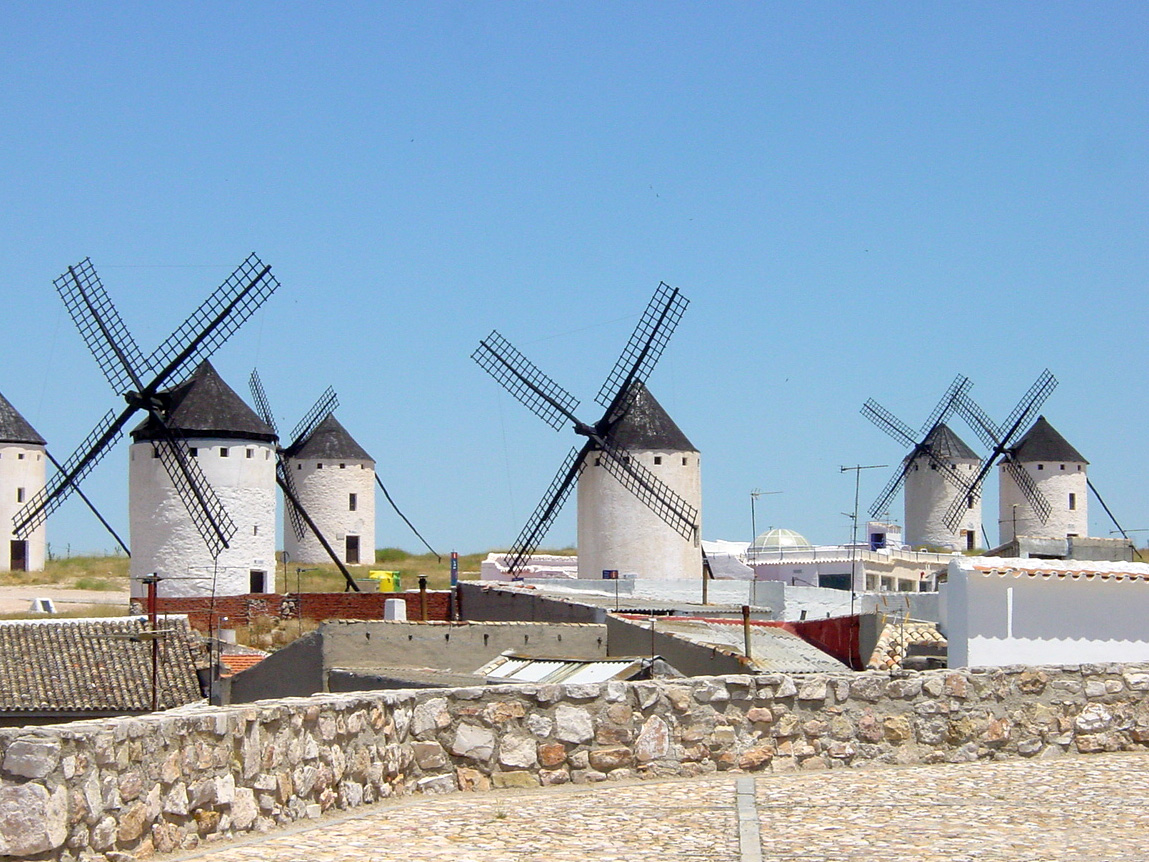
La imagen de Campo de Criptana nos recordará al Quijote. Sobre el otero que domina al pueblo aparece un magnífico conjunto de molinos de viento, una de las imágenes más famosas del territorio. Algunos de ellos se encuentran en el centro de la ciudad, como es la iglesia de Nuestra Señora de la Asunción. Aunque también hay diversos monumentos y lugares de interés reflejados en el anexo:
Fiestas:
En Campo de Criptana destacan por su importancia las fiestas patronales en honor a la Santísima Virgen de Criptana y el Santísimo Cristo de Villajos, el carnaval, la Semana Santa, el Festival internacional de la música y más festividades que aparecen más detenidamente descritas en el anexo.
La Asociación cultural El Burleta cada 14 de agosto realiza una fiesta con 3 premiados diferentes organizaciones y asociaciones donde se les reconoce su labor a la sociedad.
Vida cultural y artística:
Campo de Criptana es un municipio que presenta una rica y activa vida cultural y artística:
En el ámbito musical destaca la banda de música Filarmónica Beethoven, fundada en 1850 y que cuenta con su propia Escuela de Música desde 1940, de la que han surgido gran cantidad de músicos profesionales. La banda ha recibido múltiples distinciones, tanto a nivel nacional como internacional, y realiza numerosos conciertos a lo largo del año, así como zarzuelas junto a la Coral Santa Cecilia, también de Campo de Criptana. Igualmente destacable es el Ateneo Musical, fundado en 1973, y que celebra ciclos de conciertos de música clásica del más alto nivel artístico. Son músicos de Campo de Criptana de reconocido prestigio nacional e internacional: Manuel Angulo López-Casero, Ángel Arteaga, Luis Cobos, Manuel Angulo Sepúlveda y Bernardo Gómez. Asimismo se puede reseñar una importante labor musical representada por grupos como: Charanga Los Monigotes, constituida por veinte jóvenes en el seno de la Filarmónica Beethoven, Maestronic, Grupo Hades, Arcanoise, Rolling Rock Band, Dulce Neus y Kopyright, y otros que un día trabajaron por la música y ya lo dejaron como son Grupo Antártida, Nowba, Grupo Zona Cero, U.B.C., Los Estropeaos y Los Calabazas.
En pintura Campo de Criptana fue el primer municipio manchego en contar con una Escuela Municipal de Dibujo y Pintura, fundada en 1974 y aún en funcionamiento. Se convoca, con carácter bianual, el Premio Nacional de Pintura Francisco Valbuena, el Premio Nacional de Dibujo Villa de los Molinos y el Premio Local de Pintura Isidro Antequera. Destacan pintores criptanenses de la talla de Francisco Valbuena y José Díaz; o como el solanero, afincado en Criptana, Isidro Antequera. Otros pintores nacidos en Campo de Criptana son Aurelio López, Lourdes Arteaga, Andrés Escribano, Tomás Artolazabal, Ángel Morales, Enrique Cruz, José Andrés Lara, Juan Casero o Paco Valbuena hijo.
En escultura se encuentra Eloy Teno y su hijo Xema Teno; y en fotografía Isidro de las Heras y Nacho Calonge.
En el campo de las letras se han realizado numerosas publicaciones culturales a lo largo de las últimas décadas, como Revista Hito, el Albaicín Criptano, Cosas D’aquí, Estilo o Besana. Y se convocan, con carácter anual, los certámenes nacionales de poesía Pastora Marcela y Valentín Arteaga. Entre los escritores de Campo de Criptana destacan Raimundo Escribano, Valentín Arteaga, José González Lara, José Aureliano de la Guía y María Zaragoza.
En teatro destaca la figura de Domingo Miras, dramaturgo y Premio Nacional de Literatura Dramática; así como Manuel Manzaneque, actor y productor teatral. Actualmente el municipio cuenta con siete grupos teatrales y sobresalen las interpretaciones llevadas a cabo en los últimos años de musicales como El hombre de La Mancha o Jesucristo Superstar.
En cine se encuentran tres figuras de notable relevancia. Enrique Alarcón, decorador, director artístico y referente nacional e internacional en este campo, Sara Montiel, actriz y cantante y Andrés Velasco Rubio, productor cinematográfico y escritor, coincidiendo en muchas películas con el anteriormente citado Enrique Alarcón.
Finalmente son numerosas las personas y colectivos que en Campo de Criptana realizan, o han realizado, una destacada labor de recopilación, mantenimiento y difusión de la historia local, como Joaquín García-Reillo, Francisco Escribano, Villajos Lucas o Vicente Arias; de la cultura popular y tradicional criptanense, fundamentalmente la Asociación Hidalgos Amigos de los Molinos y su Semana Cervantina; y de la música popular, gracias a las agrupaciones folclóricas Molinos de Viento y Trovadores de la Mancha, o al grupo de pulso y púa Raimundo Escribano.
Gastronomía:
Los platos típicos son las gachas manchegas con tropezones (generalmente acompañadas de magro, chorizo, tocino frito), las migas de pastor servidas en sartenes y elaboradas con harina de almorta, el cordero servido a la caldereta, el pisto manchego, las sopas de ajo como plato invernal, los huevos revueltos con cebolla y queso manchego. El postre típico es el arroz con duz frío (duz llaman en Andalucía y en La Mancha al dulce). Suele servirse como aperitivo la almorta tostada (denominada titos).
Gallery




Festivals
September 2026
Festivals this month
- No festivals recorded this month.
Rest of the year
- February: Mercado Pirata (10) · Carnaval (15)
- May: San Isidro (15)
- July: San Cristobal (10) · Virgen del Carmen (16) · Santa Ana (26)
- August: Cristo de Villajos (23) · Feria y Fiestas en honor al Santísimo Cristo de Villajos
What's on
Street market
Mercadillo semanal: Martes, de 09:00 a 14:00 · Recinto Ferial - Avenida Hispanidad
Gastronomy
There's no information in this section yet. The village's profile can complete it from the panel.
Trails and hiking
•Camino Natural de los Humedales de la Mancha
•Ruta de los pozos y del agua (SL-CR 11, 6 km)
Routes passing through Campo de Criptana
Services
Do you have a business in Campo de Criptana? Advertise it for free and go premium whenever you like. List my business for free
Famous people
•Sara Montiel, actriz y cantante española (1928-2013)
•Jesús Manzaneque, ciclista español
•Fernando Manzaneque, ciclista español
•Óscar García-Casarrubios, ciclista español
•Ángel Arteaga, compositor español
•Luis Cobos, Músico y director de orquesta español
Town hall
Web oficial: http://www.campodecriptana.es
Town hall of Campo de Criptana
Web oficial: http://www.campodecriptana.es
Here goes your town hall's profile or your website address. Are you from the town hall? Go premium to complete your profile and edit your village's content. hola@ciudadesypueblos.es
How to get there
- 🚗 104 km from Ciudad Real (about 73 min by car)
- 🚗 139 km from Getafe (about 98 min by car)
- 🚗 142 km from Fuenlabrada (about 100 min by car)
🧭 Travelling around the villages of Spain: a practical guide — Opening hours, transport, money and customs, before you set off.
- ✈️ 150 km from Albacete airport (about 106 min by car)
- ✈️ 155 km from Madrid-Barajas airport (about 109 min by car)
Practical info
🅿️ Where to park
- Where to park · 0.3 km away
- Where to park · 0.3 km away
- Where to park · 0.5 km away
🏧 Nearest cash machine
- BBVA · 0.1 km away
- Caixabank · 0.2 km away
- Unicaja Banco · 0.2 km away
⛽ Nearest petrol station
- Petronor · 0.7 km away
- COMBUSTIBLES CRIPTANA · 1 km away
- Cooperativa Bodegas Símbolo · 1.1 km away
ℹ️ Tourist office
- Oficina de Turismo Molino Poyatos · 0.2 km away
- Tourist office · 0.4 km away
- Circuito Permanente de Orientación Albaicín Criptanense · 0.5 km away
🔭 Viewpoints
- Viewpoints · 0.1 km away
- Mirador de los Molinos · 0.7 km away
Buses
2 paradas de autobús en el municipio:
•Campo de Criptana - La Tercia
Pharmacy and health
En materia de servicios sociales y, en concreto, en el ámbito de la atención a las personas con discapacidad, es posible destacar la presencia en Campo de Criptana del Centro Comarcal de Educación Especial María Auxiliadora y del Centro Ocupacional Comarcal de Atención a Discapacitados Psíquicos Rogelio Sánchez. Ambos centros pertenecen a Aspana, Asociación Pro-Personas con Discapacidad Intelectual de Campo de Criptana fundada en 1974 y presidida de forma vitalicia por el profesor Rogelio Sánchez Ruiz que, además, es director vitalicio del Centro María Auxiliadora. En 2006 Rogelio Sánchez fue condecorado por su labor realizada desde el centro y desde la asociación, con la Medalla de Oro al Mérito en el Trabajo, por el Ministerio de Trabajo y Asuntos Sociales de España.
Asimismo, en 2010, Campo de Criptana ha sido finalista, junto con los Ayuntamientos de Ávila y Málaga, del Primer Premio de Accesibilidad de la Fundación Konecta, galardón que premia las mejores prácticas puestas en marcha en materia de accesibilidad, por el desarrollo del proyecto de eliminación de barreras cognitivas implantado en el Ayuntamiento.
Wall and news
Log in with your profile to post. Posting on the walls is free.
This wall is still quiet.
Obituaries
There are no obituaries published right now in Campo de Criptana.
In loving memory
There are no memorials in Campo de Criptana yet.
Videos
Discover Campo de Criptana on video: