
Valdepeñas
Ciudad Real · Castilla-La Mancha
Valdepeñas is a municipality in the province of Ciudad Real, in the autonomous community of Castile-La Mancha, Spain. It is also the seat of the judicial district that covers the localities of Moral de Calatrava, Santa Cruz de Mudela, Viso del Marqués, Torrenueva, Castellar de Santiago and Almuradiel. Developed in the 13th century under the auspices of the Order of Calatrava, its emergence is connected to the depopulation of the nearby settlements of Santa María, Aberturas, and Corral Rubio. It possesses a traditional wine industry. It lies on the road (A-4) and rail (Alcázar de San Juan–Cádiz railway) route traditionally connecting the Meseta Central with Andalusia through the Despeñaperros Pass.
Sections the premium town hall can edit · Fixed sections of the guide
Origins
Etimológicamente su nombre significa valle de peñas, por estar situada en un amplio meandro del río Jabalón rodeado de cerros (estribaciones de Sierra Morena que marcan el límite sur de la llanura manchega justo en esta localidad) y por abundar en su subsuelo la roca caliza.
History
Prehistory:
The municipal area houses numerous prehistoric remains, platforms and watchtowers located in the hills, compatible with settlers of the Bronze Age called Culture of the Motillas, dated between the 10th and 13th centuries BC. Vasco Merlo in his History of Valdepeñas described these structures erroneously as Celtiberian settlements, despite their being much older than that and possibly belonging to the Culture of Argar.
Ancient history:
Eight kilometres to the south of the city is located the Iberian city of "Cerro de las Cabezas" (Hill of the Heads), a great oppidum or town fortified with a true castle in the summit of the hill that it occupies, inhabited between the 7th and 2nd centuries BC. It is an important archaeological deposit of the Oretana Culture and shows signs of the first vestige of the grapevine in this region.
In the 16th century and later artefacts such as graves, coins and other ancient Roman items, from a Roman villa of the 1st century BC, that still existed in the Visigothic period.
Middle Ages:
During the Middle Ages, the area was part of the Moorish taifa of Toledo. The Arab inscriptions and a sundial on the walls of the Church of the Assumption date from this period. According to oral tradition, the Caliphate gave permission to the inhabitants to cultivate vineyards and make wine, which is prohibited by the Quran. The Moors were expelled from Valdepenas at the end of the 15th century.
By order of Queen Berenguela of Castile and after the battle of Las Navas de Tolosa in 1212, settlers of several villages (Aberturas, Corral Rubio de Jabalón, Santa María de las Flores and Castilnuevo) moved to the area around the present Church of the Assumption, which had been an old castle.
From that moment Valdepeñas belonged to the military Order of Calatrava and the first text it is mentioned in is the record of The Order of Calatrava in 1243. The new settlers came from the Kingdoms of Castile, León (Galicia mainly) and Aragón. The Order demanded conditions of establishment and right of citizenship, the continued care of the grapevine.
In medieval times the Jewish community became important and this is reflected in the existence of at least two synagogues, one of which was eventually converted into the hermitage of Veracruz and the old building where the Parish of The Christ was located, behind its present location.
Early modern age:
The Catholic Monarchs, Ferdinand and Isabella of Castille, lodged in Valdepeñas on 18 February 1488 at the mother of Alfonso de Merlo's house, and left to the care of the widow the infants during part of the conquest of Granada.
The same Alfonso de Merlo was named Captain and went with more than two hundred men to the Conquest of Granada, funding the campaign with his own money. The Catholic Monarchs recognized and granted him the title of Knight. Some of his descendants moved to the New World and took important positions in Peru and Chile.
Diverse religious and civil buildings from the 16th century such as the Trinitarians Convent can be found in the town.
King Ferdinand the Catholic wanted to control the power of Military Orders, and Pope Adrian VI granted orders to the Kingdom of Castile, passing to Royal Jurisdiction an important patrimony: two cities, two hundred villas (Valdepeñas among them) and a hundred of villages, distributed in an ample territory.
King Philip II sold the town on 22 April 1575 to Alvaro de Bazán, first Marquis of Santa Cruz. Valdepeñas would happen to be a lordship, secreting itself of the Order of Calatrava.
The successive marquesses promoted the wines of Valdepeñas in the Spanish Court of the Austrian and its fame consequently extended all over the country. Valdepeñas' "clarete" became known as "aloque" at this time.
Contemporary history:
Valdepeñas led a quiet existence until 6 June 1808, when Napoleon's occupation of Spain became an issue after the events of 2 May in Madrid of that year.
Napoleon's troops went to Andalusia as reinforcements and attempted to cross the villa; the entire population (men, women and also some of the neighbouring villas) took up arms to prevent the passage of the troops. The result was a high number of lives lost and a major fire. Highlighted in the fight was a woman, Juana Galán "La Galana". The outcome was that the troops had to retreat from the province of La Mancha, a delay which led, at least in part, to the Spanish victory at the Battle of Bailen. King Fernando VII would give the villa the Title of "Very Heroic". After these events, some inhabitants from Valdepeñas took part of the guerrilla fighting against the Napoleonic troops in the "Guerra de la Independencia", Francisco Abad, "Chaleco", became a famous guerrillero.
At the beginning of the 20th century, the appearance of Phylloxera led to the introduction of the resistant American vine but did not change the economy much. The Spanish Civil War broke this development, and the city's population decreased. From the 1940s to the 1970s the only economical activities were agriculture and the traditional family industry of wine, a common phenomenon in central Spain in those times. In the 1980s, Valdepeñas saw a modernization of the wine sector, including new kinds of grapes, and the introduction of techniques in wine production.
Monuments
•Busto DULCINEA
•Armas de Don Quijote
•Manteo a Sancho Panza
•Busto Tomás de Antequera
•Don Quijote (dedicado a Alberto Ramírez)
•Auditorio al aire libre
•Banderas de comunidades de España
•Refugio Guerra Civil
•Casa de los Vasco
What to visit
•Museo-Molino de Gregorio Prieto
•Puerta del Vino
•Iglesia de la Veracruz (Posible Sinagoga)
•Museo del Vino
•Puerta mudéjar
•Museo Municipal de Valdepeñas
•Museo de los molinos
Deporte:
El club deportivo más notorio de la localidad es el Club Deportivo F.S. Ciudad del Vino Valdepeñas, conocido por motivos de patrocinio a partir de la temporada 2018/2019 como Viña Albali Valdepeñas, que en 2018 consiguió el ascenso a primera división nacional. Fue subcampeón de liga en la temporada 2019/2020 y finalista de la Copa de España en 2020.
Fiestas:
En la actualidad, en Valdepeñas se celebran anualmente las Fiestas de la Vendimia y el Vino, a principios de septiembre (antes conocidas como "de la Vendimia", y más recientemente denominadas como "del Vino") consideradas de Interés Turístico Nacional. Coincidiendo con estas, tiene lugar desde el año 1940 la Exposición Nacional de Artes Plásticas, decana de cuantos certámenes de Bellas Artes se celebran en España y dotada del premio más cuantioso. Por todo ello obtuvo la ciudad la Medalla de Oro a las Artes en 2001.
Además, se celebra la Feria de Agosto comenzando el 30 o 31 de julio y durando tan solo 3 o 4 días y en cuyos festejos destacan atracciones infantiles y juveniles: como colchonetas elásticas, coches de choque, etc. Además, la feria cuenta con un estacionamiento ferial, así como cafeterías, zonas de restaurante al aire libre y cuenta con un mercadillo medieval que se celebra en la plaza de España todos los años.
Museos:
Valdepeñas cuenta con varios museos:
Museo de los Molinos: el molino-museo más grande del mundo.
Museo Municipal de Valdepeñas (arte, arqueología)
Museo Gregorio Prieto, con la más extensa colección de obras del pintor Gregorio Prieto, así como cartas y cuadros de compañeros de la generación del 27 (Alberti, García Lorca...).
Museo del Vino.
Yacimiento arqueológico ibérico Cerro de las Cabezas.
Yacimiento de la villa y bodega romanas de El Peral.
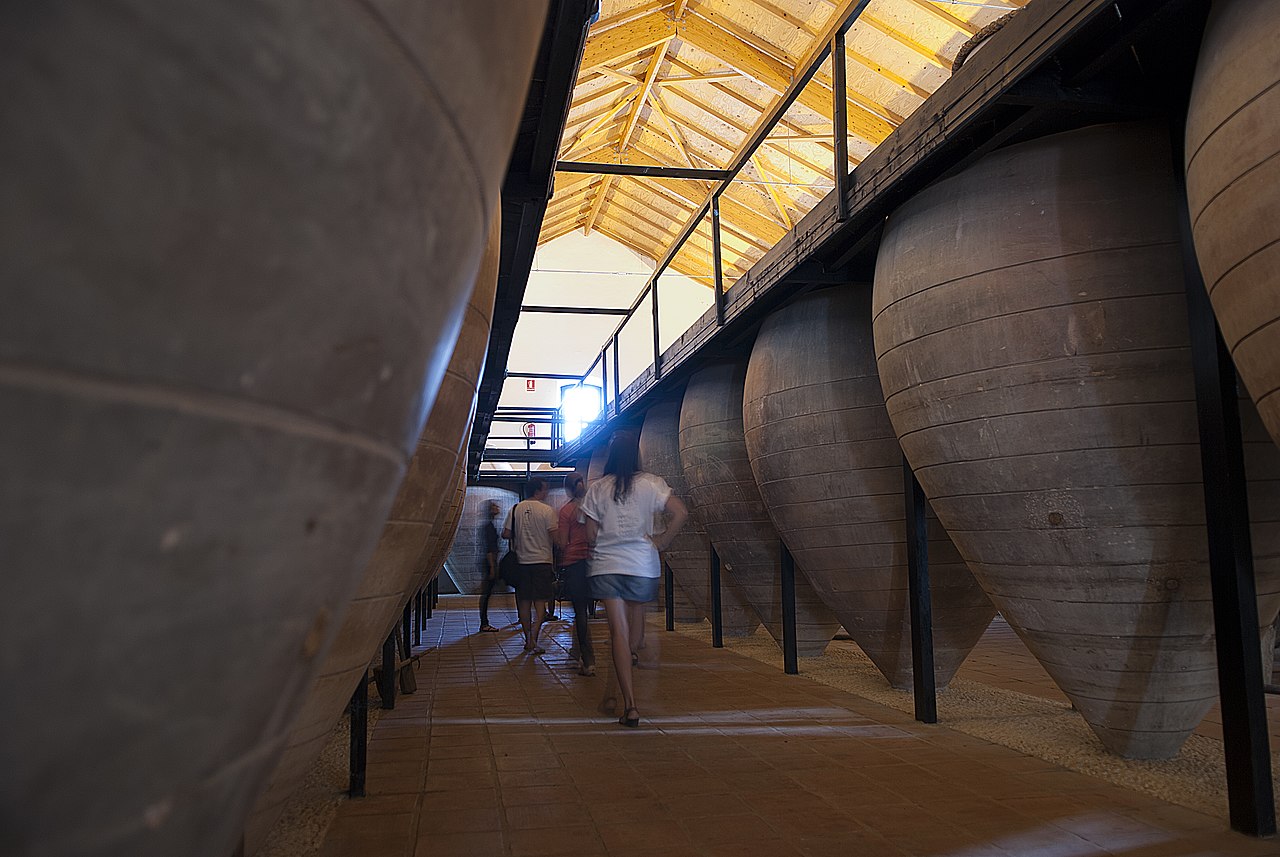
Bodegas y otros edificios históricos.
Gastronomía:
La gastronomía valdepeñera es la propia de la región de La Mancha: se trata, por lo general, de una cocina de platos sencillos elaborados a partir de productos básicos. La manchega es una cocina austera y sencilla, de origen humilde y pastoril, conocida internacionalmente debido a que algunos de estos platos aparecen en la divulgada obra Don Quijote de La Mancha.
Algunos ejemplos de la localidad de Valdepeñas son:
Dulces o cochura
Manoletes, españoles, bizcocha, flores manchegas, nuegados (por los Santos), torrijas, mantecados, cortadillos, nochebueno (en Navidad).
Medios de comunicación:
Valdepeñas cuenta con numerosas emisoras de radio que emiten en la zona comarcal y en los pueblos cercanos, además de una cadena de televisión que emite en toda la comarca: TeleValdepeñas. Entre las emisoras que se escuchan en la ciudad, destacan Cadena Dial Valdepeñas, Radio Surco, Onda Cero Valdepeñas o SER Valdepeñas.
La cadena de televisión del municipio, TeleValdepeñas, se fundó en 1998, y desde abril de 2010 emite en DVB-T. Es una cadena generalista que informa de las noticias de la comarca de Valdepeñas y alrededores. Además, emite películas, series, dibujos animados, telediarios, debates, entre otros. Su sede se encuentra en la calle Constitución.
Además, en Valdepeñas, hasta finales de 2009, se recibía Canal Sur debido a un repetidor situado en el cerro de las Aguzaderas desde el comienzo de emisiones del canal (1989, aproximadamente). En la ciudad se empezó a sintonizar Canal Sur en TDT a finales de 2008 y, finalmente, sobre el invierno de 2009 cesaron las emisiones de Canal Sur en Valdepeñas, siendo repuestas posteriormente y pudiéndose ver a través de la televisión local.
Gallery




Festivals
September 2026
Festivals this month
- 1 · September Fiesta del Vino y la Vendimia 📆 Add to my calendar
- September LXXII Fiestas de la Vendimia y del Vino en honor a la Virgen de la Consolación
- September Ferias y Fiestas en honor a la Virgen de la Sierra
Rest of the year
- February: Valencia (5) · Carnaval (12)
- March: Semana Santa
- May: Fiestas Barrio Fátima (13) · Fiestas Barrio Consolación (15)
- June: Fiestas Barrio Centro (10)
- July: Fiestas Barrio Virgen de los Llanos (1) · Santa María Magdalena (22)
- August: Feria de Agosto (2) · Fiestas patronales en honor a la Virgen de la Antigua y Santo Tomás
What's on
Street market
Mercadillo semanal: Viernes, de 09:00 a 14:00 · Plaza de San Juan
Gastronomy
There's no information in this section yet. The village's profile can complete it from the panel.
Trails and hiking
Routes passing through Valdepeñas
There's no information in this section yet. The village's profile can complete it from the panel.
Services
Do you have a business in Valdepeñas? Advertise it for free and go premium whenever you like. List my business for free
Famous people
•Bernardo de Balbuena, Poeta y eclesiástico novohispano
•Juana Galán, Guerrillera española, heroína de la Guerra de la Independencia
•Jaime Jiménez Merlo, futbolista español
•Francisco José Pacheco, ciclista español
•Francisco Nieva, dramaturgo español
•Juan Luis Rodríguez-Vigil, político español
Town hall
Alcaldía: Jesús Martín
Web oficial: http://www.valdepenas.es/
Town hall of Valdepeñas
Alcaldía: Jesús Martín Web oficial: http://www.valdepenas.es/
Here goes your town hall's profile or your website address. Are you from the town hall? Go premium to complete your profile and edit your village's content. hola@ciudadesypueblos.es
How to get there
- 🚗 64 km from Ciudad Real (about 45 min by car)
- 🚗 170 km from Albacete (about 120 min by car)
- 🚗 215 km from Fuenlabrada (about 152 min by car)
🧭 Travelling around the villages of Spain: a practical guide — Opening hours, transport, money and customs, before you set off.
- ✈️ 168 km from Albacete airport (about 119 min by car)
- ✈️ 204 km from Córdoba airport (about 144 min by car)
Practical info
🅿️ Where to park
- Where to park · 0.6 km away
- Where to park · 0.7 km away
- Where to park · 0.7 km away
🏧 Nearest cash machine
- Caixabank · 1.1 km away
- Caixabank · 1.1 km away
- Nearest cash machine · 1.1 km away
⛽ Nearest petrol station
- Repsol · 0.1 km away
- Gasolinera Hafesa Oil · 0.7 km away
- Moeve · 0.8 km away
Buses
Transporte:
Carreteras
Las principales carreteras del municipio incluyen la A-4/E-5 (autovía del Sur) y la CM-45 (autovía del IV Centenario, en construcción).
Otras carreteras son la CM-412 de Porzuna a Almansa, la CM-4117 a Daimiel, la CM-3103 a La Solana, la CR-644 a San Carlos del Valle, la CR-624 a Cózar y la CR-612 a Torrenueva.
Ferrocarril
La ciudad de Valdepeñas cuenta con una estación de ferrocarril inaugurada el 21 de abril de 1862.
Red inalámbrica municipal:
Valdepeñas es una ciudad pionera en cuanto a las telecomunicaciones ya que cuenta con una red inalámbrica municipal llamada Valdefibra. Esta red resulta muy útil en la ciudad ya que permite la interconexión de las sedes municipales, permite desarrollar iniciativas de acceso a Internet en la calle de manera gratuita y permite ofrecer a los valdepeñeros acceso a Internet inalámbrico desde sus hogares con tarifas reducidas. Actualmente la operadora que explota esta red es Iberfone. También existen bancos Wi-Fi de uso público sin contraseña.
Pharmacy and health
•Farmacia Farmacia HolaSalud (Ldo. Gaspar Naranjo) — Calle del Cristo 1
•Farmacia Farmacia del Convento — Calle de La Virgen 32
•Farmacia Farmacia Mercedes — Calle del Seis de Junio 186
•Farmacia Farmacia Parque del Este — Calle Bataneros 96
•Farmacia Farmacia de la Rubia — Calle del Buensuceso 54
•Farmacia Farmacia Alfonso Santa María Blanco — Calle Real 34
•Farmacia Farmacia J. Blanco C.B. — Avenida de los Estudiantes 41
•Farmacia Farmacia La Galana
•Farmacia Farmacia González Calero García
•Farmacia
Wall and news
Log in with your profile to post. Posting on the walls is free.
This wall is still quiet.
Obituaries
There are no obituaries published right now in Valdepeñas.
In loving memory
There are no memorials in Valdepeñas yet.
Videos
Discover Valdepeñas on video: