
San Pedro del Pinatar
Murcia · Región de Murcia
San Pedro del Pinatar is a small town and municipality in the Region of Murcia, southeastern Spain. The municipality is situated at the northern end of Murcia's Mediterranean coastline, the Costa Cálida, and borders the province of Alicante. It has an area of almost 22 km2, and a population of 25,167 as of 2018.
Sections the premium town hall can edit · Fixed sections of the guide
Origins
Esta localidad recibió su nombre hacia el siglo XVII, anteriormente se conocía como «El Pinatar», ya que se trataba de una extensa masa forestal donde abundaban los pinos y donde se cazaba jabalíes en invierno, hecho recogido en el Libro de la Montería de Alfonso XI. Tras la construcción por los franciscanos de una ermita en el siglo XVII dedicada al culto a San Pedro Apóstol ya que la mayoría de los habitantes eran pescadores, los lugareños comenzaron a denominarlo «San Pedro del Pinatar».
Gentilicio
El gentilicio se tomó del nombre inicial de «El Pinatar» por lo que sus habitantes se denominan «pinatarenses».
History
Ancient history:
San Pedro was an industrial territory whose salt mines were used by the Romans. They utilised the salt to produce an ancient Roman sauce called garum.
Middle Ages:
In 711 CE, Muslim civilizations started conquering the Iberian Peninsula. A few years later they dominated a great part of it, including the current San Pedro del Pinatar. During their occupation, they built fishing structures for a specific type of fishing which are known in Spanish as encañizadas.
In 1243, the king Muhammad Ibn Hud offered vassalage to the Crown of Castile. In April of that year, the Treaty of Alcaraz, in which the sovereignty of Castile was recognised, was signed. As a result, the former Taifa of Murcia went under Castilian rule.
The jurisdiction of the concejo (an administrative division of that era approximately equivalent to the municipality) occupies the territory. Pedro del Pinatar was part of the Crown of Castile but was on the border to the Crown of Aragon. The border, which crossed Campo de Cartagena (a region that is categorised as a comarca), was decided in 1305. The El Libro de montería de Alfonso XI, a book written in 1340, describes the municipality in the Late Middle Ages, describing the surrounding territory as a dense forest mass where wild boar were hunted. During this time, the town's population increased due to the arrival of many families.
Modern history:
The localities of the municipality were set up at the beginning of the early modern period. The salt mines were utilised by the lessees who held rights on the mines at a similar level to the Crown. The institution awarded shares to these lessees in order to regain the power on the mines. The convenient access to the coastal salty lagoon of Mar Menor allowed Berber pirates to easily disembark, destroy the region and take the loot. In a letter dated to the 6 June 1592, Philip II of Spain wrote a letter in which he announced his intention to set up a tower as part of a defence system for the region. The tower was built in 1602, and it was armed with artillery and manned until the 18th century.
From War of the Spanish Succession (1700 to 1713), the people in the Reino of Murcia (an administrative division belonging to the Crown of Castile whose status was similar to an ordinary kingdom) allied with Philip V of Spain. The supporters of the Charles VI, Holy Roman Emperor, attacked Cartagena, its port and the region related to Mar Menor in 1706.
During the last years of the early modern period, there were fewer privateer attacks; as a result, there was an economic rise and an increase in population. The municipal registers, in regards to population, stated that the number of inhabitants doubled in the last years of the 18th century (1771–1798).
The town was affected by the earthquake of 1829 but not by the cholera epidemic that struck the region in the 19th century.
During the Trienio Liberal (1820–1823) and taking advantage of the just-arrived liberalism, the people formed a local government, but after 1823, when the political system corresponding to the previous politic regime was instituted, the local government was eliminated and the territory became part of the municipality of Murcia again. After the death of Ferdinand VII of Spain, liberalism was reestablished and San Pedro achieved its own local government again on 16 September 1836.
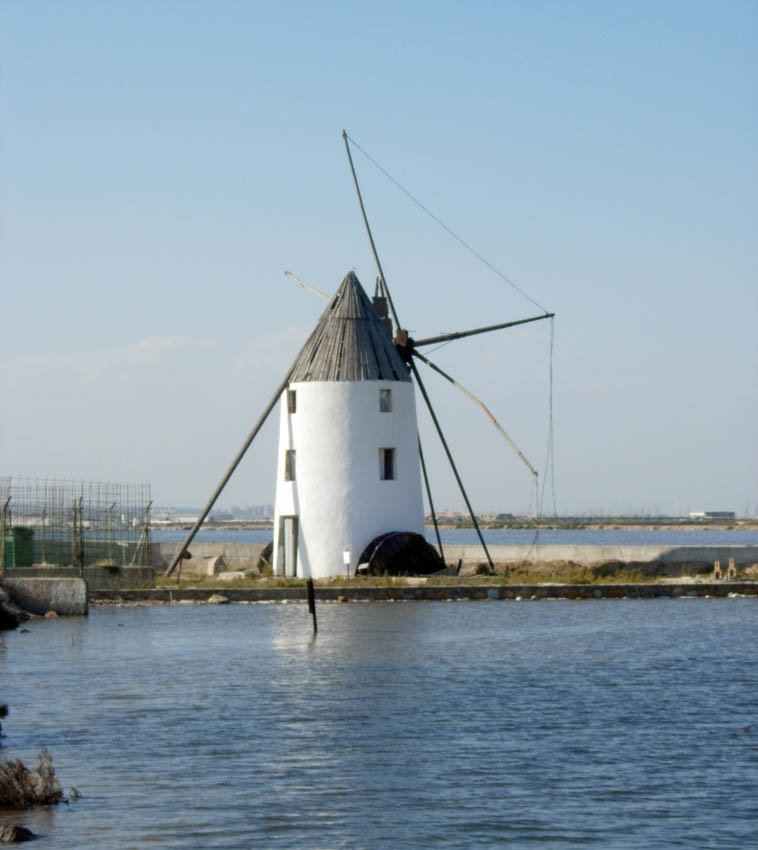
Coastal customs were set in San Pedro del Pinatar in 1857. In 1869, a law which eliminated the monopoly of the salty mines was presented. The inhabitants of the municipality relied on fishing and agriculture for their economy. Land-related activity was hindered because of a lack of lands and drought. There were attempts to attenuate these obstacles that consisted of lifting the water by waterwheels and water mills. The salt mines were among the main economic sources. Some of them were built to decant the water from Mar Menor, and a few are preserved today.
Present:
In the 1960s tourism to the municipality increased and led to a rise in economy, and the appearance of construction and service-related jobs. There was an increase in population resulting from the improve of standard of living; in 1971 there were 6,637 people living in San Pedro, and 20 years after the town's population consisted of 13,000 inhabitants.
Monuments
There's no information in this section yet. The village's profile can complete it from the panel.
What to visit
Fiestas:
Patrimonio:
Iglesia de San Pedro Apóstol (plaza de la Constitución): es un templo que comenzó siendo una ermita franciscana en el siglo XVII.
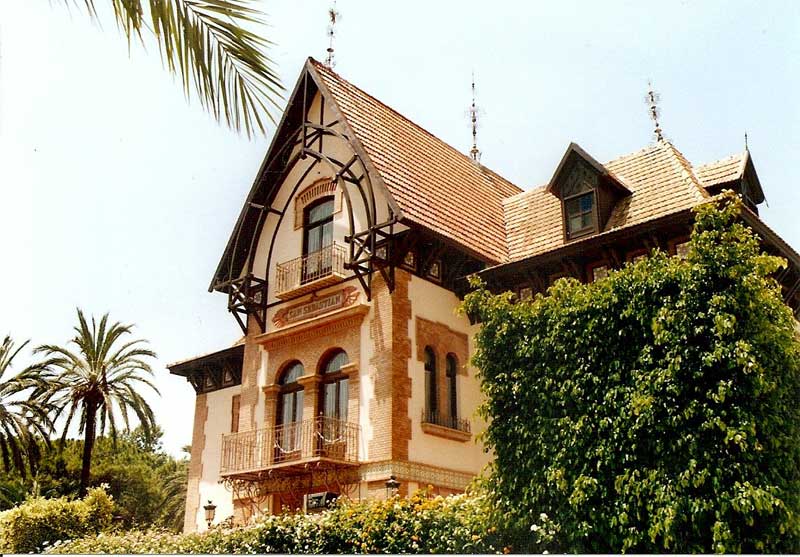
Casa del reloj o Quinta de San Sebastián (Avda. Artero Guirao s/n): un ejemplo de arquitectura modernista. En ella falleció el cuarto y último presidente de la primera República Española D. Emilio Castelar y Ripoll. Desde finales del siglo XX se ha restaurado y convertido en un restaurante.
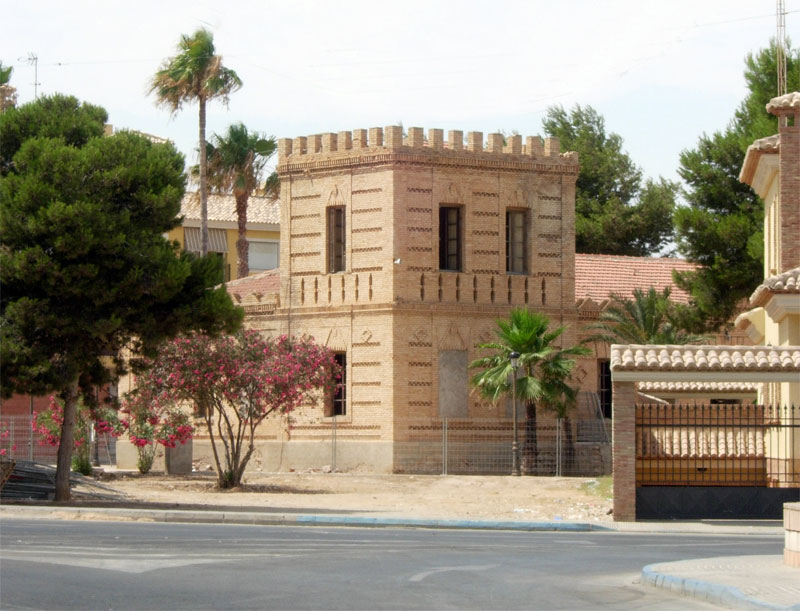
Palacio del Barón de Benifayó o de los condes Villar de Felices o Casa de la Rusa (C/ Víctor Pradera s/n): edificio de estilo neomudéjar construido en el siglo XIX por encargo del Barón de Benifayó.
Teatro cine Moderno (C/Barón de Benifayó). Obra del arquitecto Pedro Cerdán.
Villa romana de La Raya
Lonja de pescado en Lo Pagán (Explanada de Lo Pagán): puede contemplarse la subasta del pescado al estilo tradicional.
Museo Arqueológico Etnográfico: Contiene fósiles, objetos paleontológicos, etc. Dispone de una sección sobre arqueología submarina y otra de tipo etnográfico dedicada sobre todo a los últimos siglos (desde el siglo XVIII). Se encuentra en el palacio del Barón de Benifayó.
Museo del Mar (C/ Ingeniero Lorenzo Morales, 2. Edificio Hogar del Pescador, 2.º Dcha.): colecciones de artículos marinos y marineros.
Centro de Visitantes Las Salinas (Avda. de las Salinas s/n): ofrece interesantes exposiciones sobre el parque natural y el trabajo en las salinas.
Parque natural de las Salinas y Arenales de San Pedro del Pinatar
Iglesia de la Santísima Trinidad: construida en 2003, contiene diversas obras de Kiko Argüello.
Gallery







Festivals
September 2026
Festivals this month
- No festivals recorded this month.
Rest of the year
- June: Fiestas Patronales San Pedro Apóstol (5) · San Juan y San Pedro (24) · Fiesta patronal: Pedro (29)
- July: Festival de Flamenco de San Pedro del Pinatar, Homenaje a Camarón de La Isla, "Vuelta a la (3) · Romería Virgen del Carmen (16) · Festival de Flamenco de San Pedro del Pinatar, Homenaje a Camarón de La Isla, "Vuelta a la · Festival de Flamenco de San Pedro del Pinatar, Homenaje a Camarón de La Isla, "Vuelta a la
What's on
Street market
Find the day and place of the local street market:
Gastronomy
There's no information in this section yet. The village's profile can complete it from the panel.
Trails and hiking
•Sendero de las Encañizadas (PR-MU 65)
•Camino del Sureste - Ramal Sur
•Sendero del Mediterráneo - Murcia (GR 92)
•Torrevieja - Pilar de la Horadada (GR 92 E22, 21.4 km)
Routes passing through San Pedro del Pinatar
Services
Do you have a business in San Pedro del Pinatar? Advertise it for free and go premium whenever you like. List my business for free
Famous people
•Mariano Sánchez Martínez, futbolista español
•Pedro Vera, historietista español
•Cristina Gómez
•Geli Albaladejo, actriz española
•Ignacio Fontes, periodista español
•Mónica Meroño Fernández, diputada de la Asamblea Regional de Murcia
Town hall
Gobierno municipal:
Organización territorial:
Administrativamente cuenta con diecisiete pedanías: Barrio de los Ángeles-Las Esperanzas-Barrio de San Juan, Barrio del Carmen-El Salero, Los Antolinos, Los Tárragas, Los Peñascos, Loma de Abajo, Las Beatas, Los Sáez, Loma de arriba, Los Veras, Los Plazas-Los Gómez, Los Imbernones, Las Pachecas-Lo Romero, Lo Pagán, Los Cuarteros, Las Salinas y El Mojón.
Town hall of San Pedro del Pinatar
Gobierno municipal: Organización territorial: Administrativamente cuenta con diecisiete pedanías: Barrio de los Ángeles-Las Esperanzas-Barrio de San Juan, Barrio del Carmen-El Salero, Los Antolinos, Los Tárragas, Los Peñascos, Loma de Abajo, Las Beatas, Los Sáez, Loma de arriba, Los Veras, Los Plazas-Los Gómez, Los Imbernones, Las Pachecas-Lo Romero, Lo Pagán, Los Cuarteros, Las Salinas y El Mojón.
Here goes your town hall's profile or your website address. Are you from the town hall? Go premium to complete your profile and edit your village's content. hola@ciudadesypueblos.es
How to get there
- 🚗 39 km from Cartagena (about 28 min by car)
- 🚗 43 km from Murcia (about 30 min by car)
🧭 Travelling around the villages of Spain: a practical guide — Opening hours, transport, money and customs, before you set off.
- ✈️ 37 km from Región de Murcia airport (about 26 min by car)
- ✈️ 67 km from Alicante-Elche airport (about 47 min by car)
Practical info
🅿️ Where to park
- Where to park · 0.2 km away
- Where to park · 0.2 km away
- Where to park · 0.3 km away
🏧 Nearest cash machine
- BBVA · 0.2 km away
- Nearest cash machine · 0.3 km away
- Caixabank · 0.3 km away
⛽ Nearest petrol station
- €xpress · 0.3 km away
- Hermanos Navarro · 0.8 km away
- La Raya de Castilla · 1 km away
ℹ️ Tourist office
- Tourist office · 0.5 km away
- Tourist office · 0.7 km away
- Sendero de las Encañizadas · 2.1 km away
🔭 Viewpoints
- Observatorio de Aves · 2 km away
🏖️ Where to swim
- Playa Las Charcas · 2 km away
- Playa Villananitos · 2 km away
- Playa La Mota · 2.2 km away
Buses
Transporte y comunicaciones:
Carreteras:
El municipio es atravesado por la N-332. Además, dispone de accesos en las vías AP-7, RM-F24, RM-F25 y RM-F33. Hay varios aparcamientos disuasorios distribuidos por el casco urbano.
Autobús:
El servicio de viajeros por carretera del municipio se engloba dentro de la marca Movibus, el sistema de transporte público interurbano de la Región de Murcia (España), que incluye los servicios de autobús de titularidad autonómica.
Además, presta servicio la siguiente línea interurbana:
Por otro lado, en la estación de autobuses del municipio prestan servicio las siguientes líneas de largo recorrido:
Taxi:
El municipio dispone de varias empresas que prestan servicios de radio-taxi.
Marítimo:
Existe un ferry que conecta Lo Pagán con La Manga del Mar Menor durante la temporada estival.
Pharmacy and health
Find the nearest pharmacy and health centre, with the address and how to get there:
Wall and news
Log in with your profile to post. Posting on the walls is free.
This wall is still quiet.
Obituaries
There are no obituaries published right now in San Pedro del Pinatar.
In loving memory
There are no memorials in San Pedro del Pinatar yet.
Videos
Discover San Pedro del Pinatar on video: