
Chipiona
Cádiz · Andalucía
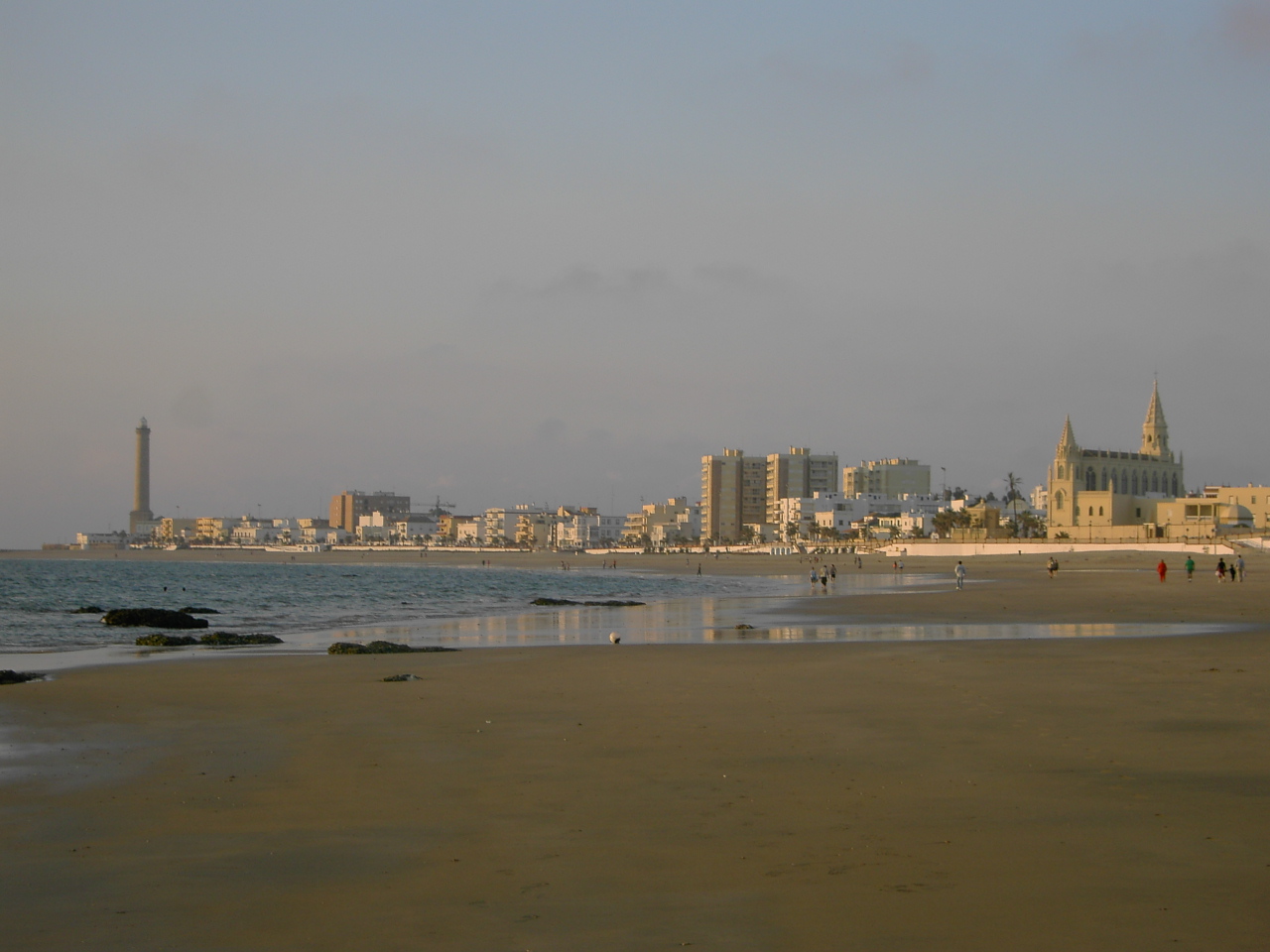
Chipiona is a town and municipality located on the Atlantic coast in the province of Cádiz, Spain. According to the 2012 census, the city has a population of 18,849 inhabitants, but this amount increases greatly during the summer holiday period. The town covers an area of 33 km2. Being in the lower valley of the River Guadalquivir it is very flat with a maximum terrestrial height of 4 metres. It is bordered on the north-west by Sanlúcar de Barrameda and on the south-east by the port of Rota. It is the town of birth of singer Rocío Jurado and where her body now rests. Chipiona is also home to the lighthouse Punta del Perro. The town is also well known for several varieties of Moscatel.
Sections the premium town hall can edit · Fixed sections of the guide
Origins
There's no information in this section yet. The village's profile can complete it from the panel.
History
Antiquity:
According to the geographers Strabo (Strabo, III, 1, 9) and Pomponius Mela (Mela, III, 4), of Ancient Greece and Rome respectively, a lighthouse existed at the mouth of the Guadalquivir River called Turris Caepionis. This was probably because it was built on the orders of the Roman Consul Quintus Servilius Caepion or his successors. The lighthouse marked a dangerous place for shipping and the opening of a navigable river, the Guadalquivir. Chipiona takes its name from the Roman Consul Caepion.
This area has also been identified as the site of the legendary Ars Gerionis, the tomb of Geryon, which stood at the end of a narrow cape that jutted into the sea, probably in what is now a reef known as the Stone of Salmedina, near Salmedina, or just Salmedina. These claims are based solely on the evidence of the literature and Roman archaeological findings dating from the second century B.C.
Middle Ages:
Legend relates that the disciples of St. Augustine in Africa, fleeing the invasion of the Vandals, came by sea to Chipiona with the image of the Virgin of Regla. Tombstones have been found near the Shrine of Our Lady of Regla from the time of the Visigoths. After the islamization of the Iberian Peninsula in 711, according to tradition, the hermits hid the image in a cistern about thirty paces from the citadel, now a monastery. The picture remained hidden until a member of the Order of St. Augustine found it in the 14th century, according to legend, following a revelation from heaven. A Shrine to Our Lady of Regla was built around the cistern.
In 1251 Chipiona was conquered by King Ferdinand III, and again more definitively in 1264 by his son Alfonso X the Wise. In 1297, King Ferdinand IV granted Guzman el Bueno, founder of the House of Medina Sidonia, the Lordship of Sanlúcar, to which Chipiona belonged.
In 1303 the eldest daughter of Guzman el Bueno and Maria Alonso Coronel, Isabel Perez de Guzman, Fernan married Ponce de León, receiving as a dowry the towns of Rota and Chipiona, thereby becoming independent both of the Lordship of Sanlúcar and joining the possessions of the Ponce de León family, descendent of the Arcos House.
Modern Age:
In 1755, Chipiona was severely hit by the tsunami that was caused by the Andalusian and Portuguese Atlantic coast Lisbon earthquake. The effects of the tsunami came to town about an hour after the earthquake, killing four people and leaving flooded streets and beaches, estimating the actual damage to 238 815.
The image of Christ of Mercy was pulled in procession to request the withdrawal of the waters, a procession that is repeated every year in November, from the chapel that bears the name of Christ to the so-called Cross of the Sea (Cruz del Mar).
Earthquake Narration by the Community of the Holy Convent of Nuestra Señora Santa María de Regla, on December 6, 1755
On the aforementioned November 1 there wasn't any news from sunrise until 10 o'clock in the morning it was a serene and peaceful day, still and calm sea, a slight north wind. But, being as 10am, being this Community as a high choir solemnly singing the Terce, it began to feel that the choir, and the church with strange swaying motion and this, as visibly noticeable, that lectern, church lamps, candlesticks from the altar, and all the temple shook and moved like a crib, from one side to the other, as viewed from the North to the South.
We were warned that this was a terrible earthquake, and although it caused a corresponding fright in everybody, and we had the suspicion that the whole building, which [is] of stone, would collapse over us all, we lacked the freedom to leave the choir, all linked by the same superior impulse, and full of sure confidence in Patronage of Our Holy Image, which was clear to the eye on her majestic throne. At that point we bowed our knees, and straining our devotion, we continued with the canonical time more consistently.
The tremor would last for ten to twelve minutes, knowing the land had returned to be quiet, and natural stillness, the Community started to take their seats, each recognising the Divine Mercy, and the patronage of Holy Mary of Rule, Our Lady, we escaped the threatening havoc with such happiness that there is not the least harm experienced in all areas of the convent.
Cantóse conventual Mass without the least suspicion, and concluded, was sung the sixth hour on the end of it, it would be like the 11 and fourth, there was a terrible roar of the sea, and found to be elevated both waves, violently throwing water on said bastion, and on the cliffs of the convent, were overwhelmed by a gunner, who was in it (which did not suffer any damage, having invoked the patronage of Our Holy Image), and fell upon the walls of the convent, and running for their flooded trenches surrounded the Church and its 2 sides to enter through the front door of the Farm, looking to the East.
Surprised by this unanticipated boost the ocean, some religious who were outside, and within the choir, acceleration fled to the fields, keeping others in the same choir.
Monuments
There's no information in this section yet. The village's profile can complete it from the panel.
What to visit
Educación:
Patrimonio:
Faro de Chipiona. Es el monumento más emblemático de la villa. Es el mayor faro de España, decimosexto de Europa y vigesimoprimero del mundo. Su altura desde la base es de aproximadamente 69 metros, data de 1867 y está situado en la llamada Punta del Perro. Se construyó para evitar que los barcos tuvieran problemas al acceder al río Guadalquivir y chocasen con la Piedra Salmedina.
Puerto deportivo. Se construyó, junto a la desembocadura del Guadalquivir, a principios de los años 1990. En 2008 fue sometido a un proceso de ampliación.
Santuario de Nuestra Señora de Regla. El edificio actual del santuario data de principios del siglo XX, construido por la comunidad de misioneros franciscanos, con la ayuda de los duques de Montpensier. Tiene su origen en una antiguo castillo-fortaleza del siglo XIV, propiedad de la familia Ponce de León, que lo donó a los ermitaños de San Agustín, en 1399, para convertirlo en iglesia.
Iglesia parroquial de Nuestra Señora de la O. Edificada en 1578 y reconstruida en 1794, tras los daños sufridos por el terremoto de Lisboa. Destacan la portada renacentista y una portada lateral con un arco gótico florido.
Castillo de Chipiona. Alberga el museo Cádiz y el Nuevo Mundo.
Museo del Moscatel. Inaugurado en 2012, está situado en la Cooperativa Católico Agrícola, que se encuentra en la avenida de Regla.
Centro de interpretación Rocío Jurado. El centro de interpretación o museo de Rocío Jurado fue inaugurado el 2 de julio de 2022. En varias salas, narra la carrera profesional de la artista y exhibe múltiples objetos que le pertenecieron. Está situado en la avenida de Granada, en uno de los edificios del Palacio de Ferias y Congresos de la localidad.
Fiestas y tradiciones:
Carnaval de Chipiona: Fiesta de larga tradición en el municipio, la referencia documental al carnaval en Chipiona, más antigua, es un Edicto del Ayuntamiento de 1896, en el que se regula el funcionamiento de estas fiestas y de la que se desprende que su existencia era anterior. Durante el periodo franquista las fiestas de carnaval fueron prohibidas en toda España. En 1984, se reinstauró esta fiesta y desde entonces se celebra anualmente entre los meses de febrero y marzo. La clausura tiene lugar con la Cabalgata, fiesta reconocida de interés regional.
Semana Santa: Chipiona tiene dos Hermandades de penitencia:
Hermandad y Cofradía de Nazarenos de Nuestro Padre Jesús Cautivo, María Santísima de los Dolores y San José Obrero. La talla de Nuestro Padre Jesús Cautivo, del escultor sevillano Francisco Buiza, data de 1960. La Virgen de los Dolores es obra anónima del siglo XVIII. La Hermandad hace estación de penitencia en la jornada del Jueves Santo.
Franciscana Hermandad del Santísimo Cristo de las Misericordias, Dulce Nombre de Jesús, Nuestra Señora de la Piedad, María Santísima de la Soledad y San Juan Evangelista. Hace estación de penitencia en la jornada del Viernes Santo. La imagen del Cristo de las Misericordias tiene un gran arraigo popular desde el Terremoto de Lisboa, en noviembre de 1755, en que se sacó la Imagen del Cristo en rogativa. Este suceso se recuerda el 1 de noviembre de cada año, en que saca al Stmo. Cristo de las Misericordias en una procesión de acción de gracias. En 2006, la Hermandad incorporó la imagen de Ntra. Señora de la Piedad, Imagen que hace su estación de Penitencia en la tarde del Miércoles Santo.
Además cuenta con la Agrupación Parroquial de Cristo Rey en su entrada triunfal en Jerusalén y Ntra. Sra. de la Esperanza. La agrupación sale en procesión en la tarde del Domingo de Ramos, sacando la imagen de Cristo Rey acompañado por niños y niñas ataviados de hebreos.
Feria del Moscatel: Desde el año 2022 se viene celebrando la Feria del Moscatel en la semana posterior a la Semana Santa. El recinto ferial se ubica en la Avda. de La Constitución, mientras que la zona de atracciones se ubica en el parque Poeta Miguel Hernández. La feria comienza el miércoles con el alumbrado de la portada y finaliza el domingo con un castillo de fuegos artificiales en el parque Blas Infante.
Romería del Pinar: Romería que se celebra el primer domingo de junio en el Pinar de la Villa y en el que la Virgen de Regla del Pinar, tras un traslado previo tres días antes al Santuario de Ntra. Señora de Regla, vuelve hasta su pinar acompañada por caballistas, carretas y público en general.[cita requerida]
Virgen del Carmen: La patrona de los marineros sale el día de su festividad, el 16 de julio, siendo embarcada al mediodía y paseada por las mares de la Villa. Durante la tarde realiza una procesión por las calles céntricas del pueblo finalizando con un castillo de fuegos artificiales en la playa de la Cruz del Mar.[cita requerida]
Velada de Regla: Están dedicadas a Ntra. Señora de Regla y se celebran junto al Santuario de Nuestra Señora de Regla. Culminan con la salida de Ntra. Señora de Regla el 8 de septiembre y finalizan con un castillo de fuegos artificiales en la playa de Regla.[cita requerida]
Halloween y Festividad de Todos los Santos: Es cada vez más frecuentes que en la tarde noche del 31 de octubre los niños salgan disfrazados de monstruos y seres fantasmagóricos a las calles a pedir puerta por puerta caramelos. El día 1 de noviembre, Festividad de todos los Santos, tiene lugar la procesión de acción de gracias del Santísimo Cristo de las Misericordias, debido al milagro realizado en el maremoto de Lisboa.
Navidad: La ciudad se adorna con alumbrados navideños. En el año 2003 se formó la Asociación de Belenistas "Caepionis", la cual realiza multitud de actividades, como son cursillos de belenes, la realización del Cartel de la Navidad, un belén viviente, concurso de belenes o el Pregón de la Navidad. Son tradicionales las zambombas que organizan los distintos barrios y asociaciones del pueblo. En la tarde del 5 de enero se realiza la Cabalgata de SS.MM. los Reyes de Oriente, en la que desde el año 2009 se hace una adoración al Niño de Dios en la plaza Pio XII.[cita requerida]
Gastronomía:
Junto al vino moscatel, destacan los productos del mar como las galeras.
Gallery




Festivals
September 2026
Festivals this month
- 6 · September Fiesta patronal: Arcángel Miguel 📆 Add to my calendar
- 8 · September Nuestra Señora de Regla 📆 Add to my calendar
- September Nuestra Señora de la Regla
Rest of the year
- February: Carnaval (15)
- March: Semana Santa (27)
- April: Feria del Moscatel (1) · Córdoba
- May: Romería de la Virgen de Regla del Pinar
- June: Romería del Pinar (5)
- July: Virgen del Carmen (16)
- August: Fiestas del Moscatel (15)
- October: V Bienal de Flamenco
- November: Fiesta patronal: Arcángel Miguel (8) · Navidad en Chipiona
What's on
Street market
Find the day and place of the local street market:
Gastronomy
There's no information in this section yet. The village's profile can complete it from the panel.
Trails and hiking
Routes passing through Chipiona
There's no information in this section yet. The village's profile can complete it from the panel.
Services
Do you have a business in Chipiona? Advertise it for free and go premium whenever you like. List my business for free
Famous people
•Rocío Jurado, cantante y actriz española
•Antonio Piñero, filólogo y escritor español
•Joaquín del Moral Sánchez, futbolista español
Town hall
Gobierno municipal:
Evolución de la deuda viva municipal:
El concepto de deuda viva contempla sólo las deudas con cajas y bancos relativas a créditos financieros, valores de renta fija y préstamos o créditos transferidos a terceros, excluyéndose, por tanto, la deuda comercial.
Town hall of Chipiona
Gobierno municipal: Evolución de la deuda viva municipal: El concepto de deuda viva contempla sólo las deudas con cajas y bancos relativas a créditos financieros, valores de renta fija y préstamos o créditos transferidos a terceros, excluyéndose, por tanto, la deuda comercial.
Here goes your town hall's profile or your website address. Are you from the town hall? Go premium to complete your profile and edit your village's content. hola@ciudadesypueblos.es
How to get there
- 🚗 32 km from Cádiz (about 23 min by car)
- 🚗 36 km from Jerez de la Frontera (about 25 min by car)
- 🚗 103 km from Sevilla (about 73 min by car)
🧭 Travelling around the villages of Spain: a practical guide — Opening hours, transport, money and customs, before you set off.
- ✈️ 42 km from Jerez de la Frontera airport (about 30 min by car)
- ✈️ 112 km from Sevilla airport (about 79 min by car)
Practical info
Buses
Check the route, times and public transport connections to Chipiona:
Pharmacy and health
Find the nearest pharmacy and health centre, with the address and how to get there:
Wall and news
Log in with your profile to post. Posting on the walls is free.
This wall is still quiet.
Obituaries
There are no obituaries published right now in Chipiona.
In loving memory
There are no memorials in Chipiona yet.
Videos
Discover Chipiona on video: