
Caspe is a municipality in the province of Zaragoza, part of the autonomous community of Aragon, in Spain, seat of the comarca of Bajo Aragón-Caspe. As of 2018 it had a population of 9,525 inhabitants (INE 2018) and its municipality, of 503.33 km2, is the fourth largest in Aragon. Caspe obtained the title of "city" in the 19th century, as a result of the damage suffered in the Carlist Wars, by concession of Queen Isabella II.
Sections the premium town hall can edit · Fixed sections of the guide
Origins
Existe la creencia popular de que el nombre de Caspe proviene de antiguos pobladores de la ciudad, originarios del mar Caspio; sin embargo, esta etimología carece de rigor filológico a pesar de su amplia difusión. El topónimo Casp aparece documentado en fuentes andalusíes como Qsp, Qasp o Qasb y ha sido relacionado con la palabra árabe Casba. Asimismo es posible que el nombre de la ciudad derive de la raíz indoeuropea Cass (encina) y el sufijo pe (lugar de o debajo de).
History
Antiquity:
It has been maintained that, before the Roman conquest of Hispania, the lands that the municipality currently occupies were inhabited by the Sedetani, an Iberian group from the 3rd century BCE. However, recent investigations place the Ausetani (Ositans) in the Caspe region, whose capital, Osicerda, may have been located in the Cabezo Palao de Alcañiz. This city-state and its territory possibly reached the Ebro to the north and the Matarraña river to the east, a border between Ositans and Ilercavones.
Middle Ages:
From the arrival of the Muslims in 713 to the Christian reconquest in the first half of the 12th century, the lands of the Ebro constituted the northernmost mark of Al-Andalus, a sector occupied by the Yemeni contingent. In this territory, Latin culture predominated over the Hispanic-Roman and Visigoth indigenous population of Christians and Jews; but from the 10th century on, Arabization and Islamization of the population prevailed, leaving Christians and Jews relegated to a small percentage.
Between June and September 1169, Caspe was integrated into the Crown of Aragon by King Alfonso II. The conquest of the town was carried out under the direction of the Count of Pallars, Arnau Mir de Tost, and his son Ramón, in collaboration with other feudal lords. In the Annals of the Crown of Aragon by Jerónimo Zurita, the following is narrated:At this time, the Moors who were in the region of the Edetanos in the castles and forces they had on the banks of the Algas river were waging a great war ... And Caspe was won, a very important place along the banks of the Ebro And from there the war continued on the banks of Guadalob and the Calanda river. It is estimated that the number of inhabitants of Caspe, at the time of the Reconquista, could have been somewhat higher than 1,000 inhabitants, overwhelmingly Islamic. Muslims were allowed to keep their religious practices, but had a year to leave their own homes and move outside the city walls. It cannot be specified when Jews arrived in Caspe, but what is certain is that when the troops of Alfonso II entered, Jews already lived in the La Muela neighborhood, sharing it with Muslims.
The town then passed to the Order of the Hospital of Saint John of Jerusalem through a land swap carried out with Alfonso II for other assets of the order. Its castle was used as residence of the bailiwick of the hospital. The population stabilized in the last quarter of the 13th century, after Garcelán de Timor was appointed commander of the bailiwick of Caspe. The town, which then had about 1,500 inhabitants, expanded from La Muela to the surrounding farmhouses with the castle of the Order at the top and the church of Santa María for the whole of the Christian community.
In 1392, Juan Fernández de Heredia, grand master of the order, bought all the possessions in the town (from the Sesé family) to found a convent. He raised the church to the category of collegiate church and increased the importance of the Sanjuanista Convent by endowing it with treasures and relics such as a lignum crucis. When he died, his body was brought from Avignon and buried in the convent church, in a tomb that he himself had carved.
In medieval times, Caspe was the largest Aragonese center for the production of glass; and one of the largest in Spain. Thirty glass furnaces are known to have existed in its municipal area. The large amount of saline soils favored the growth of Salsola kali (syn. Kali turgidum), a type of plant from which the ashes are useful in the production of glass, and this, together with the quality and quantity of the sand, were the basic elements for that manufacture. It seems that Jews were the first involved in this industry, mainly between the 14th and 15th centuries. Many of the glaziers belonged to the most important families in the town.
In the fourteenth century, the black plague ravaged the Kingdom of Aragon; There is evidence that the epidemic had reached in Caspe in 1371, even forcing the sessions of the Cortes Generales to move elsewhere. According to the Anales de Valimaña, about 300 people in the town died of the plague.
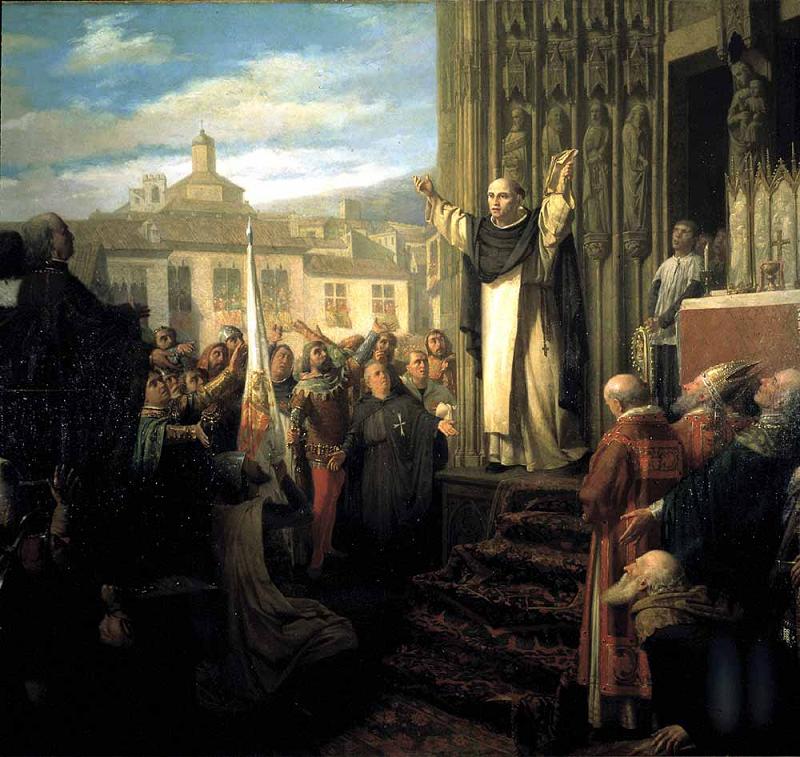
The population was the scene in 1412 of the historic "Compromiso de Caspe", when Martin I of Aragon died without descendants. On April 22 of that year, the deliberations of the delegates began, and on June 28 he was proclaimed King Fernando de Trastamara, called that of Antequera, as Fernando I of Aragón. In front of the door that gives access to the apse of Santa María la Mayor, a platform was erected, from which the people were informed of the declaration of right voted by the delegates of the States of the Crown of Aragon in favor of Don Fernando. The following day, Fray Vicente de Ferrer, who had taken a very active part in the sessions of the well-known Commitment, preached at the church.
Caspe remained for the rest of the 15th century a thriving town with its neighborhoods of La Muela, San Roque and El Pueyo, and an agricultural economy that took advantage of irrigation by the Ebro and Guadalope. At that time Pope Benedict XIII, better known as Pope Luna, visited the town to settle matters between his own family, the Luna, and the Urrea.
Modern age:
Until 1610, the Christian and Muslim communities continued to populate the town. Although they shared the old irrigated land, each had its own municipal area, as well as its own communal assets. Both were vassals of the Order of Saint John of Jerusalem.
Due to its geographical situation, Caspe has been one of the most affected populations by the different conflicts that have occurred in Spain since the 17th century. In the Catalan uprising (1640-1652), it was victim of incursions and raids by the Franco-Catalan troops, as well as fiscal exactions from the monarchy, both of which made a serious impact on its economic situation. In the War of the Spanish Succession (1701-1711) it was a follower of the Bourbon cause, while its neighbors opted for the Austrian aspirant.
19th century:
During the Peninsular War (known in Spanish as the War of Independence), French troops occupied Caspe on 4 March 1809. Abandoned soon after, it was definitively occupied from June 1809 to 1813. The most important figure in that period was that of the local lawyer Agustín de Quinto, an afrancesado who collaborated in government tasks with the French. In November 1810, Suchet appointed him General Commissar of the left bank of the Ebro, making Caspe, thanks to Quinto's residence in the town, the capital of the lower half of Aragon. At the end of the war (June 1813), Colonel Ramón Gayán arrived in Caspe to take the city from the French. To lift the siege, which lasted fifteen days, he resorted to the construction of two tunnels: one, from Calle de San Juan to the cellars of the Convent, and the other from the Revuelta. The explosion of the latter damaged the basement of the Castle, where the French had barricaded themselves, forcing them to flee to Mequinenza.
Later, the town was affected by the Carlist Wars, which had special relevance for the population. This was a consequence of the strategic location of the Caspe region, as well as the confiscation of the Order of Saint John of Jerusalem, which generated the discontent of the peasantry at the expectations created, and the loss of purchasing power of peasants, day laborers and artisans, due to the fall in the price of oil. These factors led to the start of the war when a mediocre group of Caspolinos escaped to the Carlist faction in 1814.
Caspe was the object of the Carlist incursions, suffering sieges, assaults and ephemeral occupations. In May 1835, during the First Carlist War, General Cabrera managed to seize part of the population; in the few hours that the Carlists occupied it, they took important spoils, looting the houses of the Queen's supporters. The following month, Llagostera took control of the first urban enclosure, burning the city afterwards; a year later he managed to take it again, to ab
Monuments
Acorde con su historia, Caspe cuenta con un importante patrimonio histórico. Entre los restos más antiguos están las pinturas rupestres del abrigo del Plano del Pulido, declarado Patrimonio de la Humanidad por la Unesco desde 1998, así como varios yacimientos neolíticos.
De época romana es el Mausoleo de Miralpeix, declarado monumento nacional en 1931. Consiste en una cella rectangular con muros laterales que sostienen una bóveda de cañón enmarcada en el frente con dos pilastras con capiteles corintios.
Patrimonio religioso:
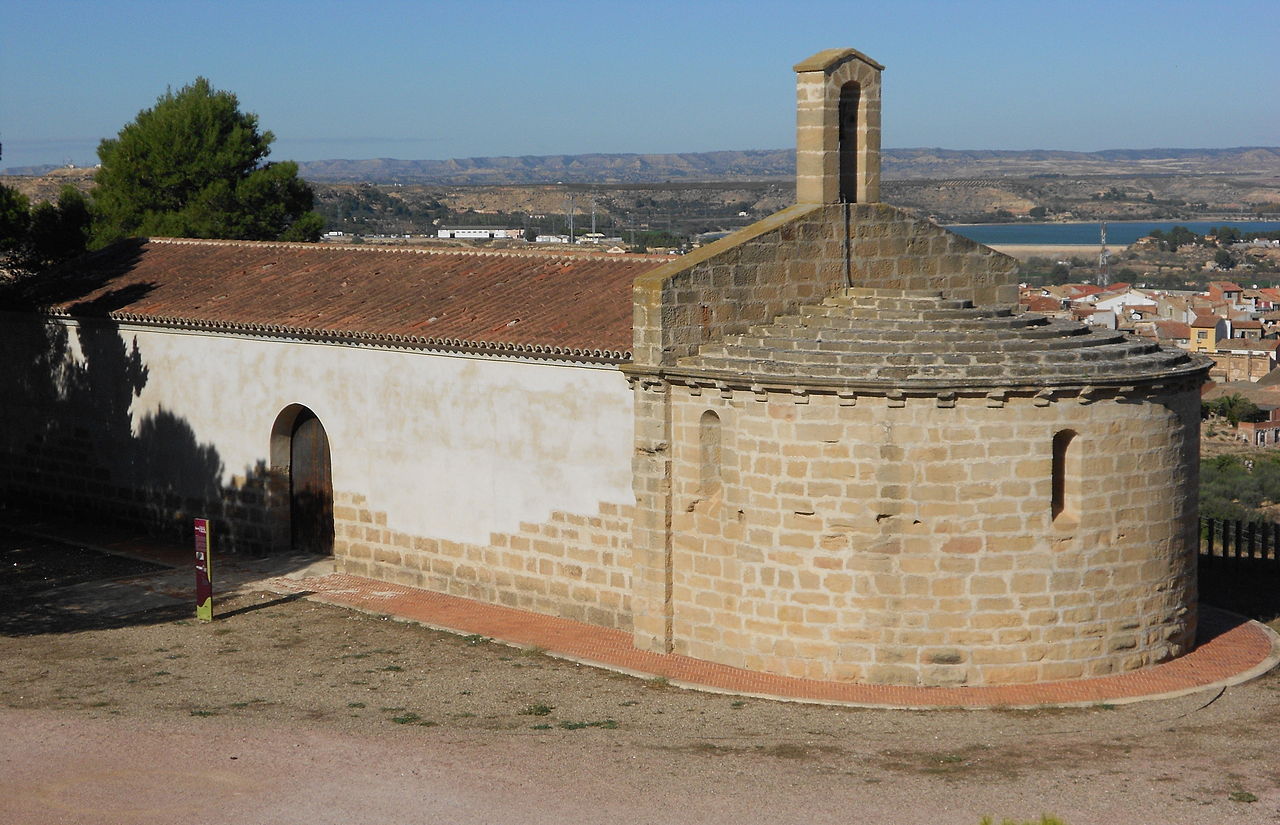
La ermita de Santa María de Horta —rescatada del embalse de Mequinenza y reconstruida en lo alto de un cerro que domina Caspe— es una construcción románica. El templo fue erigido por gentes del poblado de Miralpeix en estilo románico de carácter popular entre finales del siglo XII o principios del siglo XIII. Está construido en sillería y posee una planta alargada en forma de ojo de cerradura, dividida en cinco tramos. Conocida también como Santa María del Fondón, por su ubicación primitiva, posee un interesante ábside semicircular con modillones en nacela.
La Colegiata de Santa María la Mayor del Pilar es, con diferencia, el edificio más monumental de Caspe. Constituye uno de los ejemplos más notables del gótico purista en Aragón, todavía influido por el estilo cisterciense. El templo consta de tres naves, siendo la nave central la más ancha y alta, toda ella cubierta por bóveda de crucería. Fue consagrada por Adriano VI en 1522 y anteriormente, en 1412, se celebró en ella la misa de proclamación del fallo del Compromiso de Caspe. Situada en la zona más elevada del casco urbano, formaba parte de una acrópolis organizada por la Orden de San Juan que comprendía la iglesia, el castillo, a día de hoy ya restaurado con motivo de la conmemoración del VI centenario de la celebración del Compromiso de Caspe, y el convento. En 1936 se destruyeron los retablos y los dos soberbios sepulcros góticos de la Colegiata, incluido el del gran maestre Juan Fernández de Heredia. Actualmente en su interior se custodia la Vera Cruz de Caspe, una de las reliquias más importantes de la cristiandad; se trata de uno de los fragmentos más grandes de la cruz en la que murió Cristo (Lignum Crucis). En 1908 el atrio de la iglesia fue declarado Monumento Nacional y en 1931 el conjunto de la Colegiata fue declarado Monumento Nacional.
En las calles de Caspe se conservan varias ermitas, como la de Santa Quiteria (1648), la de Montserrat —destruida durante la Guerra de la Independencia pero reconstruida en el siglo XIX—, la de la Magdalena (1790) y la de Balma (1843). En el barrio de La Muela, el más antiguo de Caspe, se encuentra la ermita de San Indalecio, templo barroco del siglo XVIII, que consta de un espacio central de planta cuadrada cubierto con cúpula hemiésferica sobre lunetos iluminada con linterna.
Otro conjunto religioso está constituido por el edificio e iglesia de San Agustín, que formaban parte de lo que fue el convento de San Agustín de Caspe. Concluidas las obras en 1623, es un ejemplo de arquitectura ordenada y funcional que sigue el canon del modelo monástico del siglo XVII. El claustro es el elemento principal del conjunto.
Situado frente a la estación de ferrocarril se emplaza el convento de Santo Domingo, cuya iglesia está completamente en ruinas. Durante la guerra de la Independencia fue hospital militar, cementerio, prisión y fortaleza. De nuevo fue hospital de sangre en la Guerra Civil, quedando abandonado definitivamente en 1978.
Patrimonio civil:
Dentro de la arquitectura civil, destaca el castillo del Compromiso, cuyo origen se debe a los caballeros de la Orden del Hospital. Durante años el recinto se utilizó no sólo como castillo sino también como convento, junto con la vecina iglesia de Santa María. En el siglo XIX el castillo casi desapareció, ya que durante la Guerra de la Independencia las tropas francesas volaron el convento y en las guerras carlistas se vio envuelto en diversos combates, siendo incluso incendiado. Actualmente apenas queda algún elemento de la fortaleza —un muro con remate almenado con dovelas decoradas con escudos—, así como los sótanos de la misma.
Otro notable baluarte es la torre de Salamanca, que se alza sobre un monte a las afueras de la ciudad. Desde el mirador situado en lo alto se puede contemplar una espectacular panorámica de Caspe y del valle del Ebro. Fue construida por orden del general Salamanca en la última guerra carlista —la tercera—, en 1874, siendo el castillo más moderno de Aragón. Alberga el Museo de Heráldica, que recoge los símbolos heráldicos que fueron propios de la Corona de Aragón.
En el centro urbano, la plaza Mayor constituye un interesante conjunto. En un lado de la misma subsisten los primitivos soportales, en forma apuntada, llamados Arcos de Toril, mientras que en otro lado está emplazada la casa consistorial, con fachada clasicista del siglo XIX, así como la Casa Palacio Piazuelo Barberán, la más notable de la ciudad. Por otra parte, la calle Barrio Verde evoca la comunidad sefardí, ya que en el pasado constituía el eje principal de la judería.
En el término municipal de Caspe existen dos torres de vigilancia de las Guerras Carlistas: la Torre de Turlán, situada en el paraje de la Herradura a unos 6 km de la ciudad, y la Torre de Valdemoro, en el término de la Magdalena. Esta última, de planta cuadrada y construida en mampostería, fue erigida durante la tercera guerra carlista con el fin de vigilar el paso del Ebro. Otro enclave de gran belleza es el Puente de los Masatrigos, situado a 12 km del casco urbano. Aunque el puente actual es del siglo XVIII, este se apoya en una estructura anterior que data de los siglos XIII-XIV.
Patrimonio natural:
El embalse de Mequinenza o «Mar de Aragón» es un entorno de gran riqueza faunística y paisajística. Se extiende desde Mequinenza hasta las proximidades de Sástago, subiendo por el antiguo cauce del Ebro. Diversas instalaciones permiten la práctica de numerosos deportes acuáticos y terrestres, pero es la pesca la actividad estrella en este ecosistema. Caspe es la capital europea del black bass o lubina negra, y pescadores de Europa y América se desplazan anualmente a esta ciudad para participar en concursos nacionales e internacionales. Durante el primer fin de semana de cada mes de octubre se celebra el Campeonato Internacional de Pesca del Black Bass, el de más prestigio de todos los celebrados en Europa.
Otra especie acuática, el siluro, por su gran tamaño de difícil y fatigosa pesca, es muy apreciada por los no iniciados. Es interesante constatar que tanto el black bass como el siluro son especies de reciente introducción. No obstante, la carpa, el carpín y el alburno son los peces más abundantes y los más pescados, tanto de forma espontánea como en competición.
Se piensa que las aguas que almacena el embalse contienen más de 50 millones de peces.
What to visit
•Centro de Interpretación del Estatuto de Autonomía de Aragón
•Arcos del Toril
•Casa Palacio Piazuelo Barberán
•Casa del Obispo
Fiestas y eventos:
Fiesta de San Antón, el fin de semana más próximo al 17 de enero. Tienen lugar meriendas y cenas en torno a múltiples hogueras —llamadas «tederos»— por toda la ciudad.
Semana Santa, declarada fiesta de interés turístico de Aragón. Bombos, tambores y cornetas acompañan a los pasos de las procesiones. El Viernes Santo tiene lugar la procesión de la Vera Cruz.
Mas Música, 30 de abril y 1 de mayo. Celebración de la fiesta del trabajo en el paraje Mas de la Punta, con acampada nocturna y actuaciones musicales.
Conmemoración del Compromiso de Caspe, el último fin de semana de junio. Cabe destacar la gran participación de todo el pueblo en la decoración de las calles así como en la ambientación de la fiesta con trajes medievales. También ha sido declarada fiesta de interés turístico regional.
Fiestas patronales de San Roque, del 12 al 17 de agosto. El día 16, fiesta del patrono, se realiza una ofrenda de frutos así como una procesión a la ermita de San Roque. Bailes, vaquillas, concursos y actividades deportivas completan el programa festivo.
Feria regional «Expocaspe», del 29 de octubre al 1 de noviembre. Es una feria agrícola, ganadera, industrial y comercial del Bajo Aragón.
Deporte:
En fútbol, la ciudad se halla representada por el C.D. Caspe. Fundado en 1923, su mejor clasificación histórica fue la tercera plaza obtenida en la tercera división en la temporada 1989-90. Disputa sus partidos como local en el campo de Los Rosales, situado en la parte baja de la población.
Gastronomía:
Las fértiles huertas del municipio producen una serie de productos que distinguen la gastronomía de Caspe. Entre ellos destacan el aceite de oliva virgen, las aceitunas en todas sus variedades —aliñadas, asadas, chafadas o en paté—, los tomates secos fritos —especialidad local— y las cerezas.
Especial mención merecen las singulares turmas (Helianthus tuberosus), definidas como «tubérculos similares a la patata, pero más pequeños y algo más duros», así como el vino de nuez.
En cuanto a la repostería hay que citar las almojábanas, los hojaldres, las magdalenas, los mantecados de cuchara o de manteca y las reputadas tortas de balsa, hechas con almendra como se elaboraban en época medieval.
Gallery




Festivals
September 2026
Festivals this month
- No festivals recorded this month.
Rest of the year
- January: Cabalgata de Reyes (5) · San Sebastián (20)
- March: Semana Santa (25)
- June: Compromiso de Caspe (25) · XXIX Conmemoración del Compromiso de Caspe
- July: San Cristóbal (10)
- August: San Roque (16)
- October: ExpoCaspe (25)
What's on
Street market
Find the day and place of the local street market:
Gastronomy
There's no information in this section yet. The village's profile can complete it from the panel.
Trails and hiking
•Camí de Sant Jaume
•Camino natural del Ebro - Aragón (GR 99)
Services
Do you have a business in Caspe? Advertise it for free and go premium whenever you like. List my business for free
Famous people
•Álvaro Sanz, actor de película
•José María Albareda, científico y sacerdote católico español
•Indalecio, varón apostólico y santo español
•Abel Mustieles, ciclista español
•Luís Andrés Edo, sindicalista español
•Manuel Buenacasa Tomeo, sindicalista y anarquista español
Town hall
Alcaldía: Maria Pilar Herrero Poblador
Web oficial: http://www.caspe.es/
Town hall of Caspe
Alcaldía: Maria Pilar Herrero Poblador Web oficial: http://www.caspe.es/
Here goes your town hall's profile or your website address. Are you from the town hall? Go premium to complete your profile and edit your village's content. hola@ciudadesypueblos.es
How to get there
- 🚗 105 km from Zaragoza (about 74 min by car)
- 🚗 174 km from Castellón de la Plana/Castelló de la Plana (about 123 min by car)
🧭 Travelling around the villages of Spain: a practical guide — Opening hours, transport, money and customs, before you set off.
- ✈️ 91 km from Lleida-Alguaire airport (about 64 min by car)
- ✈️ 120 km from Zaragoza airport (about 85 min by car)
Practical info
🅿️ Where to park
- Where to park · 0.3 km away
- Where to park · 0.4 km away
- Where to park · 0.4 km away
🏧 Nearest cash machine
- Ibercaja · 0 km away
- Santander · 0 km away
- Caixabank · 0.1 km away
⛽ Nearest petrol station
- Moeve · 0.4 km away
- Ganar, S. Coop. · 1.3 km away
- BonÁrea - Caspe · 1.7 km away
ℹ️ Tourist office
- Oficina de Turismo de Caspe · 0 km away
- Tourist office · 0.4 km away
- Tourist office · 0.4 km away
🏖️ Where to swim
- Piscina de verano. · 0.8 km away
- Piscina Cubierta · 0.8 km away
- Piscina · 1.8 km away
Buses
5 paradas de autobús en el municipio:
•Caspe, Plaza de Aragón
•Caspe. Polígono Los Arcos
•Poblado de Pescadores
•Caspe. Estación del Ferrocarril
•Caspe. Bar Los Labradores
Pharmacy and health
•Centro de Salud "Amando Loriga"
•Farmacia Farmacia Revilla
•Farmacia Senante Cortés
•Caspe Medica
•Farmacia Farmacia Hernández
Wall and news
Log in with your profile to post. Posting on the walls is free.
This wall is still quiet.
Obituaries
There are no obituaries published right now in Caspe.
In loving memory
There are no memorials in Caspe yet.
Videos
Discover Caspe on video: