Almodóvar del Río
Córdoba · Andalucía
Almodóvar del Río is a municipality located in the province of Córdoba, Spain, located in the Valle Medio del Guadalquivir Comarca. In 2022, there were 8093 inhabitants. It belongs to the judicial district of Posadas.
Sections the premium town hall can edit · Fixed sections of the guide
Origins
There's no information in this section yet. The village's profile can complete it from the panel.
History
The oldest settlements in the municipality of Almodóvar del Río dates back to the Lower Paleolithic, with several sites having been documented (railway station, mouth of the Arroyo del Temple and de los Mochos), which have provided stone materials called boulders and bifaces. Likewise, in a cave on Cerro de Castillo, vestiges dating back to the Chalcolithic appeared.
The transition to the historical period is testified by the material remains ascribable to the Final Orientalizing Bronze, located in sites at the confluence of the Guadalquivir and the Guadiato River, and also in Cerro del Castillo. In this last place, evidence has also been found of the durability of the habitat in the Iberian period, as evidenced by the discovery of the typical Iberian painted ceramics of bands and circles. Of great relevance is a stone frieze with hunting scenes, which represents the hunting of a deer by several characters on horseback, followed by a cart pulled by donkeys; It dates back to between the 4th and 3rd centuries BC.
In Roman times, the main population center would be concentrated in the surroundings of Cerro del Castillo, extending through the northern area of the current town, where finds of amphorae and coins have been made; Inhumation tombs have also been documented in its surroundings. It is generally identified, with certain problems, with Carbula, a city mentioned in a passage (Naturalis Historia, III, 10) by the Roman geographer Pliny; Carbula was an oppidum -fortified town-, which, with the arrival of the Romans, would be integrated into the colonial territory of Colonia Patricia Corduba. This territory stands out for the abundance of archaeological sites that testify to extraordinary agricultural activity, centered on the cultivation of olive trees, as well as a great development of the olive oil trade, since enormous quantities of oil were exported from there, packaged in amphorae, manufactured in potteries. close to the Guadalquivir River (Cortijo de Rojas, El Temple, El Sotillo, Villaseca...). Important works of hydraulic engineering are the underground aqueducts of Cortijo Nuevo and Fuenreal. The habitat would last during the Visigothic period, as testified by the funerary epigraphs dated to the second half of the 6th century and the 7th century.
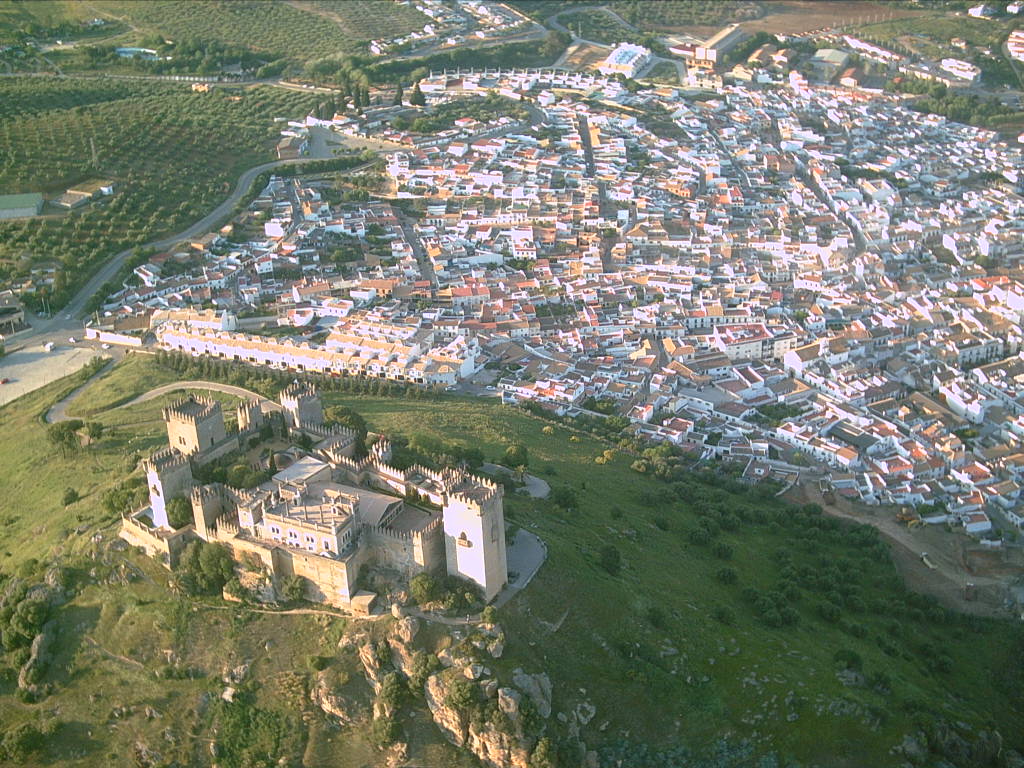
After the Muslim conquest, a fortress was established on the hill (740), and the town then received the name al-Mudawwar al-Adna, a toponym that means "the round one", in clear allusion to the shape of the hill itself. The chronicles mention the population in that year, when the caliph of Damascus appointed the lord of Almodóvar, Add al-Malik ben Qatan, to occupy the emirate of al-Andalus for the second time until he died in the civil war against the Syrians. During the 8th, 9th and 10th centuries, the fortress and its terminus were part of the Cordoba heart; In the 11th century it was attached first to the taifa of Carmona and then to that of Seville; With the Almoravids it was reintegrated into the jurisdiction of Cordoba and, finally, in the 12th century and part of the 13th century it became dependent on the Almohad court of Seville. This district had a large rural population and was covered with forests, little cereal production and abundant hunting.
In 1226, the Muslim king of Baeza was decapitated in Almodóvar del Río, who was accused of treason by the Almohads for his alliance with Fernando III the Saint, king of Castile and León.
It remained for 5 centuries under the influence of the Umayyad caliphate, until in 1240 it was incorporated, through a treaty, to the Crown of Castille during the reign of Ferdinand III of Castille and León, who conquered the city of Córdoba in 1236. In the year 1243 the city was integrated with the Council of Córdoba, staying under its jurisdiction in the following centuries.
In 1394, Frederick of Castile, illegitimate son of Henry II of Castile, died in the castle of Almodóvar del Río while being held prisoner.
The ownership of the castle is linked during the 15th century to the House of Baena y Cabra. Likewise, its notable location and the impregnability of its walls led to it being used as the residence of the monarchs Peter I and Henry II, and as a prison, as attested to by an order of the Royal Council (1491). Around 1473 the name Almodóvar del Río appears for the first time, a toponym intended to refer to its location on the banks of the Guadalquivir.
The town remained linked to the Crown, until Philip IV agreed to the sale of the jurisdiction and lordship for fifteen million maravedís and the mayor's office and the castle for one million and a half, in favor of Francisco Corral y Guzmán. Its population decreased during this period: from 1,600 residents in 1530 to 800 at the end of the Modern Age; The majority were dedicated to field work as day laborers. The cultivation of cereal stood out, then the olive grove, and the vine had less importance. Livestock farming provided part of their livelihood, especially goat farming, followed by sheep and sow farming.
The liberal revolution, which occurred in Spain and Portugal at the beginning of the 19th century, had far-reaching socioeconomic repercussions in the town, since the disappearance of the manorial regime and the ecclesiastical and municipal confiscations had an impact on the consolidation of the latifundia within the area, which generated a high social conflict, which manifested itself during the Second Republic and the Spanish Civil War.
Monuments
•Puerto Romano
•Casa Señorial del Ateneo
What to visit
•Mirador de Pairejas
•Mirador del Rivazo
•Mirador Natural del Castillo
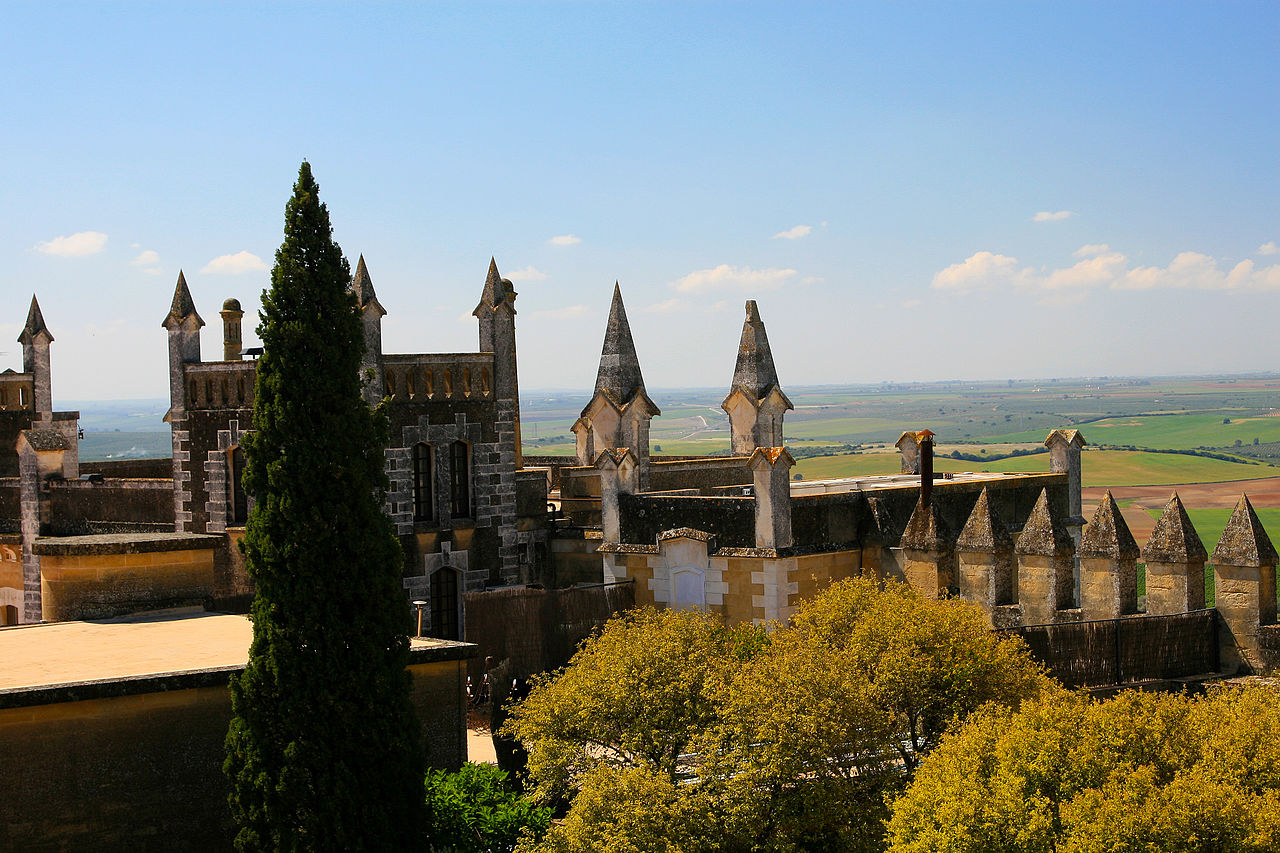
•Castillo de Almodóvar del Río
•Centro de Visitantes "Vega del Guadalquivir"
Patrimonio:
Puerto fluvial romano
Castillo de Almodóvar del Río
Parroquia de la Inmaculada Concepción
Ermita de Nuestra Señora del Rosario y San Sebastián
Casa señorial de los Natera (siglo XVIII)
Antiguo Ayuntamiento
Colección Arqueológica (Antiguo Mercado)
Hospital de la Caridad
Casco antiguo de Almodóvar del Río
Embalse de La Breña,la mayor presa de Europa de HRC
Museos (varios)
Fiestas y eventos:
Semana Santa, procesiones
Romería de la Virgen de Fátima (domingo más cercano al 13 de mayo)
Feria de la Virgen del Rosario (primera semana de octubre)
Zoco de la Encantá
Gastronomía:
Mazamorra, gazpacho de jeringuilla. La Croqueta de Almódovar, receta centenaria de su ilustre cocinero Ricardo Arrivas.
Productos típicos:
Taxidermia
Artículos de cuero: botas, monturas, útiles de montería...
Gallery






Festivals
September 2026
Festivals this month
- No festivals recorded this month.
Rest of the year
- February: Carnaval (15)
- May: Las Cruces (3) · Romería Virgen de Fátima (14)
- August: Virgen del Rosario (19)
- October: Feria y Fiestas (5)
What's on
Street market
Find the day and place of the local street market:
Gastronomy
There's no information in this section yet. The village's profile can complete it from the panel.
Trails and hiking
•Camino de Marmolejo al Santuario de la Virgen de la Cabeza (GR 48)
Services
Do you have a business in Almodóvar del Río? Advertise it for free and go premium whenever you like. List my business for free
Famous people
Manuel Alba Blanes, presidente fundador del Ateneo Popular de Almodóvar del Río en 1925 y último alcalde republicano
Paco Morán, actor.
Rafael Campanero Guzmán, expresidente del Córdoba C.F.
Pepe Díaz, exfutbolista.
Antonio Manuel Rodríguez Ramos, escritor, poeta, músico, novelista, guionista de cine y documental, Profesor de Derecho en la Universidad de Córdoba, Presidente del Ateneo de Almodóvar del Río y de la Federación de Ateneos de Andalucía, Patrono de la Fundación Blas Infante.
Town hall
Gobierno municipal:
Town hall of Almodóvar del Río
Gobierno municipal:
Here goes your town hall's profile or your website address. Are you from the town hall? Go premium to complete your profile and edit your village's content. hola@ciudadesypueblos.es
How to get there
- 🚗 29 km from Córdoba (about 20 min by car)
- 🚗 122 km from Sevilla (about 86 min by car)
- 🚗 166 km from Málaga (about 117 min by car)
🧭 Travelling around the villages of Spain: a practical guide — Opening hours, transport, money and customs, before you set off.
- ✈️ 19 km from Córdoba airport (about 13 min by car)
- ✈️ 111 km from Sevilla airport (about 78 min by car)
Practical info
🅿️ Where to park
- Where to park · 0.3 km away
- Where to park · 0.5 km away
- Where to park · 0.5 km away
🏧 Nearest cash machine
- BBVA · 0.1 km away
- Banco Santander · 0.1 km away
- Unicaja Banco · 0.2 km away
⛽ Nearest petrol station
- Geds · 1.5 km away
- Repsol · 1.7 km away
- Repsol · 5.7 km away
ℹ️ Tourist office
- Oficina de Turismo · 0.1 km away
🔭 Viewpoints
- Mirador del Rivazo · 0.2 km away
- Mirador de Pairejas · 0.4 km away
- Viewpoints · 0.5 km away
Buses
2 paradas de autobús en el municipio.
Pharmacy and health
•Farmacia Farmacia Lucena García
•Farmacia La Farmacia de Abajo
•Consultorio médico
Wall and news
Log in with your profile to post. Posting on the walls is free.
This wall is still quiet.
Obituaries
There are no obituaries published right now in Almodóvar del Río.
In loving memory
There are no memorials in Almodóvar del Río yet.
Videos
Discover Almodóvar del Río on video: