
Puente del Congosto
Salamanca · Castilla y León
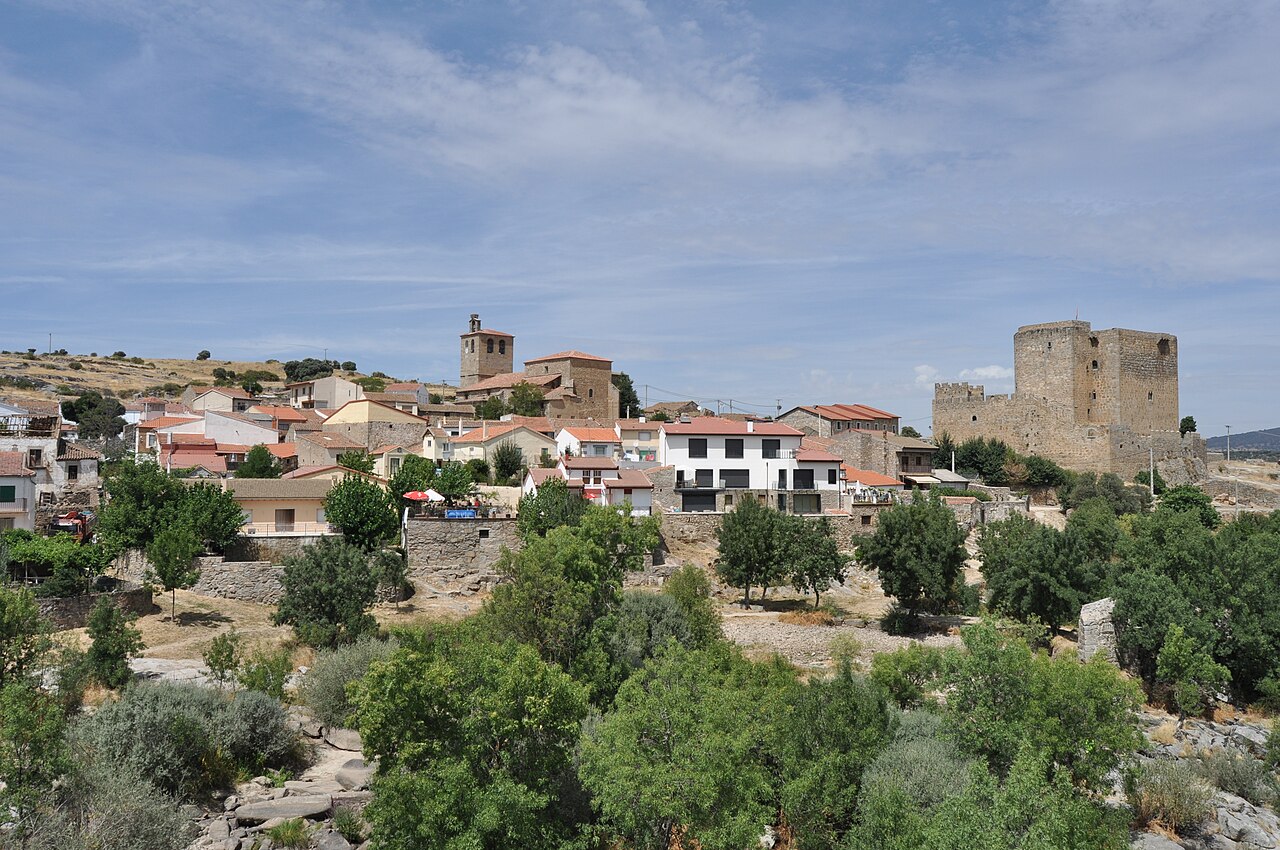
Puente del Congosto is a municipality located in the province of Salamanca, Castile and León, Spain. It is part of the Comarca de Guijuelo and the subcomarca of Alto Tormes, and falls under the jurisdiction of the judicial district of Béjar. In 2019, the Governing Council of the Junta of Castile and León declared the Castillo de los Dávila and the medieval fortified bridge over the River Tormes a Site of Cultural Interest, under the designation of Historic Ensemble (Conjunto Histórico). This recognition was due to their strategic role as a key crossing point for livestock along the Cañada Real Soriana Occidental during the transhumance route to Extremadura. In 2024 the municipality had a population of 225 inhabitants.
Sections the premium town hall can edit · Fixed sections of the guide
Origins
El nombre de Puente del Congosto viene de «Puente del Arco Angosto», haciendo referencia al puente sobre el río Tormes de la ruta Ávila-Ciudad Rodrigo, el cual tenía un arco estrecho del que solo se conserva una pared lateral.[cita requerida]
History
Prehistory and Ancient Age:
Since prehistoric times, this land has been inhabited, particularly nearby Mount Berrueco, an imposing granite promontory that sheltered countless primitive populations, from the Upper Paleolithic to the Romanization. For this reason, it is considered one of the most important archaeological sites in the provinces of Salamanca and Ávila.
Mount Berrueco has stood as a silent witness to the presence of diverse human cultures for more than twelve millennia. Its enduring significance has led to its protection under Spanish heritage laws, and in 1931 it was officially designated a Historic-Artistic Monument.
Its most important settlements in chronological order are:
La Dehesa · Upper Paleolithic (Magdalenian), more than 12,000 years ago
La Mariselva · Neolithic and Chalcolithic, from 5,000 to 2,000 BCE
El Berroquillo · Early Bronze Age, from 1,700 to 1,400 BCE
Cancho Enamorado · Late Bronze Age, between 1,400 and 1,000 BCE
Las Paredejas · Iron Age (Early), between 750 and 400 BCE
Los Tejares · Second Iron Age / Romanization, 4th century BCE
Santa Lucía / El Hontanar · Visigothic – Medieval period
The excavations carried out at the different settlements on the hill have revealed valuable information about how the climate and vegetation evolved over time. They also offer clues about how communities were structured and organized, how they worked, and which areas they chose to inhabit. Furthermore, it has proven the intense commerce this relatively remote area has due to the discover of objects from the east of the Mediterranean.
Vettonians
One of the most important settlements in the surroundings of Mount Berrueco is Las Paredejas, located within the municipality of Medinilla, in the province of Ávila. It sits on a slightly elevated platform at the northern base of Mount Berrueco. This settlement was inhabited by the Vettones, a Celtic people who occupied the central region of the Iberian Peninsula.
A remnant of the Vettonian people that can be found in Puente del Congosto is a verraco dating from that period. It is located in the Plaza de los Dados, opposite the Town Hall. The verracos are zoomorphic stone sculptures that commonly depict pigs, wild boars, and bulls. There are over 420 of this sculptures among Spain and Portugal. Their exact meaning remains uncertain, although the main theories suggest they may have served as territorial markers or as mystical or religious symbols of protection.[6]
Romanization
The victory of Rome in the Second Punic War started the Romanization, the process by which Roman or Latin culture was introduced into the Iberian Peninsula during the period of Roman rule.
From the initial Roman conquest of Hispania, the region would remain a Roman province for the next 600 years, although some territories of the Iberian Peninsula took nearly two more centuries to come fully under Roman control. The municipality of Puente del Congosto also preserves vestiges that bear witness to this historical period.
Medieval Age
After the Fall of the Roman Empire, various Germanic peoples—namely the Vandals, Suebi, and Alans—crossed the Pyrenees and settled in different regions of Hispania. In the territory surrounding what would later become the village of Puente del Congosto, as in the rest of Vettonia, the Alans established their control devastating the lands of Vettonia and Lusitania.
The Alan regime was short-lived, lasting only from 411 to 418, when they were annihilated by King Wallia, who had entered into a treaty with Emperor Honorius to expel the barbarian peoples that had invaded Hispania. The Visigothic took control of the Iberian Peninsula after the Fall of the Roman Empire, Traces of this Germanic culture can still be found in the neighboring towns to this locality, in instance in the "Moor Tomb" (despite the popular name, it is actually a visigothic tomb) located in Bercimuelle.
In the year 711, the Muslim invasion of the Iberian Peninsula took place, consequently, this land was invaded by Muslims and semi-depopulated from the VIII century until its recovery during the Reconquista, in this case after the conquest of Ávila by the Christian forces. The territory now occupied by the municipality of Puente del Congosto was located within the area known as the “tierra de nadie” (“no man's land”) or "Desierto del Duero" ("Desert of the Douro"), a vast geographical region situated between the Central System and the Cantabrian Mountains that remained largely semi-depopulated during this period.
The repopulation of Salamanca was undertaken by the French nobleman Raymond of Burgundy (Raimundo de Borgoña) husband of the queen Urraca I of León and Castile, who played a key role in the Christian reorganization of the territories south of the Douro River during the early stages of the Reconquista. Raymond led the resettlement of the region with people from northern Castile and Galicia, contributing to the demographic and political consolidation of the area. This process was part of a broader strategy to secure and stabilize the frontier zones that had remained depopulated following the Muslim invasion of the VIII century and the subsequent centuries of conflict.
The emergence of the town of Puente del Congosto dates back to the 11th century. From the very beginning, these lands were incorporated into the alfoz of Ávila.
The Mesta was officially established in 1273 by King Alfonso X, known as 'the Wise', who brought together the shepherds of León and Castile into a guild-like organization to regulate transhumance and safeguard their interests. The Mesta played a pivotal role in the economic development of Castile, particularly through the wool trade, which became one of the most valuable commodities of the period. Merino wool, bred in Castile at that period, was renowned for its exceptional softness and fineness, with longer and more durable fibers than other European wools—making it ideal for producing high-quality cloth which was sold to the major textile centers of Flanders, Italy, and England.
In 1442, Gil González Dávila, a knight from Ávila, was granted royal favor by King Henry III in recognition of his longstanding loyalty and distinguished service to the Crown. As a consequence, Puente del Congosto was detached from the jurisdiction of Ávila and elevated to the rank of villa, acquiring its own municipal status (this legally recognized settlement also granted special privileges by the Crown. These privileges often included, apart from self-governance, exemption from certain taxes, and the right to hold markets or fairs), and subsequently granted to him as a lordship, together with the nearby village of Cespedosa de Tormes.
Gil González was responsible for initiating the construction of the fortress that still stands today, a work that was later brought to completion by his widow, Doña Aldonza de Guzmán.
Following his death in 1479 a bitter rivalry over inheritance of his domains arose between his sons, Juan Dávila and Luis de Guzmán. Their conflict centered particularly on the lordship of Congosto, a territory of considerable value due to the generous income el portazgo (the toll demanded by the lord to cross the bridge) provided.
The Catholic Monarchs were compelled to intervene and ultimately decreed that Juan Dávila would retain control over Cespedosa, while the town and fortress of El Congosto were granted to Luis de Guzmán, commander of the Military Order of Calatrava. Guzmán died in 1495 without heirs, and as a result, all his possessions devolved to the order, whose lifetime administration had been secured by the Catholic Monarchs only a few years earlier.
It is believed that Queen Isabella I spent the night in the castle, and that Emperor Charles V also stayed there on his way to Yuste.
Death of Prince Juan of Asturias:
The Castle of the Dávila family stands as a silent witness to one of the most poignant episodes in the dynastic history of Spain. On October 4,
Monuments
Iglesia Nuestra Señora de la Asunción:
La iglesia parroquial de Puente del Congosto, consagrada a Nuestra Señora de la Asunción, es un magnífico edificio gótico construido en el siglo XVI, seguramente sobre algún primitivo templo, y reconstruido en el XVI, formado por tres naves e igual número de capillas en la cabecera. Cabe resaltar de su interior las bóvedas de crucería del altar mayor y la capilla de un lateral, ambas del siglo XVI, así como el retablo central, del siglo XVII, que preside la capilla mayor, revestido con láminas de papel de oro pegadas, llamadas "panes de oro". Algo posteriores, del siglo XVIII, son los retablos de otros cuatro altares laterales, de estilo barroco, así como el órgano, de gran tamaño, situado en el coro. Además de los referidos, existen otros dos altares más modernos. La iglesia conserva igualmente un valioso cancel de madera tallada de nogal, así como interesantes objetos de orfebrería, escultura y ropas eclesiásticas. En la sacristía, cuyo techo es muy llamativo, hay otro vistoso mueble, también de madera de nogal. En cuanto al exterior del templo, no desmerece en absoluto de su interior. Destaca su artística portada, toda ella de granito de la zona, con tres llamativos arcos de piedra de cantería.
Castillo de los Dávila:
El origen se sitúa entre el siglo XII o XIII, para proteger el puente en la ruta Ávila - Ciudad Rodrigo. En 1393 Enrique III concede a Gil González Dávila el señorío del Puente del Congosto, el cual, lo reconstruye y perdura en la actualidad.
En 1485 nace Pedro de la Gasca, tataranieto de Gil González Dávila, a quien el emperador Carlos V encomendó sofocar la rebelión de Pizarro en Perú.
En 1497, a la reina Isabel la Católica hallándose en este castillo, le comunicaron el fallecimiento de su hijo, el Príncipe de Asturias.
El emperador Carlos V se alojó también en el castillo camino de su retiro en Yuste.
El castillo y la villa pasaron a manos de los duques de Alba. En 1809 las tropas francesas lo ocuparon durante dos años.
Su planta, demarcada por la muralla perimetral, es de un hexágono irregular. Puede recorrerse, en su parte alta, en su práctica totalidad, por un camino de ronda. La entrada actual al recinto da acceso directo a un espacioso patio de armas al aire libre, parcialmente solado con lanchas de granito.
What to visit
There's no information in this section yet. The village's profile can complete it from the panel.
Gallery





Festivals
September 2026
Festivals this month
- No festivals recorded this month.
Rest of the year
- August: Fiesta patronal: Nuestra Senora De La Asuncion (15)
What's on
Street market
Find the day and place of the local street market:
Gastronomy
There's no information in this section yet. The village's profile can complete it from the panel.
Trails and hiking
•Ruta de Carlos V
Services
Holiday cottage
Casa Rural del Tormes
📍 Calle Carretera
Is it yours? Go premium: full profile, more visibility and up to 6 photos. View membership
Restaurant
el Nido
📍 Calle Playa
Is it yours? Go premium: full profile, more visibility and up to 6 photos. View membership
Tapas bar
Víctor
📍 Calle Mayor
Is it yours? Go premium: full profile, more visibility and up to 6 photos. View membership
Restaurant
Chiringuito La Bardera
📍 Calle Playa
Is it yours? Go premium: full profile, more visibility and up to 6 photos. View membership
Tapas bar
Café-Bar los Dados
📍 Calle Mayor
Is it yours? Go premium: full profile, more visibility and up to 6 photos. View membership
Tapas bar
Bar El Panoramix
📍 Barrio Carretero 5
Is it yours? Go premium: full profile, more visibility and up to 6 photos. View membership
Tapas bar
Bar Pelayo
📍 Barrio Carretero
Is it yours? Go premium: full profile, more visibility and up to 6 photos. View membership
Campsite
Área de autocaravana Piscina Natural Río Tormes
Is it yours? Go premium: full profile, more visibility and up to 6 photos. View membership
Do you have a business in Puente del Congosto? Advertise it for free and go premium whenever you like. List my business for free
Famous people
•David Antona, sindicalista español
Town hall
Alcaldía: José Victorino Delgado Hernández
Town hall of Puente del Congosto
Alcaldía: José Victorino Delgado Hernández
Here goes your town hall's profile or your website address. Are you from the town hall? Go premium to complete your profile and edit your village's content. hola@ciudadesypueblos.es
How to get there
- 🚗 68 km from Salamanca (about 48 min by car)
- 🚗 177 km from Móstoles (about 125 min by car)
- 🚗 181 km from Alcorcón (about 128 min by car)
🧭 Travelling around the villages of Spain: a practical guide — Opening hours, transport, money and customs, before you set off.
- ✈️ 64 km from Salamanca airport (about 45 min by car)
- ✈️ 183 km from Valladolid airport (about 129 min by car)
Practical info
🅿️ Where to park
- Where to park · 0.4 km away
🏧 Nearest cash machine
- Banco Santander · 7.1 km away
⛽ Nearest petrol station
- Avia · 8.5 km away
ℹ️ Tourist office
- Oficina de Turismo · 0.1 km away
Buses
Check the route, times and public transport connections to Puente del Congosto:
Pharmacy and health
Find the nearest pharmacy and health centre, with the address and how to get there:
Wall and news
Log in with your profile to post. Posting on the walls is free.
This wall is still quiet.
Obituaries
There are no obituaries published right now in Puente del Congosto.
In loving memory
There are no memorials in Puente del Congosto yet.
Videos
Discover Puente del Congosto on video: