Montblanc
Tarragona · Cataluña
Montblanc (Catalan pronunciation: [mumˈblaŋ]) is the capital of the Catalan comarca Conca de Barberà, in the Spanish province of Tarragona. The Prades Mountains are located in the vicinity of this town. The municipality comprises the settlements of Montblanc, La Guàrdia dels Prats, Lilla, Prenafeta, Rojals, and El Pinetell. In total it has a population of 7,542 (register office, 2025) .
Sections the premium town hall can edit · Fixed sections of the guide
Origins
La villa debe su nombre al montículo situado en el casco antiguo, conocido como Pla de Santa Bárbara. En este monte (mont, en catalán) no había huertas ni campos agrícolas porque se consideraba muy poco fértil (blanch, en catalán medieval). La unión de los dos motes dio el nombre de Montblanch. El nombre actual del municipio (Montblanc) se escribe con la normativa catalana vigente, que suprimió las h finales sordas, al igual que en Vich.
En el undécimo volumen del Diccionario geográfico-estadístico-histórico de España y sus posesiones de Ultramar (1848) de Pascual Madoz la localidad aparece referida con la grafía «Montlblanch». El Tesauro de Topónimos del Consejo Superior de Investigaciones Científicas redirige el topónimo Montblanch a Montblanc, recomendando usar el segundo.
History
The area around Montblanc has been inhabited for thousands of years. Evidence of cave dwellings have been found dating back to Palaeolithic times.
From the 4th to the 1st century BC Iberian villages existed on Santa Bàrbara hill. These villages coexisted with the early Roman settlers. Evidence of Roman artifacts have been found which date from between the 2nd century BC to the 2nd century AD.
After the invasion by the Moors in 711 AD, much of the area became dominated by a patchwork of Islamic fiefdoms. The Islamic invasion initiated a long period of very successful agricultural and commercial development. This was responsible for the birth of many towns and villages in the region which still retain their Islamic names.
The 10th and 11th centuries seem to have been a period of relatively peaceful coexistence in which Muslims, Christians and Jews lived in the region of Montblanc. This productive period continued until an allegiance of forces, strongly supported by the Roman Catholic Church, initiated an era of expulsions, which forced Muslims and Jews to leave the Iberian peninsula.
Modern history:
Since the early 15th century, the parish priest of Montblanch has held the title of Plebán. Today there are only two others: in Oliva and Ontinyent, both in Valencia. At the end of the century, Montblanch fell into disgrace. Poor harvests, epidemics, and the Catalan Civil War put an end to the spectacular growth of the Ducal Town. The walls and many houses and bridges were severely damaged.
During the 16th and 17th centuries, there was an improvement, but the Reapers' War was a severe blow to the town; part of the walls were destroyed, the archives were burned, and during their retreat, General Palavicino's Castilian troops bombarded the Gothic church of Santa María. There were assaults, looting, and fires, all of which definitively ruined the town, which lost its economic and political influence. With the War of Succession, the town lost its privileges and its veguería (administrative district). The War of Independence and the fighting between liberals and Carlists dealt the final blow.
Monuments
Religiosos
Conventos: San Francisco, de los más antiguos de Cataluña y donde se dice que pasó una noche San Francisco de Asís), y La Merced
Antiguos hospitales: San Marcial y San Bartolomé, y Santa Magdalena.
Iglesias: Santa María la Mayor (conocida como la catedral de la Montaña y que está inacabada a causa de la Peste Negra); Iglesia de San Miguel
Santuarios: de la Sierra y de la Virgen de los Prats, popularmente ermita dels Prats (perteneciente a La Guardia dels Prats)
Ermitas: San José, San Juan de la Montaña y Santa Ana (perteneciente a Prenafeta)
Civiles
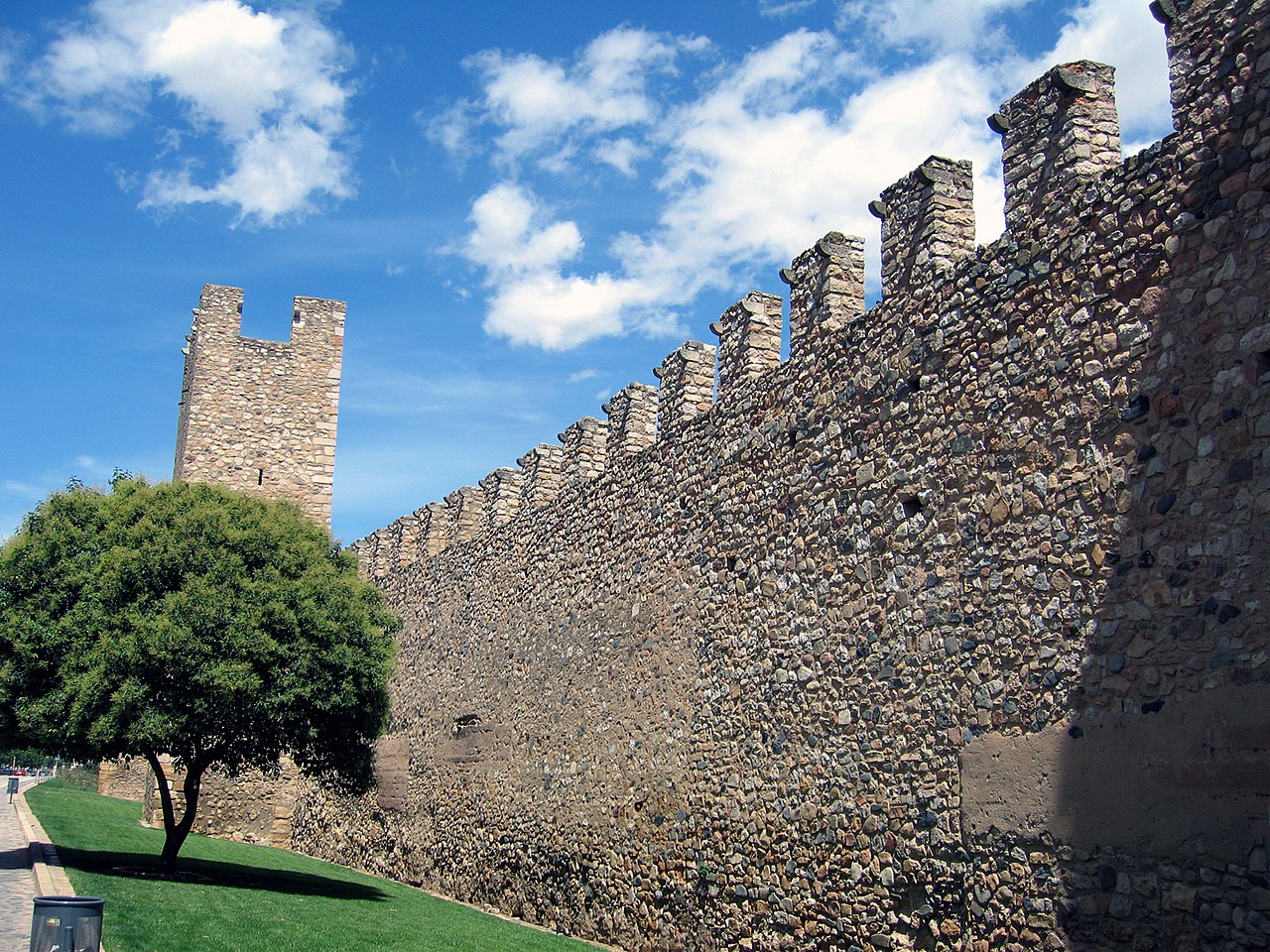
Recinto amurallado: puertas: de S. Francisco -destruido-, de San Jorge, de San Antonio -reconstruido-, de Bové, del Castellano; puertas de paso: de S. Marcial, El Foradot; torres: de los Cinco Lados, de Bové, etc.)
Casas señoriales: Palacio Real (residencia ocasional de los reyes de la Corona de Aragón), Palacios de los Josa, de los Castellví, de los Alenyà y del Castellano. Casa de los Desclergue, Casa de la Villa.
Judería: Tenía dos sinagogas. Se cree que en una de ellas es donde actualmente está el Consejo comarcal)
Plaza Mayor y calle Mayor.
Puente Viejo, románico.
Torrente cubierto del Riuot.
Casco antiguo: declarado conjunto histórico-artístico en 1948.
Museos
Museo del Pesebre de Cataluña.
Museo-Archivo de Montblanch y Comarca.
Museo de Arte Frederic Marés.
Museo de Arte Palau Ferré.
Museo Molinos de la Villa.
Museo de Ciencias Naturales.
Sala de exposiciones San Miguel.
What to visit
Se pueden encontrar gigantes (construidos en 1864) y cabezudos, baile de bastones, mula, dragón, águila, grallas de Montblanc, timbalas, torraires de Montblanc (castellers), demonios, banda de música Virgen de la Serra, cabezudos infantiles, dragón infantil y águila infantil.
Leyendas:
Leyenda de San Jorge. La tradición catalana supone que la leyenda de San Jorge ocurrió en Montblanch. Existe el Portal de Sant Jordi y cuenta la tradición que delante del portal el santo mató el dragón.
Virgen de la Sierra. La princesa bizantina Eudoxia Láscaris llevaba una imagen de la virgen hacia Zaragoza, de repente, el carro no avanzó y se supuso que la virgen quería quedarse en Montblanch. Era el año 1296.
Fiestas:
Enero: Reyes Magos (día 6) y fiesta de San Antonio (Matanza del Puerco y Tradicionales Tres Vueltas).
Febrero: feria del Saldo y Carnaval.
Abril: fiesta de los Conductores de Carros, Procesiones de Semana Santa y Semana Medieval de la Leyenda de San Jorge.
Mayo: fiestas y ferias de San Matías.
Junio: Procesión de Corpus, Fiesta de San Juan y Baile de Sardanas.
Julio y agosto: Todos los fines de semana hay alguna fiesta mayor de los barrios o de las pedanías y Acampada Jove
Septiembre: fiesta mayor en honor a la Virgen de la Sierra.
Octubre: Festival Internacional de Cerámica de Montblanch conocido también como Terrània.
Diciembre: fiestas de Navidades.
Gallery




Festivals
September 2026
Festivals this month
- No festivals recorded this month.
Rest of the year
- June: Fiesta patronal: San Antonio (13)
What's on
Street market
Find the day and place of the local street market:
Gastronomy
There's no information in this section yet. The village's profile can complete it from the panel.
Trails and hiking
•Ruta del Cister (GR 175, 103.54 km)
•Del Santuari de Pinós als Ports (GR 171, 276 km)
•Vilaverd-Rojals (PR-C 17, 8.210 km)
•Camí de Sant Jaume de Tarragona a Lleida - Etapa 4
•Camí Ral de Vilafranca a Montblanc (CR-VM)
•GR 7 Catalunya - Etapa 14 (GR 7, 18 km)
•El Camí IT6TR5 El Camí Central: de Castelló de la Plana a Montserrat (CC-C)
Services
Do you have a business in Montblanc? Advertise it for free and go premium whenever you like. List my business for free
Famous people
•Montserrat Martin, arquera española
•Magín Catalá y Guasch, misionero español
•Matías Palau Ferré, artista español
•Antonio Palau y Dulcet, bibliógrafo, escritor y librero español
•Joan Vizcarra, historietista español
•Josep Andreu, político español
Town hall
Alcaldía: Oriol Pallissó Balanyà
Web oficial: http://www.montblanc.cat
Town hall of Montblanc
Alcaldía: Oriol Pallissó Balanyà Web oficial: http://www.montblanc.cat
Here goes your town hall's profile or your website address. Are you from the town hall? Go premium to complete your profile and edit your village's content. hola@ciudadesypueblos.es
How to get there
- 🚗 37 km from Tarragona (about 26 min by car)
- 🚗 92 km from Terrassa (about 65 min by car)
- 🚗 98 km from Hospitalet de Llobregat, L' (about 69 min by car)
🧭 Travelling around the villages of Spain: a practical guide — Opening hours, transport, money and customs, before you set off.
- ✈️ 32 km from Reus airport (about 23 min by car)
- ✈️ 82 km from Lleida-Alguaire airport (about 58 min by car)
Practical info
🅿️ Where to park
- Where to park · 0.1 km away
- Zona blanca. Estació · 0.1 km away
- Santa Tecla 2 · 0.1 km away
🏧 Nearest cash machine
- Nearest cash machine · 0 km away
- CaixaBank · 0.1 km away
- BBVA · 0.2 km away
⛽ Nearest petrol station
- Repsol · 0.2 km away
- Estació de Servei BonÀrea Montblanc · 1.3 km away
- Energetics Conca · 2.1 km away
ℹ️ Tourist office
- Tourist office · 0 km away
- Església de Sant Francesc · 0.2 km away
- Tourist office · 0.2 km away
🔭 Viewpoints
- Cantarroella · 0.6 km away
- Viewpoints · 1.9 km away
- Viewpoints · 2.5 km away
Buses
Check the route, times and public transport connections to Montblanc:
Pharmacy and health
Find the nearest pharmacy and health centre, with the address and how to get there:
Wall and news
Log in with your profile to post. Posting on the walls is free.
This wall is still quiet.
Obituaries
There are no obituaries published right now in Montblanc.
In loving memory
There are no memorials in Montblanc yet.
Videos
Discover Montblanc on video: