Montaverner
Valencia · Comunidad Valenciana
Montaverner is a municipality in the Comunitat Valenciana, Spain. It belongs to the province of Valencia, in the region of Vall d’Albaida.
Sections the premium town hall can edit · Fixed sections of the guide
Origins
El topónimo deriva, según Joan Coromines, del árabe منطب النهر (mantab an-nahr, "el ? del riachuelo"). Su parecido con monte y taberna se debe a etimología popular. A finales de 1995 se aprobó el cambio del nombre oficial del municipio, de Montaberner a Montaverner, considerándose la segunda la «forma tradicional en valenciano».
History
Although there are archaeological remains in the municipality (a Roman column in the Pla de Colata, remains from the Bronze Age in the Plaça Major and Tossal del Calvari) and in its demarcation there were the farmsteads of Colata and Collatella, the origin is found in the visit made by King Jaume I in 1270. It was he who decided to found a town at the confluence of the Albaida and Clariano rivers in order to secure the road that linked Valencia with Alicante. Thus, on August 26, 1271, the Carta Puebla was granted, establishing the first settlers from Barcelona, who had to leave the land due to the Al-Azraq revolt in 1276. After belonging to the Lord of Albaida for the years 1281-1296 It became "the king's town", dependent on the term of Xàtiva and exempt from feudal rule.
The expulsion of the Moors in 1609 produced a strong demographic crisis, going from housing 60 houses to 30, since its inhabitants, all of them old Christians, had to go to the surrounding towns in order to repopulate them. It's in this century when the town suffered the plague of the garrotillo (1677–1678) and experienced the Miracle de Sant Blai (Second day of Easter 1678, April 11). During the 18th century the current Church was built, where at that time the following streets were located: Major, Montons, de los Penadesos, de dalt, quatre cantons, Alacant, and Plaça; while in 1789 the existence of Mayor, Montons, Panaderos, Sant Vicent, Alacant and Molí streets was recorded.
The N-340 highway built between 1860 and 1862, the bridges (“Llarg” and “Curt”), completed in 1890 and the passage of the railway (1893) led to a demographic increase, exceeding 1000 inhabitants at the beginning of the 20th century . During this century there was the phylloxera crisis (1910), the creation of the El Trobador factory (1920s) and the industrial and urban development during the second half of the century. The beginning of the 21st century has brought with it the improvement of communications in the region (Central Highway, CV-60 Ollería-Gandía, viaduct over Albaida river), the construction of the industrial estate, sports center, Lluis Peiró Auditorium,...
From past times there are witnesses in the form of various utensils on a hill natively called "Tossal del Calvari". More recent are the remains of a rustic Roman villa found in the area of Colata.
The origin of the population is a Muslim farmhouse incorporated by King Jaume I at the end of Xàtiva. On August 26, 1271, it was granted a population letter, with tax exemption for 10 years. On December 4 of that year, the donation of inheritances and plots was confirmed, which led to a conflict of those who weren't favored with Peter the Great. Being subject to the Bailiwick and Government of Xàtiva, it never had a territorial lord because it belonged to the Crown. In 1535 obtaines the ecclesiastical independence of Albaida. The expulsion of the Moors decimated the population by two thirds and made Colado, Vistabella and Behalí disappear as towns, of which ruins are preserved in the municipal area.
Monuments
Ayuntamiento: situado en el antiguo Convento/Escuela de las Terciarias Capuchinas, situado en la avenida San Pancracio, 21. El edificio fue recuperado para todo el pueblo e inaugurado como sede del nuevo Ayuntamiento el 6 de noviembre de 2021.
Centro Joven "Javier Monllor": situado en la plaza Mayor, a la entrada del pueblo (Puerta del Sol).
Puentes: si bien el acceso tradicional fue a través de los pasos como el de Colata, en 1890 se levantaron los puentes largo (“Pont llarg”) y corto (“Pont Curt”) sobre el Clariano y Albaida, los dos son de hierro y constituyen una representación de los puentes del siglo XIX. Finalmente en 2005 fue construido el viaducto sobre el Albaida, al que se une el puente sobre el mismo río de la CV-60 y una pequeña pasarela de hierro a pocos metros del viaducto.
Lavaderos: al inicio de la calle Onteniente y dentro del núcleo urbano, aprovechando la presencia de la "Font del Molí" (fuente del molino), se encuentra este sencillo edificio de planta rectangular. El segundo se halla cerca de la “Font dels Quatre Xorros”, a la izquierda de la antigua N-340, formado por tres balsas.
Fuentes: junto a la N-340 y entre los puentes de hierro y el viaducto, se halla la fuente de cuatro chorros conocida como “Fuente de los Cuatro Chorros”, y siguiendo la antigua carretera junto al camino de Colata se encuentra otra fuente, “la Balsilla” o “Senia” (en recuerdo de la noria que allí se encontraba). En el interior del pueblo, por las actuales calles Gandía y Onteniente, a la salida de éste, se encuentra la "Fuente del Molino" (font del molí), junto a la frondosa vegetación que crece a merced de la humedad que proporciona el río Albaida, y en los caminos hacia Bufali o Ayelo de Malferit encontramos las fuentes “Ambrosio”, “Capblanc”, “Povil” y “Angles”.
Iglesia parroquial. Dedicada a San Jaime y a San Juan Evangelista (siglo XVIII). La iglesia parroquial conserva restos antiguos, como son la columna romana a la entrada, y el capitel con las barras de Aragón incrustado en el campanario. El edificio comenzó a levantarse en 1735, por iniciativa del párroco Dr. Esplugues, concluyéndose en 1758, levantándose el campanario durante los años 1758-1762 (Sábado Santo). De estilo neoclásico conserva la antigua iglesia la capilla de la Inmaculada, (de principios del siglo XVIII). Entre las obras de interés destacan: pila bautismal de estilo neobizantino (1909), las imágenes de Galarza del Cristo de la Paciencia y San Blas, la imagen de la Virgen de Loreto (1995), la Vera Cruz (antes de la guerra civil española) y custodia (siglo XVIII), las pinturas de la capilla del Cristo de la Paciencia (siglo XVIII) y de las pechinas (principios siglo XX). Finalmente la iglesia acoge los restos del sacerdote mártir hijo del pueblo y administrador parroquial de Bélgida, el párroco Pascual Penadés (U1936), y también se conserva la lápida sepulcral del Dr. Esplugues, cuyos restos fueron profanados el año 1936. La parroquia cuenta con la ermita del Calvario, a la que se accede por el vía crucis, construida en 1941 y la centenaria ermita neogótica de la Virgen de Loreto de Colata, construida en 1906.
Ermita de Colata. Durante el siglo XX, fue construida la ermita de Colata (1906), Ismael Blat pintó las pechinas. Durante estos años fueron fundadas las Cofradías del Cristo, de la Virgen de los Dolores, de la Virgen de Loreto y Cristo de la Paciencia y el Centro Júnior de Montaberner (1981). También un paseo por el término municipal nos llevará a descubrir las ruinas de la Casa de Colata, lugar donde más de cien sacerdotes realizaron ejercicios espirituales en los años 1741-43.
Ermita de la Colina del Calvario (Tossal del Calvari). Construida en 1941, la parroquia cuenta con la ermita del Calvario, a la que se accede por el vía crucis.
Espacio de Ocio Infantil "La peixera", situado en la plaza Mayor, número 6.
Otros lugares de interés: Hallamos los siguientes paneles de cerámica repartidos por diversas calles del municipio. En el casco viejo: Virgen del Rosario (Mayor), San Antonio de Padua (Fora), San Francisco (Bot), San Vicente (su calle), San José (Molino), San Rafael, Santo Domingo de Guzmán (Alicante), Virgen de Loreto, San Juan y Santiago, San Pancracio y San Blas; y la Virgen del Pilar en el barrio que lleva su nombre. El barrio del Pilar es exponente de la arquitectura de la segunda mitad del siglo XX y comienzos del actual.
What to visit
There's no information in this section yet. The village's profile can complete it from the panel.
Gallery




Festivals
September 2026
Festivals this month
- No festivals recorded this month.
What's on
Street market
Find the day and place of the local street market:
Gastronomy
There's no information in this section yet. The village's profile can complete it from the panel.
Trails and hiking
Routes passing through Montaverner
There's no information in this section yet. The village's profile can complete it from the panel.
Services
Do you have a business in Montaverner? Advertise it for free and go premium whenever you like. List my business for free
Famous people
•Ignacio Ferri Julià, futbolista español
•Maruja Tomás, cantante y vedette española nacida en la población de Montaverner (Valencia)
Town hall
Alcaldía: Jorge Boluda Martínez
Web oficial: http://www.montaverner.es
Town hall of Montaverner
Alcaldía: Jorge Boluda Martínez Web oficial: http://www.montaverner.es
Here goes your town hall's profile or your website address. Are you from the town hall? Go premium to complete your profile and edit your village's content. hola@ciudadesypueblos.es
How to get there
- 🚗 76 km from Alicante/Alacant (about 54 min by car)
- 🚗 82 km from València (about 58 min by car)
🧭 Travelling around the villages of Spain: a practical guide — Opening hours, transport, money and customs, before you set off.
- ✈️ 84 km from Valencia airport (about 59 min by car)
- ✈️ 85 km from Alicante-Elche airport (about 60 min by car)
Practical info
🅿️ Where to park
- Where to park · 0.2 km away
- Where to park · 0.3 km away
- Where to park · 0.3 km away
🏧 Nearest cash machine
- Caixa Ontinyent · 0.1 km away
- Cajamar · 0.1 km away
- Caixabank · 5.6 km away
⛽ Nearest petrol station
- Coarval · 0.3 km away
- Family Energy · 1.1 km away
- Coarval · 2.1 km away
🔭 Viewpoints
- Viewpoints · 3.8 km away
🏖️ Where to swim
- Piscina Municipal · 3.9 km away
- Piscina Municipal · 3.9 km away
Buses
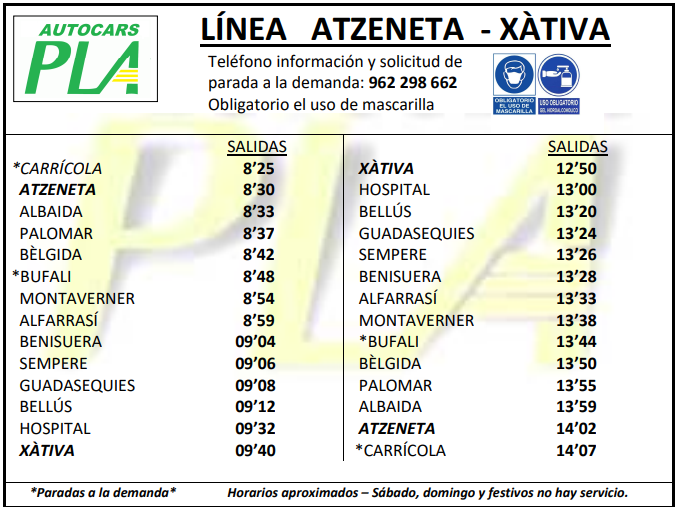
5 paradas de autobús en el municipio:
•Bufali, C/ la Pau 11
•Montaverner, Av. Sant Pancraci front 64
•Alfarrasí, Av. València 5
•Alfarrasí, Av. València front 5
•Montaverner, C/ Alacant 52
Pharmacy and health
•Consultori Auxiliar Dr. Ramón Garcia-Noblejas Dávila d'Alfarrasí
Wall and news
Log in with your profile to post. Posting on the walls is free.
This wall is still quiet.
Obituaries
There are no obituaries published right now in Montaverner.
In loving memory
There are no memorials in Montaverner yet.
Videos
Discover Montaverner on video: