
Martín del Río
Teruel · Aragón
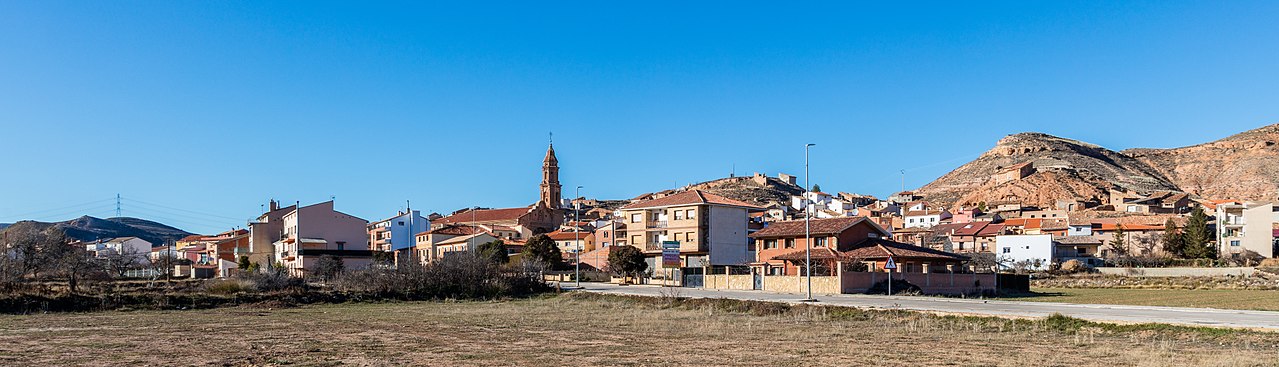
Martín del Río is a municipality and locality in the province of Teruel, in the autonomous community of Aragon, Spain.
Sections the premium town hall can edit · Fixed sections of the guide
Origins
El nombre Martín del Río ha evolucionado a lo largo de los siglos. Originalmente se llamaba solo "Martín", pero en el siglo XVIII se añadió "del Río" para diferenciarlo de otros lugares homónimos. De hecho, en Salamanca existía otro "Martín del Río", que pasó a llamarse Martín de Yeltes en 1902.
Las primeras menciones documentadas datan del siglo XII: "Martín" (1158), "Río d’Martín" (1173) y "Martino" (1189).
Las hipótesis más aceptadas son:
Origen latino, derivado de un terrateniente romano llamado Martius → Martinus → Martín.
Origen medieval, vinculado a un colono llamado Martino o Martín durante la repoblación.
No debe confundirse el municipio con San Martín del Río.
History
Prehistory and Antiquity:
Archaeological evidence indicates human presence since the Paleolithic. Within the municipal area, sites from the Late Bronze Age and the Iron Age I–II have been documented, as well as remains of Iberian and Roman culture.
Middle Ages:
In the area known as El Pajazo, remains from different historical periods have been found. In 2024, Visigothic burials were discovered, confirming the presence of a settlement from that period, while in 2017 a medieval necropolis of Andalusi chronology was excavated. These finds, together with the remains of a fortress on the upper part of the village, indicate continuity of occupation in Martín del Río during both the Visigothic period and Muslim rule.
In the mid-12th century, the area was conquered by the Kingdom of Aragon under the rule of Ramon Berenguer IV. The first written mention of Martín del Río appears in a papal bull of 1158 delimiting territories of the Archdiocese of Zaragoza.
In this context, the place was granted in tenencia to Galindo Jiménez II of Pozán, following the practice of the time to ensure administration and defence.
In 1173, King Alfonso II confirmed the Fueros of Daroca, granting fiscal and military benefits to frontier localities, including Martín del Río.
At the end of the 13th century, the village became part of the Community of Villages of Teruel within the Sesma of the Martín River; historical documents record the participation of its representatives in the assemblies of the Community.
Early Modern period:
According to a census from the late 15th century, Martín del Río had 21 "fuegos" (≈100 inhabitants). During the Early Modern period, it experienced notable growth, reaching approximately 400 inhabitants by 1777. During this stage, the urban core was consolidated and prominent buildings such as the church and the chapel of the Saints were erected.
Contemporary period:
By the mid-19th century, the locality had a recorded population of 448 inhabitants. It is described in the eleventh volume of the Diccionario geográfico-estadístico-histórico de España y sus posesiones de Ultramar by Pascual Madoz as follows:
MARTIN DEL RIO: a village with a town council in the province of Teruel (10 leagues), judicial district of Segura (1½), diocese and territorial court of Zaragoza (19), captaincy general of Aragon. Situated on the right bank of the Martín River, from which it takes its name, on a slope facing south; it enjoys good ventilation and a healthy climate. It consists of about 110 houses of medium construction, forming a single settlement; it has a parish church dedicated to the Assumption of Mary, served by a parish priest and two chaplains; the church is Gothic in style, with three naves of regular height; there is a public school attended by a small number of children, and a cemetery that poses no threat to public health. It borders Vivel to the north; Montalbán to the east; Utrillas and Las Parras de Martín to the south; and La Rambla de Martín to the west. Within it rises a spring of excellent water which, together with the Martín River, irrigates several plots of land; one hour from the village are farmsteads known as Los Pojazos, among rocky outcrops on the road to Las Parras, where there is a flour mill. The land is partly flat with some ravines and hills; it has a fine alluvial plain with many fruit trees and poplars, watered by streams from Vivel, La Rambla and Las Parras. The roads are bridle paths between neighbouring villages. Mail arrives from the district capital twice a week. Produce includes wheat, barley, oats, hemp, silk, potatoes, onions, saffron and various vegetables; there is little sheep and cattle farming, and game such as rabbits and partridges. Industry consists of agriculture, a flour mill and some linen looms. Population: 112 households, 448 inhabitants. Taxable wealth: 50,461 reales. In 1839, while the Carlist leader Ramón Cabrera was besieging Montalbán, he established his headquarters in Martín del Río, where he was joined by the well-known José Arias Teijeiro, minister of Don Carlos, who, following the shootings in Estella, fled from the Basque Provinces to join Aragon. (Madoz 1848, p. 260)
At the beginning of the 20th century, the company Minas y Ferrocarriles de Utrillas (Utrillas Mines and Railways) built a railway complex in the municipal area with numerous facilities, from mineral washing plants to warehouses and locomotive sheds. It became the terminus of the Utrillas railway, linking the mining area with Zaragoza and enabling coal output to be transported. The railway also improved communications between local towns and Zaragoza. The facilities remained in service for more than half a century, until the decline of rail activity led to the closure of the line in 1966.
Lignite mining boosted the population from 611 inhabitants (1900) to 926 (1950); thereafter, rural exodus caused a sharp decline. Mining activity ceased in 2002 with the closure of MFU (Minas y Ferrocarriles de Utrillas).
The Spanish Civil War had a strong impact on Martín del Río, which remained under Republican control between 1936 and 1938. The municipality witnessed the activity of the Macià-Companys Column and the 30th Republican Division, which fortified the surroundings with trenches and shelters, while nearby Vivel del Río, taken by the Nationalists in February 1937, turned the area into a front line for more than a year. In March 1938, during the Aragon Offensive, Nationalist troops occupied the village after heavy fighting.
Monuments
Atractivos naturales:
Entre sus atractivos turísticos naturales se encuentra:
El Hocino de la Rambla: una garganta fluvial situada al oeste del casco urbano de Martín del Río, excavada por el río de la Rambla. El paraje combina la vegetación de ribera —con chopos, sauces y juncos— con los paredones calizos, donde es frecuente observar cabras montesas y buitres leonados. Su punto más característico es el Pozo de las Televisiones, un salto de agua que discurre entre grandes bloques rocosos y junto al cual se aprecian cavidades rectangulares en la pared, cuyo aspecto recuerda a antiguos televisores y dio nombre al lugar. La cascada constituye actualmente el final del recorrido senderista, aunque está previsto ampliar el itinerario con un proyecto municipal que acondicionará unos 500 m más aguas arriba mediante pasarelas y elementos de protección, lo que permitirá completar una ruta circular enlazando con la PR-TE 96.
El Hocino del Pajazo: toma su nombre del desaparecido barrio de El Pajazo, anegado tras la construcción del Embalse de las Parras. Se localiza al sudoeste de Martín del Río, siguiendo el curso del río de las Parras. El sendero se adentra en un desfiladero calizo donde, en época de lluvias o deshielo, el agua forma la Cascada del Pajazo, un salto de 14 m visible desde un mirador natural. Más arriba, ya en el término de Las Parras de Martín, una pasarela conduce al Pozo de las Palomas, una cascada que emerge desde el interior de una cueva rodeada de vegetación húmeda. El recorrido, breve y de fácil acceso, conserva además testimonios del poblamiento histórico, como una necrópolis medieval con tumbas antropomorfas excavadas en la piedra tosca y restos de un antiguo colmenar tradicional.
La localidad forma parte del denominado Anillo de Montalbán del Camino del Cid, además por el término discurre la GR-262, el PR-TE 96, BTT TE/06 Ruta 1 y pronto lo hará la futura Vía Verde Utrillas - Zaragoza.
Cuenta con varios alojamientos y un camping en las afueras. También cuenta con una residencia para mayores.
Arquitectura religiosa:
Iglesia de la Asunción de Nuestra Señora: es uno de los principales referentes arquitectónicos del municipio. Fue levantada en la primera mitad del siglo XVIII por los maestros albañiles Mateo Colás y Juan José Nadal, siguiendo un estilo barroco de planta basílical. Durante la Guerra Civil resultó gravemente dañada y en la década de 1950 sufrió el derrumbe de su cúpula, lo que obligó a clausurarla. A finales de los años setenta comenzaron las obras de restauración y en la década siguiente se acometieron mejoras en el interior, en las que participaron activamente vecinos del pueblo. En la actualidad, el templo constituye un símbolo del patrimonio histórico y cultural local, testimonio del esfuerzo comunitario por preservar su legado.
Ermita de los Santos Fabián y San Sebastián: conocida popularmente como ermita de los Santos, se encuentra junto a la carretera N-211, entre Montalbán y Martín del Río. Fue construida en 1522 en estilo barroco y conserva en su interior pinturas de carácter rococó. Su elemento más destacado es la torre, formada por tres cuerpos octogonales de ladrillo rematados por un chapitel de cobre, considerada uno de los mejores ejemplos de mudéjar tardío en la provincia de Teruel. El templo acoge las romerías de San Isidro y San Jorge, a las que acuden tanto de vecinos del municipio como de localidades cercanas.
What to visit
There's no information in this section yet. The village's profile can complete it from the panel.
Gallery




Festivals
Las fiestas en honor a Nuestra Señora de la Asunción, celebradas en el mes de agosto y organizadas por la Comisión de Fiestas, constituyen las fiestas principales de Martín. Durante estos días se desarrollan diversas actividades, como actuaciones musicales, festejos taurinos y otros espectáculos populares. Al final de cada jornada solía tener lugar tradicionalmente, el baile de “la zorra”, una danza característica de la localidad que combina un marcado componente festivo con cierto grado de riesgo.
Las fiestas de Reyes, que tienen lugar durante la primera semana de enero, son organizadas por las Quintas y los Quintos de la localidad. Entre los actos más destacados figura la tradicional Cabalgata de Reyes Magos, considerada una de las más auténticas de la provincia.
La fiesta en honor a San Fabián y San Sebastián, patrones de la localidad, se celebra habitualmente el sábado más próximo al 20 de enero. La jornada comienza con la ronda de los músicos locales por las casas del municipio, donde recogen productos que, tras el encendido de una gran hoguera vespertina, son subastados en la tradicional Subasta de San Fabián y San Sebastián, recuperada en 2018. La hoguera, además, sirve de punto de encuentro vecinal y permite preparar la cena a las brasas. La organización de los festejos corre a cargo de la Comisión de Fiestas.
September 2026
Festivals this month
- No festivals recorded this month.
Rest of the year
- January: La fiesta en honor a San Fabián y San Sebastián, patrones de la localidad, se celebra habi (20) · Las fiestas de Reyes, que tienen lugar durante la primera semana
- August: Las fiestas en honor a Nuestra Señora de la Asunción, celebradas en el mes
What's on
Street market
Find the day and place of the local street market:
Gastronomy
There's no information in this section yet. The village's profile can complete it from the panel.
Trails and hiking
•Sendero del Río Martín (GR 262)
•Hocino de la Rambla (PR-TE 96)
Services
Holiday cottage
La Casa de la Abuela
📞 +34 978 75 0811
Is it yours? Go premium: full profile, more visibility and up to 6 photos. View membership
Restaurant
La Posada
Is it yours? Go premium: full profile, more visibility and up to 6 photos. View membership
Do you have a business in Martín del Río? Advertise it for free and go premium whenever you like. List my business for free
Famous people
•Miguel Alejos Burriel, político español
•Miguel Salvador
Town hall
Web oficial: http://www.martindelrio.es/
Town hall of Martín del Río
Web oficial: http://www.martindelrio.es/
Here goes your town hall's profile or your website address. Are you from the town hall? Go premium to complete your profile and edit your village's content. hola@ciudadesypueblos.es
How to get there
- 🚗 73 km from Teruel (about 52 min by car)
- 🚗 112 km from Zaragoza (about 79 min by car)
- 🚗 150 km from Castellón de la Plana/Castelló de la Plana (about 106 min by car)
🧭 Travelling around the villages of Spain: a practical guide — Opening hours, transport, money and customs, before you set off.
- ✈️ 115 km from Zaragoza airport (about 81 min by car)
- ✈️ 135 km from Castellón airport (about 95 min by car)
Practical info
🏧 Nearest cash machine
- Banco Santander · 5.6 km away
- Ibercaja · 9.1 km away
⛽ Nearest petrol station
- Repsol · 6.7 km away
🔭 Viewpoints
- Hocino de El Pajazo · 4.6 km away
- Peña del Cid · 4.7 km away
Buses
1 paradas de autobús en el municipio.
Pharmacy and health
Find the nearest pharmacy and health centre, with the address and how to get there:
Wall and news
Log in with your profile to post. Posting on the walls is free.
This wall is still quiet.
Obituaries
There are no obituaries published right now in Martín del Río.
In loving memory
There are no memorials in Martín del Río yet.
Videos
Discover Martín del Río on video: