
Jérica
Castellón · Comunidad Valenciana
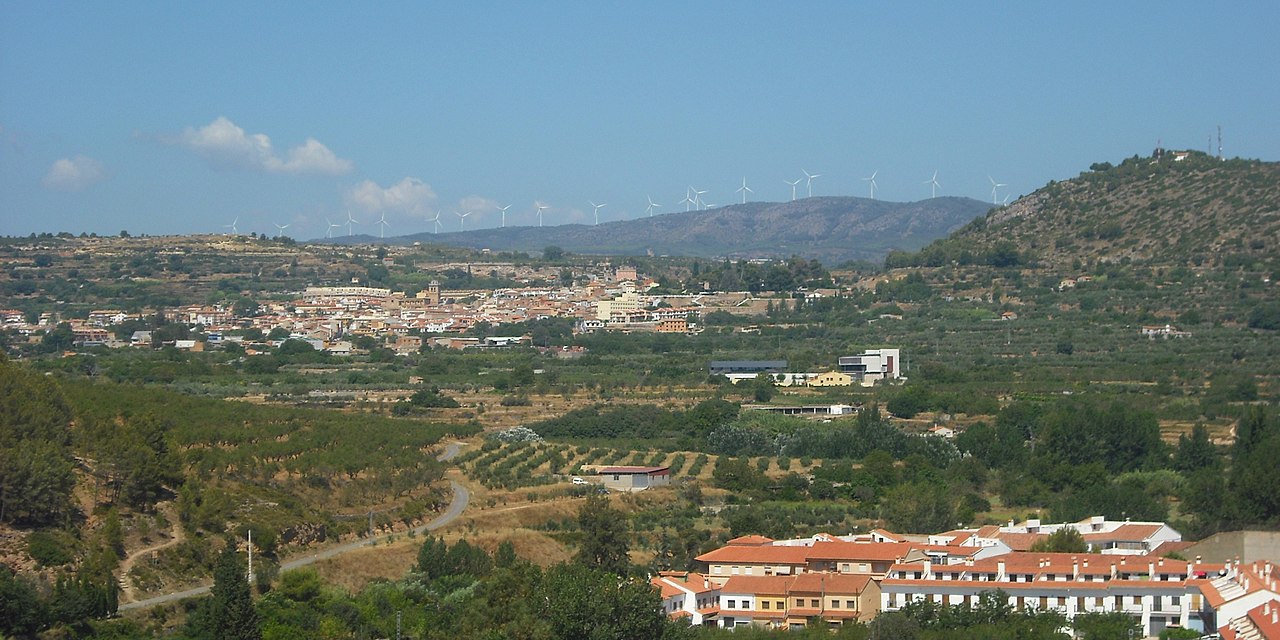
Jérica (Valencian: Xèrica) is a town in the Castellón province of Valencian Community, Spain. It is in the comarca (region) of Alto Palancia. Its population was 1,703 at the end of 2009. The town's name is based in Arabic شارقة (šāriqa), meaning the eastern slope of a mountain. In Arabian documents the settlement has also been referred to as قلعة الاشراق (qalʿa aš-širāq), "Castle of the Sheriffs".
Sections the premium town hall can edit · Fixed sections of the guide
Origins
El topónimo deriva del árabe شارقة (šāriqa), «falda oriental [de una montaña]». En documentos árabes aparece mencionada también como قلعة الاشراق (qalʿa aš-širāq), «castillo de los jerifes».
History
The first evidence of human settlement is from the Neolithic period, from human remains found in the Herreros Cave (Cave of the Blacksmiths). Several settlements from the Iberian period exist within the castle grounds.
The municipality has the highest number of Roman artifacts discovered in the comarca, especially the large quantity of gravestones, including the unique gravestone of Quintia Prova of Hispania on which the cost of a Roman arch with two statues is mentioned.
The first references to the present nucleus of the settlement are in the period of Muslims' presence in the area, including the Taifa of Valencia and following the disintegration of the Caliph of Córdoba in 1027 and then the subsequent capture of the area by El Cid in 1098. The first stages of the towers and the oldest parts of the castle are from this time.
On 5 February 1235, the area was captured by the Christian army in order to control the sacristan of Girona, Gillém de Montgriu, although the Muslim population were not expelled.
In 1249 the Carta Puebla was issued, which authorized the occupation of Jérica, since it was evident by then that the local population were moving into the area. In 1255 King James I of Aragon transferred authority over the villa of Jérica to Teresa Gil de Vidaurre and to the son which had been born from their relationship (he also ceded the villa of Alcublas to Lady Teresa Gil in 1257). Their son was James I, Baron of Jérica. On 29 November 1255, in Calatayud, King James I granted the privilege that the Camino Real (Royal Road) from Aragón to Valencia pass through Jérica, and abandoning the previous road, which lay relatively far from the villa.
In 1261 King James I granted temporal authority over the castle and the villa of Jérica to his son, James I of Jérica. In 1272 he confirmed this power in his will. In 1284 James II of Jérica succeeded him, and in 1286, King Alfonso IV of Aragon confirmed James' control of the villa. It was governed by James II until 1321, when it passed to his son Jaime (James III of Jérica). James III received permission of King Alfonso IV to strengthen and fortify the existing walls.
Don Pedro of Jérica controlled the villa until 1361, when he willed it to his sons Juan and Pedro (Juan Alfonso held seniority). During this period, intermittent war occurred between the kings of Aragón and Castilla, and in 1363 the Castilian army entered the villa utilising the castle and the church that was being erected.
Juan Alfonso died without issue in 1369. The villa was then ceded back to Peter IV of Aragon as an estate. The King decided in 1372 to make a condado (land which is granted to a Count) and give it to the Infante Don Martin as a Fiefdom, with the stipulation that it return to The Crown when Martin would marry María de Luna, señora de Segorbe.
The villa's direct attachment to the Royal Crown did not last long; in 1417 King Alfonso V of Aragon ceded the señorío (noble estate) to his brother, the Infante Don Juan.
The señorío only lasted a few years; in 1431 Don Juan sold it (illegally) to Francisco Zarzuela. This caused years of misery for the people of Jérica, who suffered with the tyrannous government of a family who cared nothing for them.
This continued until 1479 when negotiations between the town's leaders and King Ferdinand el Católico resulted in the villa's being returned to control of The Crown.
In 1537, Carlos I of Spain gave the señorío to the Duque de Calabria. On his death the estate was willed to the monks of the Monastery of San Miguel of the Kings of Valencia. A litigation between the governors of the villa and Emperor Carlos I occurred, as they wished to be returned to governance under The Crown. This occurred in 1564, during the reign of Felipe I. In 1565 it abandoned the legislative control of Aragon, of which it had been a part, taking in its place that of Valencia. Since that time the villa has had its own shield.
In the second decade of the eighteenth century, after the close of the War of the Spanish Succession, King Felipe V, desiring to reward the loyalty and services of the Duke of Berwick (who had won the Battle of Almansa), created the Duchy of Liria and Jérica, and granted it to the Duke. This first Duke of the newly created Duchy was James FitzJames (known locally as Jacobo Fitz-James Stuart) was the son of King James II of England, who had also named him Duke of Berwick and Viceroy of Ireland. He was a marshal in the French Army and an officer in the Spanish army during the War of Succession.
The third Duke of the Duchy was named for his grandfather, the first Duke. He married María Teresa de Silva y Palafox Álvarez de Toledo, Duchess of Alba. After that, the title passed through the House of Alba. At present it is held by Cayetana Fitz-James Stuart, of Liria.
During the Carlist Wars (1833 to 1876), troops of the Carlist faction established themselves within the Jérica castle and fortified it strongly. Near the end, troops of the opposing faction (los liberales) stormed the castle and demolished its walls.
The villa suffered such destruction and damage during the Spanish Civil War that its leaders petitioned the Federal government for inclusion on the list of Devastated Regions, which meant the state was in charge of reconstructing numerous buildings.
Historic buildings:
This area has been known as a distinct villa since the Roman Era, and through the Saracen times. It is noted as a significant location, due to its imposing castle with its strong walls dominated by turrets.
The religious monument Torre de las Campanas (Tower of the Bells) was constructed in 1634 in style of Mudéjar on the site of a previous works. It is a unique example of the style in the Valencian Community . Due to its position as the highest construction in the area, it is the most familiar image of it.
The area has two civil monuments: a castle and watchtowers. There is a castle, of which the Roman foundations can still be observed, although most of the construction is of the Muslim period. The best conserved area is the main tower, the Torreta. This construction is robust: it is square with walls more than 1.5 m thick. The vaults in the centre of the ground floor are remarkable. These Muslim watchtowers, Torres de los Ordaces y la Muela, overlook the castle. Presently, they are in need of conservation.
There are two main plazas. The larger is called del Olmo, an ample, irregular polygon, where the weekly market and the annual fair are held. The smaller plaza, adjacent to the chapel, is a parallelogram of 11 m x 7 m dimension. There are three smaller plazas called del Loreto, Tiendas (shops), and Carnicerías (meat markets).
On Arrabal Avenue near the center of the town is the Town Hall, which flies the town's flag. The municipal jail is located in this building. The hospital for the poor and needy is on this same street. There are also several churches, including la Iglesia de Santa Águeda la Nueva in the southern part of town, which dates from 1835. A cemetery is located at 150 m from the town.
Monuments
Religioso:
Torre de las Campanas. Construida en 1634 en estilo mudéjar sobre los restos de una construcción anterior. Es la única en este estilo de toda la Comunidad Valenciana. Tiene la poco frecuente particularidad de ser exenta (separada de su propìa iglesia). Debido a su situación en la alto de la localidad es la imagen más típica de la localidad.
Antiguo Convento de Nuestra Señora la Virgen del Socorro
Ermita del Calvario
Ermita del Loreto
Iglesia de Santa Águeda la Nueva
Iglesia Parroquial de San Miguel de Novaliches
Museo parroquial de Jérica
Convento de Capuchinos
Civil:
Castillo. Fue destruido tras las guerras carlistas. Aún se pueden observar los basamentos de la época romana, aunque la mayor parte de la construcción es del periodo musulmán. La zona mejor conservada es la torre mayor, la Torreta. Esta construcción de aspecto robusto, posee planta cuadrada con muros de más de 1'5 m de espesor. Son destacables las bóvedas de medio punto de la planta baja.
Torres de los Ordaces y la Muela. Estas torres musulmanas formaban parte del sistema de vigía del castillo. Actualmente se encuentran en muy mal estado de conservación.
Museo municipal de Jérica
What to visit
•Mirador de San Roque
•Museo Municipal
•Iglesia del Cristo de la Sangre
•Museo Parroquial
•Vuelta de la Hoz
•Piscifactorias romanas
Gallery




Festivals
17 de enero: Fiestas de San Antón. Donde destaca la bendición de los animales y el reparto de los molletes en la puerta de la iglesia a todos los asistentes. Es una fiesta que se celebra desde muy antiguo. Actualmente se celebra gracias a la colaboración de la Asociación de Mujeres de Jérica.
5 de febrero: Fiesta de Santa Águeda, Patrona de Jérica. Fiesta local conmemorando la reconquista de la Villa por las tropas de Jaime I. Los actos religiosos son la ofrenda a la Santa, la Misa y la Procesión por las calles de la población. Desde hace unos años se acompaña de festejos taurinos y también se desarrollan diferentes actividades como exposiciones, jornadas culturales, etc.
Semana Santa. Los actos más destacados son las celebraciones de Jueves y Viernes Santo, la procesión nocturna del Cristo de la Sangre, Patrón de Jérica, y que hasta hace unos años era acompañado por los soldados licenciados, el Encuentro donde el Corazón de Jesús y La Virgen María, tras su recorrido por distintas calles, se encuentran en la plaza y Esta hace tres reverencias. Por la tarde las conocidas Jotas de Pascua con colaboración de los Quintos.
Miércoles siguiente al domingo de Pentecostés: La popular Feria Vallada, de origen Medieval.
Último fin de semana de junio: Fiestas en honor al Corazón de Jesús, con actos religiosos, verbenas, chocolatada y cucañas para los más pequeños, etc.
Segundo miércoles de julio: Festividad del Cristo de la Sangre. El origen de esta fiesta se remonta a la fundación en la Villa del Convento de los Capuchinos, que son los que traen la devoción a la localidad. Son tanto los favores recibidos que deciden nombrarlo patrón y dedicarle una iglesia.
Tercer domingo de julio - Domingo de las Fuentes. Se ofrece un concierto a cargo de la Sociedad Musical y Cultural Otobesa, donde normalmente es acompañada de alguna banda invitada.
Segunda semana de agosto: Fiesta en honor a la Virgen de los Desamparados, organizada por los veraneantes del pueblo.
Fin de semana del 16 de agosto: Fiestas en honor de san Roque, organizadas por los jóvenes del pueblo. Se realizan pasacalles, volteo, verbenas y actos religiosos. En caso de que este día no coincida con el fin de semana, se realiza el inmediatamente posterior.
Primer sábado de septiembre: Romería al Santuario de la Cueva Santa.
Segundo fin de semana de septiembre: Fiestas de las Hijas de María, con actos religiosos, verbenas, etc.
Tercer domingo de septiembre: Fiestas en honor a la Divina Pastora. Son, quizás, las fiestas más populares de Jérica. Durante la primera semana se realizan diversos actos: Desde la presentación de las Reinas mayor e infantil con sus respectivas Cortes de Honor, hasta el Rosario de la Pastora, pasando por verbenas, la ofrenda, las "variedades", la cabalgata de disfraces, el concierto de la banda, la Misa del Domingo, los juegos infantiles, el Vole, la Bacalá, los correfocs, etc.
Durante la segunda semana se realizan los festejos taurinos con entradas de toros, exhibición de los mismos, toros embolados, verbenas, y el tradicional desfile de las peñas, acompañadas por la charanga de nuestra localidad.
Día 12 de octubre: Festividad de la Virgen del Pilar. Fiesta organizada por la Rondalla La Pastorica de Jérica. Comienza el día con un pasacalle de los componentes de la Rondalla hasta la iglesia Arciprestal de Santa Águeda, donde se celebra una misa aragonesa, cantada por un grupo coral de la localidad, y en la que participan los niños de la Rondalla. Al terminar la Santa Misa, en la plaza de la Iglesia los distintos grupos de la Rondalla bailan unas jotas. Después de una comida de hermandad, hacia las 6 de la tarde chocolatada y cucañas en la plaza del Ayuntamiento.
Fin de semana del 22 de noviembre: Santa Cecilia. Fiesta organizada por la Sociedad Musical Otobesa de Jérica, que dura todo el fin de semana. El viernes, tradicional chocolatada y cucañas. El sábado, concierto de las distintas agrupaciones que componen la sociedad, y a continuación cena popular, con actuación humorística de los músicos. El domingo, recogida de nuevos músicos, misa y comida popular.
September 2026
Festivals this month
- 18 · September Divina Pastora 📆 Add to my calendar
- 29 · September San Miguel 📆 Add to my calendar
- September Primer sábado
- September Segundo fin de semana
- September Tercer domingo
Rest of the year
- January: Fiestas locales (17)
- February: Fiestas locales (5) · Fiesta patronal: Águeda de Catania (5) · Santa Águeda (5)
- June: Último fin de semana
- July: Segundo miércoles · Tercer domingo
- August: Fin de semana (16) · Segunda semana
- October: Día (12)
- November: Fin de semana (22)
What's on
Street market
Find the day and place of the local street market:
Gastronomy
There's no information in this section yet. The village's profile can complete it from the panel.
Trails and hiking
•Camino del Cid (La Conquista de Valencia E08) (GR 160)
•Camino del Cid (La Conquista de Valencia E07) (GR 160)
Routes passing through Jérica
Services
Do you have a business in Jérica? Advertise it for free and go premium whenever you like. List my business for free
Famous people
•Pablo Barrachina y Estevan
•Baltasar Calvo
Town hall
Web oficial: http://www.jerica.es/
Town hall of Jérica
Web oficial: http://www.jerica.es/
Here goes your town hall's profile or your website address. Are you from the town hall? Go premium to complete your profile and edit your village's content. hola@ciudadesypueblos.es
How to get there
- 🚗 58 km from Castellón de la Plana/Castelló de la Plana (about 41 min by car)
- 🚗 65 km from València (about 46 min by car)
🧭 Travelling around the villages of Spain: a practical guide — Opening hours, transport, money and customs, before you set off.
- ✈️ 60 km from Valencia airport (about 42 min by car)
- ✈️ 80 km from Castellón airport (about 56 min by car)
Practical info
🅿️ Where to park
- Where to park · 0.2 km away
- Where to park · 0.2 km away
- Where to park · 0.2 km away
🏧 Nearest cash machine
- Cajamar · 2.3 km away
- Caixabank · 2.3 km away
- Bancaja Navajas · 6.7 km away
⛽ Nearest petrol station
- COOP. DIVINA PASTORA DE J · 0.5 km away
- Shell · 0.6 km away
- COOP. OLEICOLA SERRANA DEL PALANCIA DE VIVER · 2.1 km away
ℹ️ Tourist office
- Oficina de Turismo · 0.1 km away
- Punto de Informaciòn de la Via Verde · 1.3 km away
🔭 Viewpoints
- Viewpoints · 0.9 km away
- Viewpoints · 1.3 km away
- Mirador de San Roque · 2.5 km away
Buses
10 paradas de autobús en el municipio:
•Viver, pl. Mayor del Palancia 2
•Benafer, C/ Replaceta 9
•Jérica, C/ Extramuros 2 - Masia Novales
•Jérica, Poblado Novaliches 1G
•Jérica, Pl. Germán Monleón 2
•Jérica, C/ Jaime Ariño 6 (CRA Palancia-Mijares)
•Jérica, IES Jérica-Viver
•Viver, Av. Diputación 1 - CEIP Historiador Diago
Pharmacy and health
•Centro de Salud Viver
•Farmacia Farmacia Coret — Plaza Mayor
•Farmacia Farmacia Jérica
•Consultori Auxiliar de Novaliches
Wall and news
Log in with your profile to post. Posting on the walls is free.
This wall is still quiet.
Obituaries
There are no obituaries published right now in Jérica.
In loving memory
There are no memorials in Jérica yet.
Videos
Discover Jérica on video: