
Guadamur
Toledo · Castilla-La Mancha
Guadamur is a municipality located in the province of Toledo, Castile-La Mancha, Spain. According to the 2008 census (INE), the municipality has a population of 1819 inhabitants. On 4 June 2007 a twinning agreement was signed with the towns of Vouillé (department of Deux-Sèvres, Poitou-Charentes, France) and Tournai (Wallonia region, Belgium), to promote cultural exchanges and develop a cultural tour of Europe, on the occasion of the fifteenth centenary of the Battle of Vouillé. In that town near Poitiers, Clovis I, king of the Franks, defeated the Visigoths of Alaric II in 507. Tournai was the first capital of the Franks under kings Clovis and Childericus.
Sections the premium town hall can edit · Fixed sections of the guide
Origins
El término «Guadamur» (قدمر), según algunos estudiosos, significa en árabe el río de las olas; sin embargo, otros piensan que se derivaría de wadi al-mur río del muro, como referencia a alguna construcción romana o visigótica de uso hidráulico. De este modo, la raíz resulta un híbrido del árabe wadi río, valle, vaguada, y del latín murus muro, a la manera de otros híbridos como Guadalcanal (Sevilla).
Uadi (el-uadi, الوادي, uad واد) es un vocablo de origen árabe utilizado para denominar los cauces secos, o estacionales, de los ríos.
History
Origins:
Archaeological remains before our era are rare, but there are a few lithic finds (a Neolithic scraper, a hatchet) difficult to date. Guadamur is too far from Paleolithic settlements nearby (in the province of Madrid).
The residents of the area before the arrival of the Roman receive the designation of Carpetani by geographer Strabo. Near Guadamur are Celtic place names as Alpuébrega, La Brega or Castrejón.
Archaeological findings, although limited, demonstrate the Roman presence in the town and its surroundings: coins, a cameo, a stele of limestone and a brake horse dated in the 2nd century. It is necessary to add pieces reused by the Visigoths, and remains of columns, plates and statues of Carrara marble. There wasn’t a Roman settlement in Guadamur in particular, but it seems secure the existence of a Roman road of the second order and the likely existence of a villa in the area of the old road to Toledo. The local name Portusa, a ford of the Tagus to 8 km northwest of Guadamur, points to the area as a place of transit.
Middle Ages:
The Visigothic period (409-711) left Guadamur the most interesting chapter in its history. In August 1858, heavy storms over Guadamur uncovered a series of tombs at the site of the gardens of Guarrazar. Neighbours Francisco Morales and María Pérez discovered the Treasure of Guarrazar by chance; it is the most important of those found in the Peninsula on the Visigoth era. These findings, other of some neighbors and the archaeological excavation of the Ministry of Public Works and the Royal Academy of History (April 1859), they formed a group consisting of: six crowns, five crosses, a pendant and remnants of foil and channels (almost all of gold, now at the National Archaeological Museum of Madrid), a crown and a gold cross and a stone engraved with the Annunciation (now in the Royal Palace of Madrid), three crowns, two crosses, links and gold pendants (now at the Musee de Cluny, Paris), a crown, and other fragments of a tiller with a crystal ball (stolen from the Royal Palace of Madrid in 1921 and still whereabouts unknown). The most valuable of all is the crown of king Recesvinto (which today names the main square of the town): blue sapphire parts come from the former Ceylon, now Sri Lanka. There were also many fragments of sculptures and the remains of a building, perhaps a Roman delubrum (sanctuary or place of purification); in the following centuries it was dedicated to Christian worship as a church or oratory, which housed a number of graves: in the most important was found a skeleton lying on a bed of lime and sand, and preserved the stone slate, whose Latin inscription mentions a priest named Crispín, dating from 693 (51st year of the reign of Égica, year of the 16th Council of Toledo. This plaque is now in the National Archeological Museum in Madrid. According to some hypothesis, Guarrazar was a monastery that served as a hideout for the real treasure of the court, Toledo churches and monasteries to prevent their capture by the Muslims: the monastery of Sancta Maria in Sorbaces, according to the inscription of the Sónnica cross, a piece of the treasure of Guarrazar preserved in Paris.
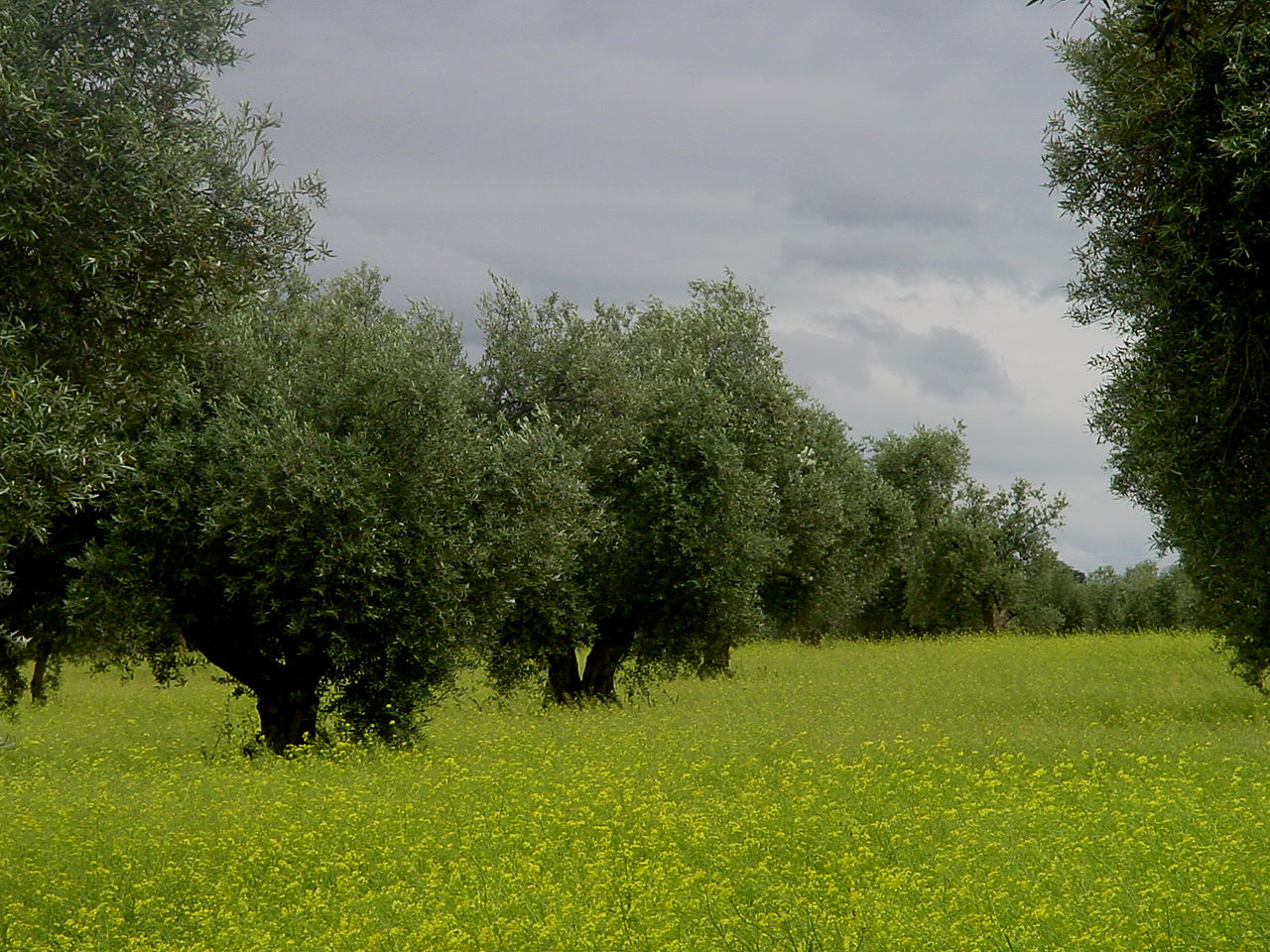
Besides its own name, there are in the vicinity of Guadamur more Moorish remains in the form of name: Daramazán "fortified home"; Daramezas, "home of table or plateau"; Guajaraz", river of thorns "; Guarrazar", valley of lead"; Zuarraz, "little canal"; Aguanel "water of the well"; Aceituno, "the olive grove".
The capitulation of Toledo in 1085 made Almohades and Almoravids attempt to unseat Christians as strategic position. The region, in the next one hundred years, was devastated by attacks and counterattacks by both sides. Initiated recruitment in times of Alfonso VII, Guadamur appears as the village council of Toledo, who pay taxes and which jurisdiction depends. There is documentation which provides proof of the existence of traditional private property of citizens from Toledo around Guadamur and this can be traced to the reign taifa by the Arabic names of the farms. Since the late 12th century these properties were passed into the hands of the clergy, especially the regular.
During the 13th, 14th and 15th centuries, this land was in a progression towards the noble scheme, and it begins to feel the shame of servitude in a monarchical decomposition, strengthened nobility, peasant resistance, religious conflict, plague and livelihood crisis. Guadamur entered medieval history under the hand of Pedro López Ayala, son of the royal chancellor and mayor of Toledo, whose family disputes control to the Silva. He intervened in the war that pitted Juan II and favorite Álvaro with infants of Aragon, Don Enrique and Don Juan, and ended up giving Toledo in 1440. Lost ground, Juan II forgave Pedro in 1444; in 1446 won Guadamur, among other possessions, as a royal granting. This date marks the beginning of four centuries of manorial system in the town: the town became a possession of an absolute landlord that judges, punishes, fines, legislates, chooses the authorities and subjects the villains to taxes and benefits. The son of Don Pedro was the first Count of Fuensalida (1470); two years before he had obtained permission from the king to build a castle in Guadamur, probably on a previous moose Arabic watchtower. It holds the shields of the Ayala and the Silva families, rivals in medieval Toledo. The 15th century also dates the nearby shrine of Our Lady of the Nativity, influenced by the Toledo Mudéjar style.
Modern Age:
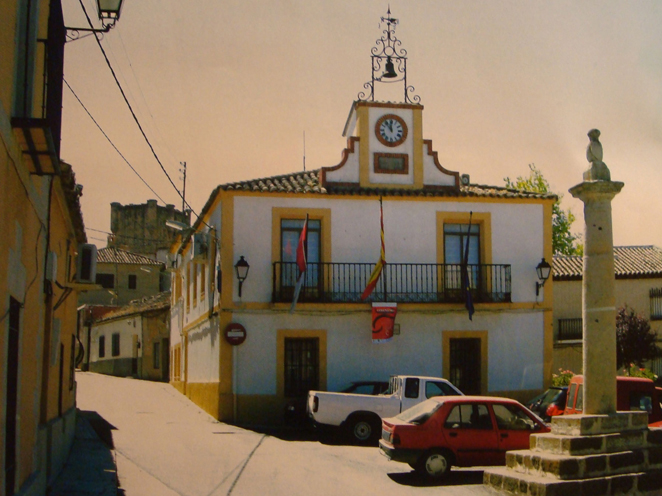
In 1471 Guadamur obtained the title of town. In these years is also built a pillory on the square of the village, insignia of jurisdiction and execution, which replaced the old gallows of wood (still a hill not far from the castle retains the name of "Cerro de la Horca").
The III Count of Fuensalida (1489–1537) hosted Prince Don Felipe and Doña Juana in Guadamur on 11 July 1502, just after they had been appointed heir and heiress to the Crown of the Kingdom of Castile. In 1590, during the reign of Philip II, the castle serves as a secret prison of the Inquisition. The Vi Count participated in the expulsion of the Moors (1609) recruiting 126 young men and weapons in Guadamur. The IX Count was appointed by Charles II Captain General of the Kingdom of Sardinia and Captain General of Milan. In the 17th century Fuensalida County reaches its maximum expansion: 10,000 inhabitants and 40,000 ha, the second state of the kingdom of Toledo. In the Cadastre of Ensenada, which collects data at the villa from 1752, mention is made of "tithes and first fruits of which are caught in it" and go, inter alia, to the parish of Guadamur, to the coffers of the King, to the Cardinal Archbishop of Toledo, to the canons of the Cathedral of Toledo and the parishes of Santo Tomé, Santa Leocadia, San Martín, San Román, San Ginés, San Antolín, San Nicolás, La Magdalena, San Andrés, San Justo, San Vicente, the Mozarabic, Santa Eulalia and Santa Justa. The history of the county ended in 1843 just when the Government granted the noble properties of Guadamur to the neighbours of the town.
In the 16th century there were two local pastures (dehesas): in the Old one grazed herds of Segovian Mesta. In the New one were seventy hives in the 18th century, which produced abundant honey and beeswax. The Toledan archbishop Silíceo (1546) built a bridge over the Guajaraz. Dating from this period is also the parish church of St. Mary Magdalene and the hermitage of San Antonio Abad, San Antón popularly (though the saint who was venerated in it until the mid-19th century was San Sebastián). The chapel now houses the Museum of Popular Arts and Customs of the Montes de Toledo.
Contemporary Age:
At the end of 1808 Guadamur receives a detachment of French cavalry which was part of Napoleon's troops entered Toledo on December 13. Are installed in the castle, then abandoned but in good use (as the pastor of the town, Juan José de Funes, wrote in 1788). According
Monuments
Castillo de Guadamur, construido en 1468 por Pedro López de Ayala, conde de Fuensalida.
Yacimiento arqueológico de Guarrazar, declarado bien de interés cultural y otorgado el premio Hispania Nostra.
Ermita de San Antón, del siglo XVI, hoy Museo de Artes y Costumbres Populares de los Montes de Toledo.
Ermita de Nuestra Señora de la Natividad, siglos XIII–XIV, estilo mudéjar.
Iglesia parroquial de Santa María Magdalena, del siglo XVI.
Rollo de justicia, de 1468-1471.
Centro de interpretación del Tesoro de Guarrazar, Museo sobre arqueología visigoda con réplicas del Tesoro, Coronas, Cruces y materiales originales.
Museo Casa Las muñecas de Salyperla, ubicado al lado del Centro de Interpretación del Tesoro de Guarrazar y donde hay más de 1500 muñecas y juguetes de los años 1970 a los 1990.
What to visit
There's no information in this section yet. The village's profile can complete it from the panel.
Gallery





Festivals
Las fechas festivas son las siguientes:
3 de febrero: San Blas, patrón protector de los niños. Se celebra en el Colegio de Guadamur (siempre dentro del calendario escolar).
22 de julio: María Magdalena, advocación de la parroquia. Son las conocidas como fiestas pequeñas; las organiza el Ayuntamiento de Guadamur.
7-10 de septiembre: Virgen de la Natividad, fiestas patronales. El icono de estilo bizantino (copia de un original perdido) que alberga la ermita de la Natividad representa a Ana (madre de María) y a la Virgen niña. Son las primeras fiestas grandes del mes de septiembre, y son organizadas por la Hermandad de Nuestra Señora de la Natividad.
13-16 de septiembre: Cristo de la Piedad, fiestas patronales. Su cofradía data de 1531. Son las segundas fiestas grandes del mes de septiembre, y son organizadas por la Hermandad del Santísimo Cristo de la Piedad.
Jornadas Visigodas: esta festividad se celebra el primer o segundo fin de semana del mes de mayo, con el objetivo de trasladar el pueblo a una villa visigoda, con mercadillos medievales, representaciones teatrales al aire libre... Se celebran en la zona alta del pueblo, en torno a la ermita de Nuestra Señora de la Natividad y por los alrededores del Castillo. La XIII edición se celebró los días 11, 12 y 13 de mayo de 2022 siendo alcaldesa María del Sagrario Gutiérrez Fernández y concejal de Cultura, Pilar Rodríguez Fernández.
En las Relaciones topográficas de Felipe II —interrogatorio de 1575— las autoridades de la villa señalaron que se guardaban las fiestas de San Blas, San José y San Clemente «por voto particular del pueblo, y que se guardan por causas que les movieron a los antiguos».
En las respuestas al Catastro de Ensenada dadas en [Guadamur el 6 y 7 de julio de 1752 se señalan como «fiestas votivas que se hacen en cada año» las dedicadas a Nuestra Señora de la Natividad, Santa Catalina y San Marcos.
September 2026
Festivals this month
- 8 · September Virgen de la Natividad 📆 Add to my calendar
- 10 · September Fiestas locales 📆 Add to my calendar
- 14 · September Santísimo Cristo de la Piedad 📆 Add to my calendar
Rest of the year
- February: Fiestas locales (3)
- May: Jornadas Visigodas: esta festividad se celebra el primer o segundo fin de semana del mes
- July: En las respuestas al Catastro de Ensenada dadas en [Guadamur (6) · Fiestas locales (22)
What's on
Street market
Find the day and place of the local street market:
Gastronomy
There's no information in this section yet. The village's profile can complete it from the panel.
Trails and hiking
•Ruta de los tres Castillos (PR-TO 38, 13.9 km)
•Camino de los Montes de Toledo - Etapa 1 (17 km)
•Camino de los Montes de Toledo - Etapa 2 (24 km)
Services
Do you have a business in Guadamur? Advertise it for free and go premium whenever you like. List my business for free
Famous people
•Felipe Clemente de Diego, jurista español
Town hall
La administración del municipio corresponde al Ayuntamiento, compuesto por nueve concejales elegidos por sufragio universal cada cuatro años en una circunscripción única con listas cerradas.
Las primeras elecciones democráticas, celebradas en 1979, las ganó la UCD. En esta primera etapa se formó un gobierno dirigido por el centrista José Antonio García Morales. En las segundas elecciones, las de 1983, destacan por la desaparición de la UCD. La alcaldía pasó a manos del socialista Adolfo Escribano Pavón. En 1987 los socialistas seguían ganando las elecciones, esta vez, Rodrigo Gutiérrez Fernández será quien llevará la alcaldía del municipio hasta el año 1997 que deja el cargo. Cabe destacar que en 1995 gana la lista del Partido Popular encabezada por María del Sagrario Gutiérrez Fernández pero el PSOE pacta con Izquierda Unida para impedir que gobernara.
Rodrigo Gutiérrez Fernández dimite como alcalde en 1997 por tensiones derivadas en los diferentes plenos. Es en este momento cuando llega a la alcaldía la segunda de su lista, Esperanza García Martín por el PSOE.
En 1999, gana las elecciones municipales por segunda vez el Partido Popular, esta vez con mayoría absoluta, a partir de este momento, María del Sagrario Gutiérrez Fernández se convierte en la primera alcaldesa electa en la historia de la democracia de Guadamur y que, por consiguiente, lleve la dirigencia y gestión del Ayuntamiento de Guadamur hasta la actualidad. Desde entonces, María del Sagrario Gutiérrez Fernández ha gobernado Guadamur, alcanzando ya su séptimo mandato consecutivo por mayoría absoluta.
Gobierno municipal:
Actual distribución del Ayuntamiento después de las elecciones municipales de 2023 en Guadamur
Town hall of Guadamur
La administración del municipio corresponde al Ayuntamiento, compuesto por nueve concejales elegidos por sufragio universal cada cuatro años en una circunscripción única con listas cerradas. Las primeras elecciones democráticas, celebradas en 1979, las ganó la UCD. En esta primera etapa se formó un gobierno dirigido por el centrista José Antonio García Morales. En las segundas elecciones, las de 1983, destacan por la desaparición de la UCD. La alcaldía pasó a manos del socialista Adolfo Escribano Pavón. En 1987 los socialistas seguían ganando las elecciones, esta vez, Rodrigo Gutiérrez Fernández será quien llevará la alcaldía del municipio hasta el año 1997 que deja el cargo. Cabe destacar que en 1995 gana la lista del Partido Popular encabezada por María del Sagrario Gutiérrez Fernández pero el PSOE pacta con Izquierda Unida para impedir que gobernara. Rodrigo Gutiérrez Fernández dimite como alcalde en 1997 por tensiones derivadas en los diferentes plenos. Es en este momento cuando llega a la alcaldía la segunda de su lista, Esperanza García Martín por el PSOE. En 1999, gana las elecciones municipales por segunda vez el Partido Popular, esta vez con mayoría absoluta, a partir de este momento, María del Sagrario Gutiérrez Fernández se convierte en la primera alcaldesa electa en la historia de la democracia de Guadamur y que, por consiguiente, lleve la dirigencia y gestión del Ayuntamiento de Guadamur hasta la actualidad. Desde entonces, María del Sagrario Gutiérrez Fernández ha gobernado Guadamur, alcanzando ya su séptimo mandato consecutivo por mayoría absoluta. Gobierno municipal: Actual distribución del Ayuntamiento después de las elecciones municipales de 2023 en Guadamur
Here goes your town hall's profile or your website address. Are you from the town hall? Go premium to complete your profile and edit your village's content. hola@ciudadesypueblos.es
How to get there
- 🚗 15 km from Toledo (about 11 min by car)
- 🚗 75 km from Fuenlabrada (about 53 min by car)
- 🚗 79 km from Móstoles (about 56 min by car)
🧭 Travelling around the villages of Spain: a practical guide — Opening hours, transport, money and customs, before you set off.
- ✈️ 111 km from Madrid-Barajas airport (about 78 min by car)
- ✈️ 214 km from Salamanca airport (about 151 min by car)
Practical info
🅿️ Where to park
- Where to park · 0 km away
- Where to park · 1.4 km away
- Where to park · 1.5 km away
⛽ Nearest petrol station
- PRADOGAS, S.COOP. DE C-LM · 1 km away
- Cooperativa Las Minas · 1.6 km away
- Estación de servicio Vavamuel · 1.6 km away
Buses
Check the route, times and public transport connections to Guadamur:
Pharmacy and health
Find the nearest pharmacy and health centre, with the address and how to get there:
Wall and news
Log in with your profile to post. Posting on the walls is free.
This wall is still quiet.
Obituaries
There are no obituaries published right now in Guadamur.
In loving memory
There are no memorials in Guadamur yet.
Videos
Discover Guadamur on video: