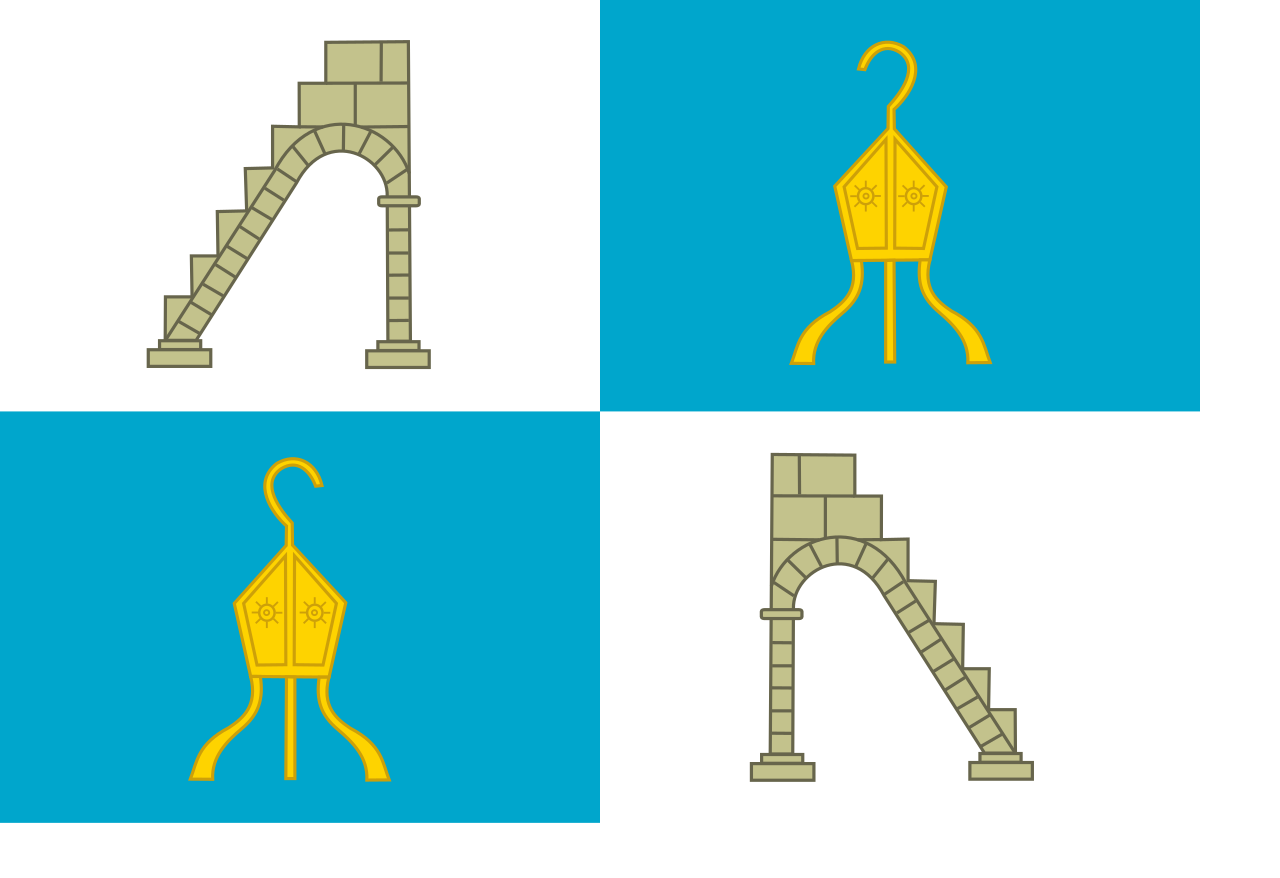
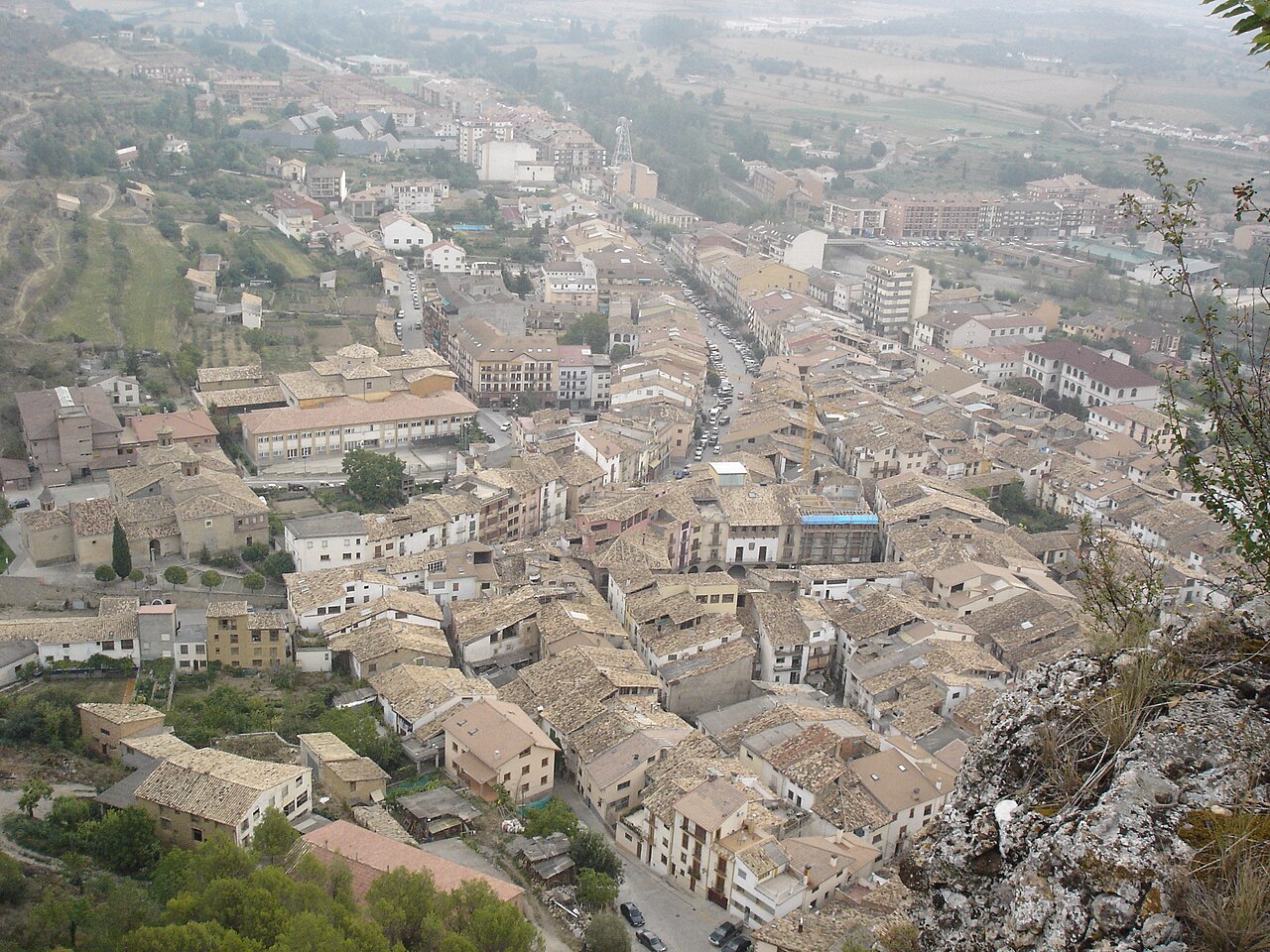
Graus (Spanish: [ˈɡɾaws]) is a village in the Spanish province of Huesca, located in the Pyrenees at the confluence of rivers Esera and Isabena. It is the administrative capital of the region. It is one of the areas of Aragon in which is still preserved the Aragonese language. The Battle of Graus took place here, and Spanish philosopher Baltasar Gracián y Morales was exiled here. During the Spanish Civil War, the village of Graus served as a fairly important local commercial center with 2,600 inhabitants around 1936. It was a libertarian stronghold and a centre of collectivization at that time.
Sections the premium town hall can edit · Fixed sections of the guide
Origins
There's no information in this section yet. The village's profile can complete it from the panel.
History
The first population in Graus is dated from the Paleolithic as is evidenced by the remains found at the site of "Las Forcas" close to the Morral Rock.
Being one of the northernmost points of the Islam in Spain, Graus was reconquered by the Christians in 1083 by Sancho Ramirez, after the death of Ramiro I in 1063 in the Battle of Graus. After this battle, Graus was ceded to the monastery of St. Victorian of Asan, being responsible for rebuilding and repopulating the town, giving important privileges to those who populate Graus.
In 1223, Peter II of Aragon granted the town with the title of "Very Noble and Very Old Village of Graus", which retains today.
In 1415 the Dominican friar (lately canonized) St. Vincent Ferrer visited the village being invited by Berenguer de Bardaxi. Both were commissioners three years earlier in Caspe, resolving the problem of succession of the Crown of Aragon. The Valencian saint was preaching here with great success, giving in appreciation of all done by the town a crucifix which is preserved and venerated in the local church. The main festivities of the town are dedicated to Vincent Ferrer and the Holy Christ, celebrating that visit and his appreciated donation.
Centuries later, in 1588, Philip II of Spain set a weekly market every Monday that has lasted until now. Lately, in 1681 Charles II of Spain added the Santa Lucia fair every May.
In the 16th and 17th centuries, the town enjoyed an economic splendor, that helps the village the construction of great mansions, most of them still compose the awesome Main Square of the town and other places of the village. In these centuries is also built the most important monument of the town, the Basilica of Our Lady of the Rock.
In the 1920s, Graus incorporates the towns of Barasona and Benavente de Aragón. In the 1960s, Graus incorporates the towns of Aguinalíu, Panillo, Puebla de Fantova and Torruella de Aragon. And finally, in the 1970s, the village absorbs the towns of Chuseu, Güell and Torres de Chuseu.
During the Spanish Civil War, the town participated in the Spanish revolution and was collectivised by the CNT and UGT.
Monuments
Graus fue declarado conjunto histórico-artístico en 1975. En sus cercanías se hallan unos asentamientos paleolíticos, en el monte de las Forcas.
Patrimonio civil:
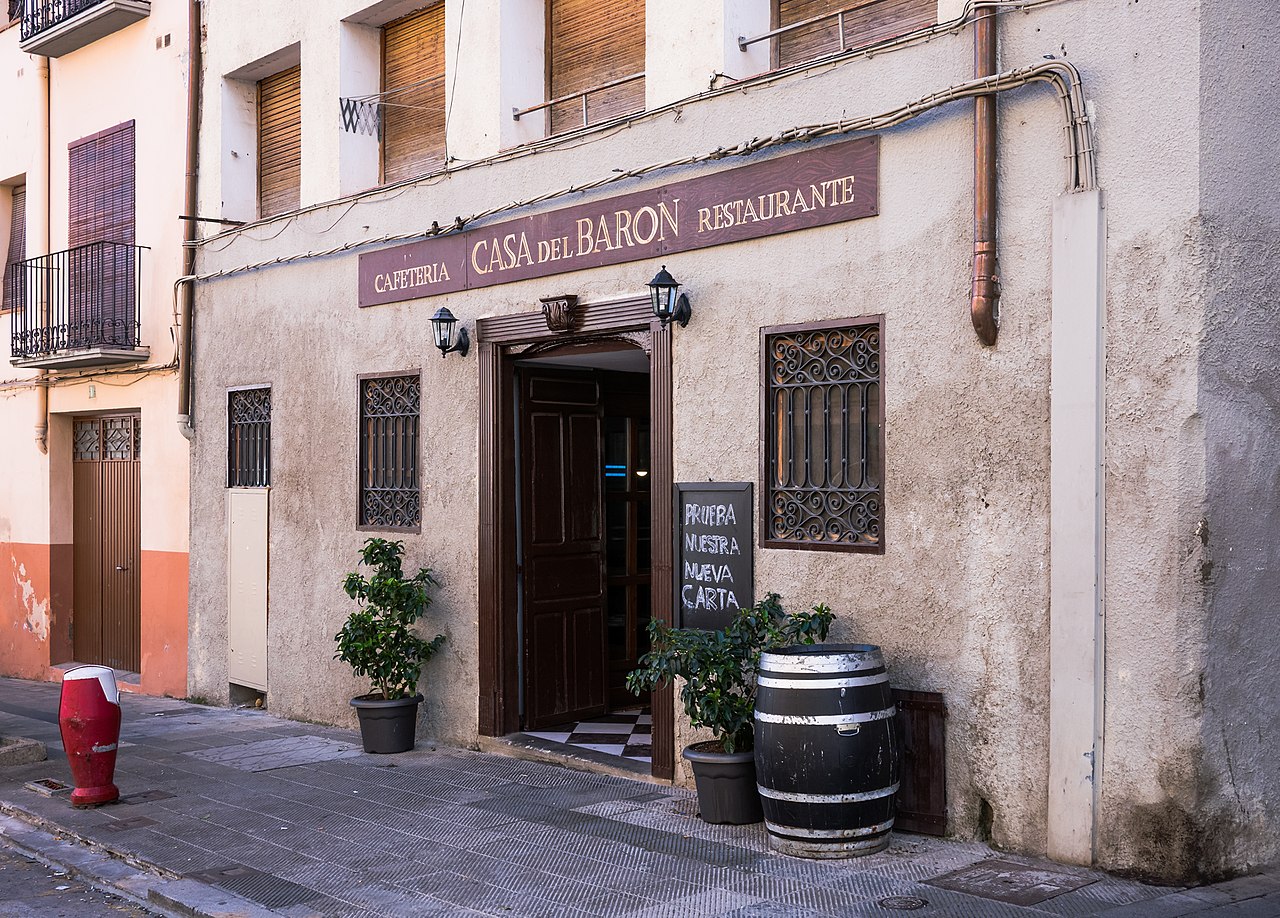
El Puente de Abajo, sobre el río Ésera, se construyó en el siglo XII sobre fundamentos romanos y se encuentra frente al Barrichós o barrio de Abajo, el cual es el más antiguo del pueblo y en el que destacan las casas de los Mur (o Rodrigo de Mur), Fantón, Torquemada y la antigua posada de Juan Tallada. En los dinteles de las ventanas de la casa Mur se puede leer con letras entrelazadas: Roderico Mur y Marca o Roderico ama a Marica. La plaza mayor tiene forma de pentágono irregular con arcos de medio punto, ojivales y apuntados. De ella cabe señalar las casas Heredia, del Barón, Bardaxí, Capucho y el ayuntamiento, la cual es la más antigua. Otras casas de la plaza son la de Loscertales y la de la Cultura. Todavía se conservan integradas en la villa tres de las cuatro puertas de las antiguas murallas: la de Chinchín (o de Barbastro) al sur, la de Linés al norte y la del Barón al oeste.
Patrimonio religioso:
La basílica de la Virgen de la Peña se construyó a mediados del siglo XVI en estilo gótico renacentista sobre la iglesia románica de Santa María. Por encima del santuario, sobre la Peña, se encuentra el Corazón de Jesús y en sus cercanías la ermita de San Pedro. La iglesia parroquial de San Miguel se construyó posteriormente y se encontraba antiguamente extramuros, donde se guarda la imagen de Cristo que San Vicente Ferrer entregó a la villa en 1415. Por último, se fundó en el siglo XVII el convento de Santo Domingo (desaparecido hoy en día) y el colegio de la Compañía de Jesús con su iglesia, del cual solo persiste la iglesia transformada en el centro Espacio Pirineos.
Aunque no pertenece al término municipal de Graus, sino de Panillo, muy cerca se encuentra el templo budista Dag Shang Kagyü, fundado a finales de los años 1980 por el monje tibetano Kalu Rinpoche, quien llegó a la Ribagorza y bajo una encina centenaria (visitable en la actualidad) decidió que aquel sería el entorno propicio para la formación de un centro destinado al retiro espiritual. El templo consta de un albergue y una estupa construida al estilo tradicional tibetano. En la actualidad, Dag Shang Kagyu es la sede de la escuela Kagyu en Europa.
Museos:
Espacio Pirineos: en la antigua iglesia de la Compañía de Jesús, se trata de un centro de interpretación del Pirineo.
Museo de Iconos: en la basílica de la Peña, alberga imágenes ortodoxas.
Museo de Historia y Tradición de la Ribagorza
What to visit
•Corazón de Jesús
•Mirador de Las Forcas
•Plaza Mayor
•Espacio Pirineos
•Museo Parroquial
Gallery






Festivals
1 de mayo: romería a la ermita de San Pedro.
Primer domingo de mayo que no sea día 1: Feria de Mayo, creada en 1907.
Durante el verano: festival de Clásicos en la frontera y NOCTE.
Último sábado de julio: Día de la Longaniza, desde 1992.
Del 12 al 15 de septiembre: fiestas mayores, en honor del Santo Cristo y San Vicente Ferrer y declaradas de interés turístico desde 1973. Cabe destacar actuaciones como la espera a los gaiteros, los dances, las albadas, la mojiganga y la Pllega, y personajes como los gigantes, los cabezudos, las caretas, los caballez y el Furtaperas.
29 de septiembre: feria de San Miguel, otorgada por el rey Pedro II en 1201 y dedicada tradicionalmente a la venta de caballerías.
Víspera de domingos de los días del Pilar y de Todos los Santos: rosario de la Aurora y la Despierta.
13 de diciembre: feria de Santa Lucía, desde 1681, concedida por el rey Carlos II.
September 2026
Festivals this month
- 12 · September Fiestas locales 📆 Add to my calendar
- 12 · September Santo Cristo y San Vicente Ferrer 📆 Add to my calendar
- 29 · September Feria Caballar de San Miguel 📆 Add to my calendar
Rest of the year
- May: Fiestas locales (1) · Primer domingo
- July: Último sábado
- December: Fiestas locales (13)
What's on
Street market
Mercadillo semanal: Lunes, de 09:00 a 14:00 · Plaza Mayor
Gastronomy
There's no information in this section yet. The village's profile can complete it from the panel.
Trails and hiking
•Juseu - Puebla de Fantova (PR-HU 124, 28 km)
•Olvena-La Puebla de Castro-Graus (PR-HU 73)
•Vias Ferratas de Huesca
•Sendero Histórico: Huesca (GR 1)
•Aran Pirineos. Camino de Santiago (246.5 km)
Services
Do you have a business in Graus? Advertise it for free and go premium whenever you like. List my business for free
Famous people
•Eusebio Bardají Azara, diplomático, España
•Sebastián Romero Radigales, diplomático español
•Ángel Samblancat, periodista, escritor y político español
•José Salamero Martínez, clérigo aragonés conocido por su dedicación a los más desfavorecidos y por promover la fundación de asociaciones e instituciones de carácter social
•Antonieta Sanagustín, modista e indumentarista tradicional española
•Francesc Xavier Asarta i Ferraz, arquitecto español
Town hall
Alcaldía: José Antonio Lagüens Martín
Web oficial: http://www.graus.es
Town hall of Graus
Alcaldía: José Antonio Lagüens Martín Web oficial: http://www.graus.es
Here goes your town hall's profile or your website address. Are you from the town hall? Go premium to complete your profile and edit your village's content. hola@ciudadesypueblos.es
How to get there
- 🚗 77 km from Huesca (about 54 min by car)
- 🚗 147 km from Zaragoza (about 104 min by car)
- 🚗 194 km from Terrassa (about 137 min by car)
🧭 Travelling around the villages of Spain: a practical guide — Opening hours, transport, money and customs, before you set off.
- ✈️ 67 km from Lleida-Alguaire airport (about 47 min by car)
- ✈️ 69 km from Huesca-Pirineos airport (about 49 min by car)
Practical info
🅿️ Where to park
- Where to park · 0.1 km away
- Where to park · 0.2 km away
- Where to park · 0.2 km away
🏧 Nearest cash machine
- Nearest cash machine · 0.1 km away
- Bantierra · 0.1 km away
- Nearest cash machine · 0.2 km away
⛽ Nearest petrol station
- Estación de Servicio Laboil · 0.3 km away
- Hiper Oil · 4.2 km away
- Gasolinera Mazana · 4.7 km away
ℹ️ Tourist office
- Oficina de Información Turística · 0.2 km away
- Tourist office · 0.5 km away
- Tourist office · 0.6 km away
🔭 Viewpoints
- Corazón de Jesús · 0.5 km away
- Mirador de Las Forcas · 0.8 km away
🏖️ Where to swim
- Where to swim · 0.8 km away
- Where to swim · 0.8 km away
- Where to swim · 0.9 km away
Buses
1 paradas de autobús en el municipio.
Pharmacy and health
•Farmacia
•Centro de Salud
Wall and news
Log in with your profile to post. Posting on the walls is free.
This wall is still quiet.
Obituaries
There are no obituaries published right now in Graus.
In loving memory
There are no memorials in Graus yet.
Videos
Discover Graus on video: