Grañón (Spanish pronunciation: [gɾa.ˈɲon]) is a village in the province and autonomous community of La Rioja, Spain. The municipality covers an area of 31.01 square kilometres (11.97 sq mi) and as of 2011 had a population of 307 people. It belongs to the comarca of Santo Domingo de la Calzada and the judicial district of Haro. Its residents, known as Grañoneros or Grañoneras, work primarily in agriculture and the cattle industry, with many young people being forced to leave the village to look for other forms of work in Logroño, the capital of La Rioja.
Sections the premium town hall can edit · Fixed sections of the guide
Origins
There's no information in this section yet. The village's profile can complete it from the panel.
History
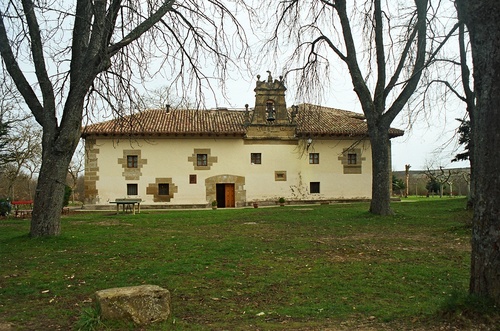
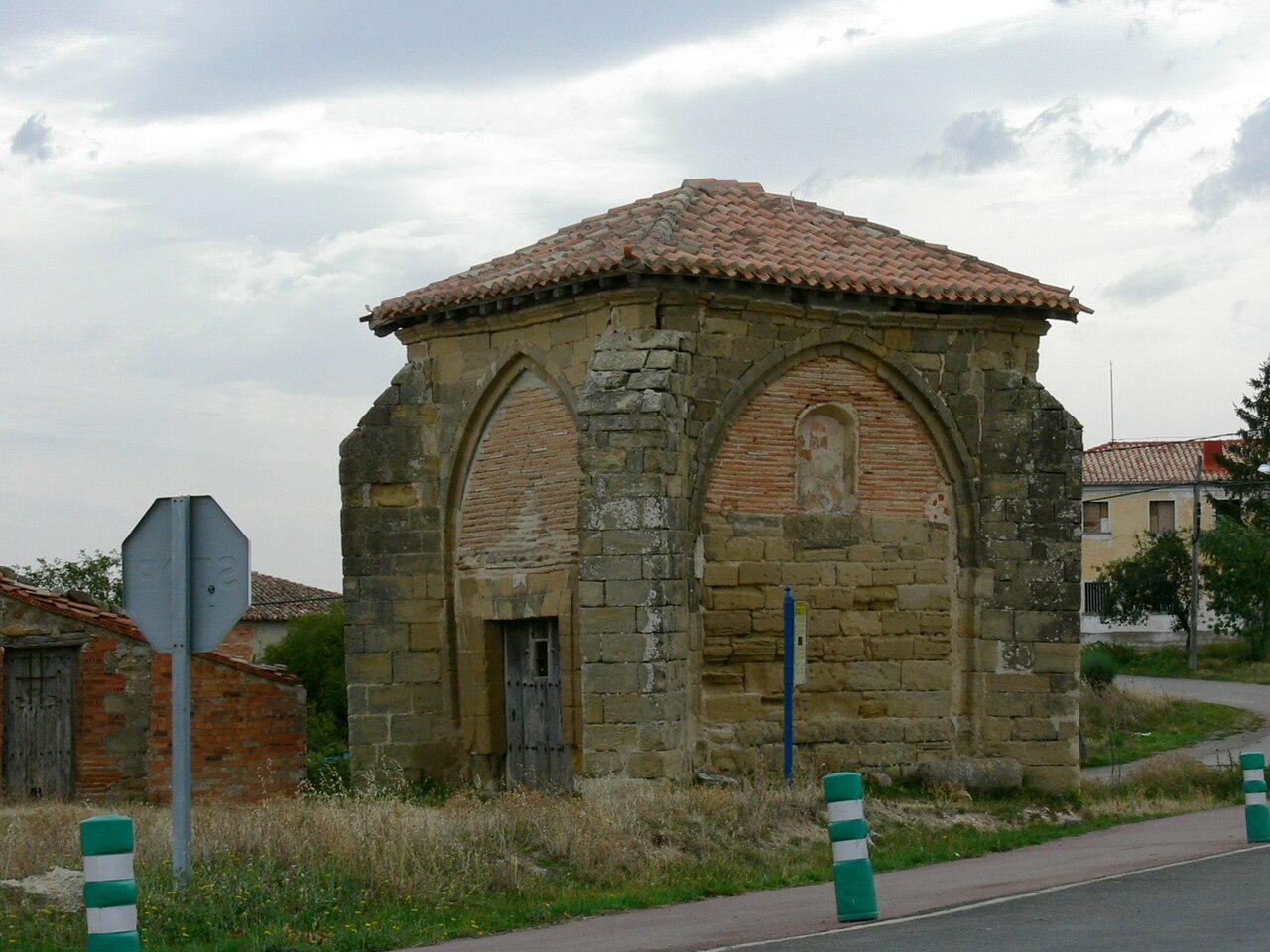
Documents from the time period suggest that the existence of Grañón dates back to the 9th century, when the king of León, Alfonso III, ordered a castle to be constructed on top of a hill located next to the village, which was known as Mirabel or Mirabelia. According to the Chronica Naierensis, there was a castle in Grañón by the year 885. Other studies suggest it was built in the year 889. This fortress, as well as others in the vicinity, would have been used to defend attacks from Muslims in Christian territory. Under the protection of Grañón's castle, small hamlets and neighbourhoods began to develop, which gradually saw a population being established in the area. Various hospitals were known to be present in the town. One of these was the Hospital of Carrasquedo, where a chapel of the same name stands today.
Grañón was involved in the territorial battles between Sancho VI of Navarre and Alfonso VIII of Castile in the second half of the 11th century. In 1176, the Navarrese and the Castilians were reunited under the arbitration of the English king, Henry II, to put an end to the war. The Navarrese king claimed Mirabel Castle belonged to him through hereditary right, but Grañón's castle remained with the Castilians. In 1187, Alfonso VIII granted a fuero (a local jurisdiction) to the village, with which the urban planning of the new settlement was determined.
When Domingo de la Calzada re-routed the Camino de Santiago in medieval times from the old Roman road, directing it towards Burgos and causing it to pass through Grañón and Redecilla del Camino, the town was revitalised.
Grañón used to be surrounded by walls, although no trace of these remains today. As the new village centre became established, the castle's importance to the village reduced as it evolved, with its populating growing. The fertile soils of Grañón have seen many disputes over the years. The most famous of these is the Leyenda de los Valientes (Legend of the Brave), where the towns of Grañón and Santo Domingo de la Calzada fought over the ownership of a 1000 ha parcel of land known as La Dehesa, which is located between the two towns.
Leyenda de los Valientes (Legend of the Brave):
It is said that, many centuries ago, there was a dispute over an extensive dehesa located between the towns of Grañón and Santo Domingo. The inhabitants of Grañón observed with disgust at how the dehesa that they believed belonged to them was being used by their neighbours in Santo Domingo. The people of Santo Domingo argued that those lands belonged to them by right. The two sides could not come to an agreement and residents of both towns were constantly arguing and fighting. Eventually, an armed conflict broke out between the residents of the two towns. Representatives from both towns met up and decided that each town would choose one person to fight – unarmed – for the disputed lands. The winner would take the dehesa for their town.
While Santo Domingo's chosen representative was a skilled fighter fed on a diet of select foods, Martín García, Grañón's representative, was a simple farmer and fed himself on a diet of caparrones (red kidney beans).
The big day arrived. The Santo Domingo fighter had been covered in oil to stop the Grañonero from getting hold of him. To get around this issue, Martín García inserted a finger into his opponent's anus, which enabled him to pick him up and launch him far. With this, Martín García won La Dehesa for Grañón.
In August, a celebratory pilgrimage takes place to the Cruz de los Valientes (Cross of the Brave), which is located between the two towns, in the same location where this battle supposedly took place. There, the dispute is commemorated alongside residents of Santo Domingo. Flowers are left in the name of Martín García and caparrones are eaten.
In 1995, the Grañonero singer Juancho Ruiz el Charro wrote the song La cruz de los valientes (The cross of the brave) which recalls the legend of Martín García. It was performed at the cross in August 2001.
Monuments
•Castillo Grañón
•Cruz de los Valientes
•Tumbas antropomorfas visigodas
•Ermita de Carrasquedo
What to visit
•Pinsapo de Grañón
Gallery



Festivals
En Grañón se celebran numerosas fiestas a lo largo de todo el año. Las más importantes son:
25 de marzo: Fiesta de la Virgen de Carrasquedo. La misa es en la ermita y luego hay verbena para amenizar la celebración.
1º de mayo: Se traslada a la Virgen de Carrasquedo en procesión desde la ermita hasta la iglesia de San Juan Bautista, donde pasará todo el verano. La romería hasta el pueblo es numerosa y los danzadores bailan durante todo el trayecto al ritmo de la gaita y el tamboril. Antes de entrar en el pueblo, una pequeña procesión sale con San Juan Bautista al encuentro de la patrona para darle la bienvenida. Cuando se juntan los dos santos, se suelen recitar cuartetas. El domingo siguiente se vuelve a sacar a la Virgen para dar una vuelta al pueblo y para que bendiga los campos.
24 y 25 de junio: San Juan y San Juanito. El día se San Juan hay hogueras y verbena. Al alba se adornan carros en el monte y luego se recorren todas las calles despertando al pueblo que suele regalar pastas y bebidas (últimamente también pidiendo agua) de casa en casa.
Tercera semana de agosto: Fiestas de Gracias. Se celebran en agradecimiento por la cosecha y se lleva a la Virgen de vuelta a la ermita, donde pasará todo el invierno. El último día de fiesta se cocinan patatas a la riojana en los alrededores de la ermita.
Otros acontecimientos, que empezaron a celebrarse con posterioridad son:
Caparrones en la Cruz de los Valientes, a mediados de agosto. Se conmemora el triunfo de Martín García sobre el de Santo Domingo. Vecinos de ambas localidades se reúnen a medio camino, donde se alza la Cruz, para realizar una ofrenda floral y degustar los famosos caparrones.
Cada miércoles tiene lugar en Grañón un mercadillo en el que se pueden encontrar productos variados.
September 2026
Festivals this month
- No festivals recorded this month.
Rest of the year
- March: Virgen de Carrasquedo (23) · Fiestas locales (25)
- May: Fiestas locales
- June: San Juan (22) · Fiestas locales (24)
- August: Fiestas de Grañón (25) · Tercera semana · Caparrones en la Cruz de los Valientes, a mediados
What's on
Street market
Find the day and place of the local street market:
Gastronomy
There's no information in this section yet. The village's profile can complete it from the panel.
Trails and hiking
•Camino Francés - 03 Logroño a Burgos (750 km)
Services
Hostel
Albergue Ave de Paso
📞 +34 6 6680 1051
Is it yours? Go premium: full profile, more visibility and up to 6 photos. View membership
Hostel
Albergue parroquial San Juan Bautista
📍 Iglesia San Juan Bautista 📞 +34 941420818
Is it yours? Go premium: full profile, more visibility and up to 6 photos. View membership
Hostel
Albergue Casa de las Sonrisas
📍 Calle Mayor 16 📞 +34 687877891
Is it yours? Go premium: full profile, more visibility and up to 6 photos. View membership
Holiday apartments
Casa Grande Hotel y Restaurante
Is it yours? Go premium: full profile, more visibility and up to 6 photos. View membership
Tapas bar
BarBackAna
📍 Santiago 47 📞 +34 636575576
Is it yours? Go premium: full profile, more visibility and up to 6 photos. View membership
Tapas bar
Bar Teo
Is it yours? Go premium: full profile, more visibility and up to 6 photos. View membership
Tapas bar
Bar Sindicato
Is it yours? Go premium: full profile, more visibility and up to 6 photos. View membership
Shops
Autoservicio Cruz de los Valientes
Is it yours? Go premium: full profile, more visibility and up to 6 photos. View membership
Shops
Panaderia Jesus
Is it yours? Go premium: full profile, more visibility and up to 6 photos. View membership
Shops
Tienda Casa Piedad
Is it yours? Go premium: full profile, more visibility and up to 6 photos. View membership
Do you have a business in Grañón? Advertise it for free and go premium whenever you like. List my business for free
Famous people
Conde García Ordóñez (c. 1060-1108): Tenente de Grañón y conde de Nájera, entre otros títulos, conocido como "García de Grañón" o "el Crespo de Grañón" (así se le menciona en la Crónica Najerense y en la tercera parte del Cantar de Mío Cid, como enemigo de Rodrigo Díaz de Vivar, el Cid Campeador). Fue uno de los grandes nobles castellanos durante el reinado de Alfonso VI, de hecho, llegó a ser ayo del infante heredero Sancho Alfónsez y armiger regis, además, tuvo un papel destacado en la repoblación de La Rioja (Fuero de Logroño). Falleció en la batalla de Uclés defendiendo al infante Sancho Alfónsez.
Don Sancho de Grañón (ss. XI-XII): Monje benedictino que fue amigo personal de Santo Domingo de Silos y obispo de Calahorra (1109-1117). Su pontificado está marcado por la dedicación de la iglesia de Cañas a Santa María, cumpliendo con los deseos de Santo Domingo, y por el reforzamiento del poder episcopal frente al parroquial. En 1109 consiguió una bula del Papa Pascual II por la cual el obispado de Calahorra se configuraba sobre la base de las provincias de Álava, Vizcaya, Nájera y los Cameros. Esta actuación puso fin al desconcierto creado a partir de la invasión musulmana y sancionó definitivamente los títulos de obispo y pastor del prelado calagurritano. Actualmente da nombre a la calle que une la plaza del Hórreo con la plaza de Ávila.
Martín García (mediados del s. XIV): Vecino de Grañón que según cuenta la "Leyenda de los Valientes" venció a su contrincante calceatense en un combate a muerte por la dehesa que ambas localidades se disputaban, aunque fallecería días después, presumiblemente a consecuencia de las secuelas de la lucha. Convertido en héroe local se le homenajea en agosto con una caparronada junto a la Cruz de los Valientes, en el lugar donde tuvo lugar el litigio. Antiguamente se rezaba un padrenuestro y un avemaría para el descanso de su alma en la eucaristía de los domingos en la parroquia de Grañón. Por otra parte, la calle que conecta la entrada norte del pueblo (por la Barbacana) con la plaza de Ávila (al sur) lleva su nombre.
Don Agustín Morquecho Alonso del Valle (31 de agosto de 1788 - c. 1850): Miembro de una de las familias más importantes de Grañón, se convirtió en cura beneficiado de la parroquia de San Juan Bautista. Hombre culto, formado y comprometido con su tierra, a principios del siglo XIX fue vicepresidente de la Real Sociedad Económica de Amigos del País de La Rioja Castellana, en la que tuvo un papel relevante liderando muchas de las iniciativas de esta sociedad (construcción de caminos, búsqueda de financiación, comercio del vino, etc.). En 1810 fue uno de los riojanos propuestos por el obispo Francisco Mateo Aguiriano y Gómez para representar al obispado de Calahorra en las Cortes de Cádiz (1810-1814) como diputado, aunque finalmente al cambiar el sistema de elección por provincias no llegó a participar en esas importantes Cortes. Clérigo de tendencia liberal y reformista, en 1820, en el contexto del Trienio Liberal (1820-1823), fue elegido miembro de la diputación provincial de Burgos (a la que pertenecía el territorio riojalteño, mientras La Rioja Baja se encontraba dentro de la provincia de Soria). Trabajó activamente para conseguir una realidad administrativa propia para La Rioja y en 1822 llegaría el momento culmen de su carrera al ser uno de los integrantes de la diputación que nació al constituirse la provincia de Logroño. Nada se sabe de su trayectoria posterior a la restauración del absolutismo por parte de Fernando VII en 1823.
Juancho Ruiz, el Charro: (8 de septiembre de 1958) es un cantante, autor, promotor, arreglista y productor musical español, que abarca géneros como el mariachi, country, pop latino, boleros, jazz, merengue y balada romántica nacido en Grañón.
Town hall
Alcaldía: César Sáez de Quejana Villar
Web oficial: http://www.granon.org/
Town hall of Grañón
Alcaldía: César Sáez de Quejana Villar Web oficial: http://www.granon.org/
Here goes your town hall's profile or your website address. Are you from the town hall? Go premium to complete your profile and edit your village's content. hola@ciudadesypueblos.es
How to get there
- 🚗 60 km from Logroño (about 42 min by car)
- 🚗 66 km from Vitoria-Gasteiz (about 47 min by car)
🧭 Travelling around the villages of Spain: a practical guide — Opening hours, transport, money and customs, before you set off.
- ✈️ 62 km from Burgos airport (about 44 min by car)
- ✈️ 68 km from Vitoria airport (about 48 min by car)
Practical info
🅿️ Where to park
- Where to park · 1.2 km away
🏧 Nearest cash machine
- Caixabank · 5.1 km away
- Caja Rural de Navarra · 6 km away
- Banco Santander · 6 km away
⛽ Nearest petrol station
- Moeve · 7.6 km away
- Cooperativa Garu · 8.5 km away
ℹ️ Tourist office
- Castilla y León · 1.7 km away
🔭 Viewpoints
- Viewpoints · 0.3 km away
- Viewpoints · 1.2 km away
- Viewpoints · 1.3 km away
🏖️ Where to swim
- Piscina municipal · 3 km away
Buses
2 paradas de autobús en el municipio.
Pharmacy and health
•Farmacia
Wall and news
Log in with your profile to post. Posting on the walls is free.
This wall is still quiet.
Obituaries
There are no obituaries published right now in Grañón.
In loving memory
There are no memorials in Grañón yet.
Videos
Discover Grañón on video: