
Blanca
Murcia · Región de Murcia
Blanca is a Spanish municipality in the Region of Murcia, located in the "Vega Alta del Segura". It belongs to one of the six municipalities of the Ricote Valley (Valle de Ricote), together with Abarán, Ojós, Ricote, Ulea, Archena and Villanueva de Segura. Blanca limits on the north by the municipality of Abarán, on the south by those of Ulea and Ojós, on the east by the municipalities Molina de Segura and Fortuna, and on the west by the municipality Ricote. Blanca has an area of 87.7 km ², its average height is 233 m and the village has 6489 inhabitants, according to the INE in 2011.
Sections the premium town hall can edit · Fixed sections of the guide
Origins
There's no information in this section yet. The village's profile can complete it from the panel.
History
The population existed before the Muslim era, during the independent maritime state of Cartagena.
In fact, to protect and fortify the port and the inlands, some of the best masons in Europe were sent to build and create communities by the fortifications and bridges under construction. Blanca is in fact one of the rare area where wounded soldiers, orphans and widows could take refuge, regardless of their religion or nation. This humanitarian sanctuary was then confirmed by the Vatican.
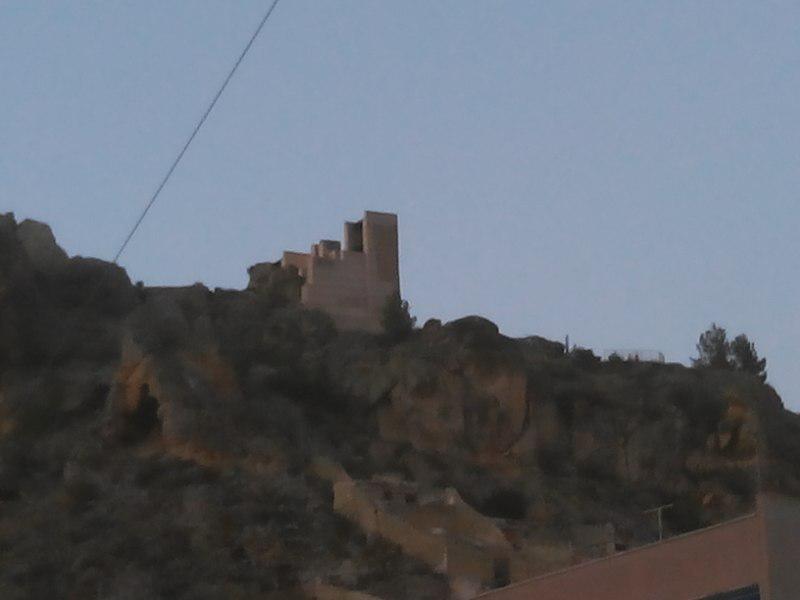
We have to go to the year 713, with the arrival of the Arab conquest, to find permanent human presence in the town of Blanca. The first testimony brings us the remainder of its castle, dating from the twelfth century. In the thirteenth century, it was known by the name of "Negra", apparently because of the color of the black mountain near to the castle and population center. This castle was built between 1155 and 1171 by the first King of Murcia, Muhammad ibn Mardanis, known as the "Wolf King". The historical connection to form part of the Moorish Ricote Valley was found in 1228, during the insurrection led by Ibn Hud as from Ricote against the Almohads. However, after his death, ten years later, anarchy and lawlessness propagated in the Kingdom of Murcia, causing the Alcaraz Pact signed with Castile in 1243, which required the submission to the Crown as a protectorate. Respecting and guaranteeing the possessions, and Muslim traditions in change of vassalage to the Castilian king. Once Alfonso X on the Castilian throne and after breaking some clauses of the Treaty, the Mudéjar population revolts, between 1264 and 1266. After suffocating the revolution, Alfonso X gave the Ricote Valley population the Jurisdiction of the city of Murcia, being so included in the territory of the city. With the death of the eldest son and Castilian heir, Fernando de la Cerda, the struggle began for the succession to the throne of Castile. The struggle was between Fernando's sons, the infants de la Cerda, and his uncle, son of Alfonso X, the Infante Don Sancho. Future Sancho IV, promised, in a document dated 25 March 1281, to reward the Order of Santiago by donating the Ricote Valley, including Negra (Blanca), if they help him in his struggle for the crown. When being proclaimed king in Seville 19 November 1285, Sancho IV fulfills his commitment and gave to the Order of Santiago the Ricote Valley, their neighbourhoods, villages and places, for the support provided (1).
Peace did not last many years in the Ricote Valley because James II of Aragón invaded the Kingdom of Murcia, in 1296, to reward himself for the help given to the other party, i.e.| the Infants de la Cerda, in the struggle for succession of the throne against his uncle. During this occupation, Negra and its castle were given to the counselor Bernardo de Sarria, although the santiaguista commander of Ricote claimed to replace them to John Osores on 19 September 1303. The last time the name of Negra is stated in a document is in the year 1315. The change of the name Negra to Blanca probably took place between the years 1353 and 1362 by the influence of Dona Blanca de Borbón, Queen of Castile, who was abandoned by King Pedro I and defended by Fadrique, Master of the Order of Santiago, and by Sancho Sanchez de Moscoso, the santiaguista commander of Ricote (2). Years later, precisely in 1382, Blanca appeared for the first time under the name of Blanca. The Advancer (Counselor) of the Kingdom of Murcia, Martin Alonso de Valdivieso, required the freedom of a Moor from Blanca, who was captured upon request of a Jew of Elche. (3). Unfair events could not stop the war instability in the middle decades of the fifteenth century. It caused the abandonment of Blanca's people marching with the troops of the King of Granada after a foray into the Kingdom of Murcia. Thereafter, after demanding tax benefits, Blanca's people returned. After the bloody sack of Cieza in 1477, leaving the villages depopulated, the inhabitants of Blanca again left their village. They returned again in 1492 after the conquest of the Kingdom of Granada. The domain of the Order of Santiago on Blanca and the rest of the Ricote Valley would be extended until the nineteenth century. In order to improve the performance of their lands, in the early years of this domain, the Order convinced to convert to Christianity the Mohammedans of Blanca before the new law in 1501. In this way, they were now called new Christians. The Mohammedans converted after the new law in 1501 were called Moors. Some years thereafter, in 1507, the Catholic Monarchs gave instructions to build churches on the old mosques (4). The Muslim population hoped, with this conversion to Christianity, to get rid of the fiscal pressures to which they were subject all the time. However, their frustration was great seeing that this was not the case, and this provoked a violent uprising of the Moorish population throughout the Valley in 1517. This rebellion was suppressed and repressed a year later.
Throughout the sixteenth century, Blanca experienced a significant increase in the population of the village. Philip II, always lacking money due to his wars, arranged a new strategy for obtaining money: that one of creating municipalities. Consequently, Blanca got on 10 August 1591 from Philip II the privilege of the municipality at the cost of 2400 ducats. The expulsion of the new Christians of the Ricote Valley - now suddenly called Moriscoes - decreed in 1613 by Philip III left in ruin the lands of Blanca. Blanca left only with a population of 300 people (5), due to the forced exodus of its inhabitants. However, 10–15 years after 45% of its inhabitants returned to their lands (6). Miguel de Cervantes Saavedra wrote at length about the Moorish Ricote Valley through the figure of Morisco Ricote (7). Many authors thought the Morisco Ricote came from Esquivias or Albacete, but Govert Westerveld, one of the two chroniclers of the town proved that the Morisco Ricote came from the Ricote Valley (8) as confirmed in 2010 by Professor Francisco Márquez Villanueva (9). Back in the Golden Century of Murcia, eighteenth century, Blanca began to recover its loss of the population, moving from 700 inhabitants in 1713 to 1378 in 1786, according to the Census Floridablanca. The present church dedicated to St. John the Evangelist was rebuilt at the end of the seventeenth and the beginning of the eighteenth century by the stonecutter brothers Lucas and Antonio de la Lastra. The building was finished in the year 1717.
After the War of Independence (1808-1814), Blanca's privilege was ratified by King Ferdinand VII in 1819. Nine years later, the Kingdom of Murcia is hit by an epidemic of yellow fever, and Blanca was elected by the Chapter of the Cathedral of Murcia as a refuge from the disease, and through the intercession of St. Roch the fever did not reach Blanca, according to tradition. St. Roch was named as the pattern of Blanca seeing the results of praying of the inhabitants from Blanca to him. Freed from the control by the Order of Santiago, in 1851, and after the revolutionary events and the restoration of the monarchy of Cánovas del Castillo in Alfonso XII, Blanca faces the entrance of the new century, better prepared than some of the surrounding municipalities. In 1856, the inhabitants arranged the building of a new bridge over the River Segura. In 1869, a rural road was finished to connect the city with the railway station. In 1894 public lighting was installed. Also in 1894, Blanca suffered several collapses from the hillsides being destroyed several buildings, including a home-hospital and shelter for the poor. The result was a complete change of the landscapes which motivated the construction of new houses and streets. During the twentieth century, the turbulent political and social periods were lived in the town with regularity as the rest of the region. Proclaimed the Second Republi
Monuments
•La Farola
•Castillo de Blanca
•Casa de la Encomienda de la Orden de Santiago
•Palacio de los Álvarez Castellanos
What to visit
•Alto de Bayna
•Museo y Centro de Arte de Blanca (M.U.S.A.C.)
•Fundación Pedro Cano
•Mirador del Algezar
•Museo de la Luz y el Agua
•La Favorita
•Wikiplaza Las Esteras
Patrimonio:
Fiestas:
Semana Santa: Cuando llega el tiempo de Cuaresma todas las cofradías y hermandades pasionarias ultiman los preparativos para los actos y desfiles llenos de fervor y sentimiento. En Blanca actualmente hay ocho cofradías, de las cuales las más antiguas son la Real y Muy Ilustre Cofradía de Nuestro Padre Jesús Nazareno, la Hermandad de San Juan Evangelista, la Real Congregación de los Sagrados Corazones de Jesús y María y la Cofradía de Servitas de Nuestra Señora de la Virgen de los Dolores. Y otras de posterior fundación como la Cofradía de La Verónica, la Hermandad de San Pedro, la Hermandad de Santa María Magdalena y la Hermandad más joven, la Hermandad de la Oración en el Huerto, que por primera vez sacan la imagen de la Virgen de las Angustias a la procesión de Viernes Santo del año 1986, y fue tres años después cuando se fundó la hermandad. Es destacable la tradicional “Puja de Imágenes” en la que se demuestra el sentimiento de los blanqueños al pagar por llevar sobre sus hombros el peso de la imagen elegida.
Feria de agosto: En agosto Blanca celebra sus fiestas estivales y otra vez en honor del patrón San Roque. Aquí cambia la decoración, la mona por los toros, el Encierro declarado de Interés Turístico Regional y sin duda el día más importante para todos los blanqueños. El encierro es una tradición que lleva celebrándose desde hace más de trescientos años y es un acontecimiento único en la Región de Murcía. Durante la mañana, el ambiente que se vive a lo largo de todo el recorrido del encierro es de una alegría desmesurada, en la que los bailes y pasacalles de las charangas, animan a todos los que se unen a la fiesta, donde todo el mundo es bien recibido. Se celebra siempre antes del quince de agosto.
Fiestas de invierno: Blanca en Navidad, donde se puede disfrutar de diversos belenes monumentales. Entre ellos, se puede destacar el belén monumental situado en la sala de exposiciones de Cajamurcia, el belén de la Hermandad de Nuestro Padre Jesús Nazareno o el belén monumental de la estación de Blanca, entre otros de carácter particular.
Fiestas de primavera: Blanca en primavera, tras la Semana Santa inicia una semana de fiestas dedicada al patrón del municipio San Roque, en el cual los actos más característicos de estas fiestas son la Coronación de la Reina, celebrado la tarde del Domingo de Resurrección y la Romería, la cual tiene lugar el viernes siguiente a Viernes Santo. En dicha romería, se traslada al patrón san Roque a su ermita, situada junto a la N-301, y se disfruta con la familia y amigos del día en el campo. Por la tarde, tiene lugar la procesión con la llegada de San Roque de nuevo al pueblo.
Fiestas patronales de San Pedro: barrio Alto Palomo. (finales de junio)
Fiestas del Pilar en la barriada Estación de Blanca. (12 de octubre)
Gallery



Festivals
September 2026
Festivals this month
- No festivals recorded this month.
Rest of the year
- March: Feria Villa del Toro (15)
- April: Fiestas de Primavera (5)
- August: Semana de la Juventud (4) · Fiestas de Agosto (15) · Fiesta patronal: Roque de Montpellier (16)
What's on
Street market
Mercadillo semanal: Jueves, de 08:00 a 14:00 · Avenida Río Segura
Gastronomy
There's no information in this section yet. The village's profile can complete it from the panel.
Trails and hiking
•Camino de Santiago del Azahar
•Río Segura (GR 127)
•Senda de los Moriscos - Huerta de Ricote (PR-MU 8, 8 km)
•Barranco del Pozo (PR-MU 10)
•Hoya de San Roque (PR-MU 24)
•Sendero de las Norias (PR-MU 28)
•Sendero del Collado de la Madera (PR-MU 47, 16.7 km)
•Mirador de la Cruz (PR-MU 56, 2.7 km)
•Senda de los Forestales (PR-MU 58)
•Castillo de Ricote (SL-MU 26, 0.8 km)
•Vereda de Ojós (PR-MU 8.1)
Services
Do you have a business in Blanca? Advertise it for free and go premium whenever you like. List my business for free
Famous people
•Pedro Cano, pintor español
•Álvaro Peña Sáez, escritor español
Town hall
En 2023, fue elegido alcalde Pablo Cano Gomez (PP) con el apoyo de Blanca Lo Primero.
Town hall of Blanca
En 2023, fue elegido alcalde Pablo Cano Gomez (PP) con el apoyo de Blanca Lo Primero.
Here goes your town hall's profile or your website address. Are you from the town hall? Go premium to complete your profile and edit your village's content. hola@ciudadesypueblos.es
How to get there
- 🚗 38 km from Murcia (about 27 min by car)
- 🚗 75 km from Elche/Elx (about 53 min by car)
🧭 Travelling around the villages of Spain: a practical guide — Opening hours, transport, money and customs, before you set off.
- ✈️ 59 km from Región de Murcia airport (about 42 min by car)
- ✈️ 91 km from Alicante-Elche airport (about 64 min by car)
Practical info
Buses
2 paradas de autobús en el municipio:
•Apeadero de Autobuses
•Ricote
Pharmacy and health
Sanidad:
El municipio dispone del centro de salud Blanca perteneciente al área de salud IX (Vega Alta del Segura). Dispone de medicina de familia, pediatría, enfermería, recogida de muestras y matrona. Tiene horario de mañana de 08:00 a 15:00.
Educación:
Como centros educativos se encuentran colegio público Antonio Molina González, colegio público Virgen del Pilar, colegio concertado La Milagrosa y el instituto educación secundaria Valle del Segura.
Dispone de una biblioteca pública municipal. Cuenta con salón de actos, punto de información juvenil, sala infantil-juvenil, 72 puestos de lectura, así como varios servicios, talleres de lectura, sala de ordenadores y audiovisuales. Se encuentra también la Sala de Cronistas Oficiales de la Región de Murcia.
Seguridad ciudadana:
Casa-Cuartel de la Guardia Civil. 5.ª zona: comunidad autónoma de la Región de Murcia. Puesto de Blanca.
Policía local
Protección civil
Deporte:
Dispone de un polideportivo municipal gestionado por la concejalía.
Transporte:
Por carretera:
Las principales vías de comunicación, cercanas a Blanca, son la autovía A-30 (Albacete-Murcia) y la autovía A-33 (hacia Fuente la Higuera).
Desde Murcia, se accede a través de la A-30, salida 111 Blanca-estación ffcc. Desde Madrid, a través de la salida 110 de la A-30, o de la N-301. Desde Valencia, a través de la intersección de la A-33 con la A-30, o a través de la N-344.
Tren:
Hacia el este del término discurre la línea férrea Chinchilla-Cartagena, que disponía de una estación (hoy en desuso) llamada de Blanca-Abarán, dando lugar en su entorno al núcleo de población de Estación de Blanca.
Autobús:
Prestan servicio las siguientes líneas interurbanas:
Wall and news
Log in with your profile to post. Posting on the walls is free.
This wall is still quiet.
Obituaries
There are no obituaries published right now in Blanca.
In loving memory
There are no memorials in Blanca yet.
Videos
Discover Blanca on video: